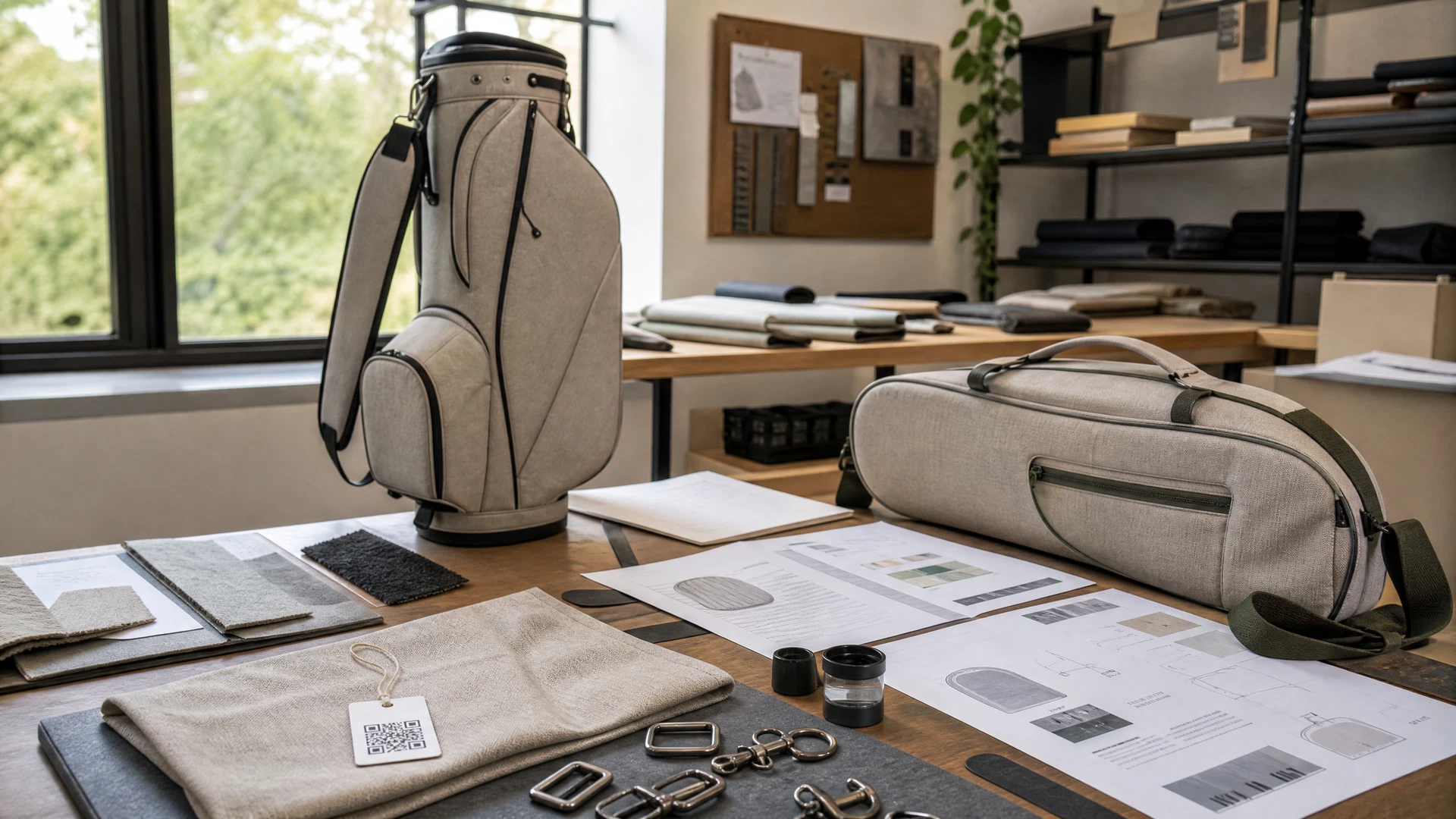
A Better First Sample: Buyer Specification-Review Checklist
Announcing our new buyer specification-review checklist for custom golf and tennis bag procurement. Streamline your B2B sports bag sampling process today.
Links Golf Sports
Product Specialist & OEM Consultant · Links Sports Co
10+ years in golf & tennis bag manufacturing. Specialises in OEM/ODM custom branding, material sourcing, and B2B wholesale for brands across 30+ countries.
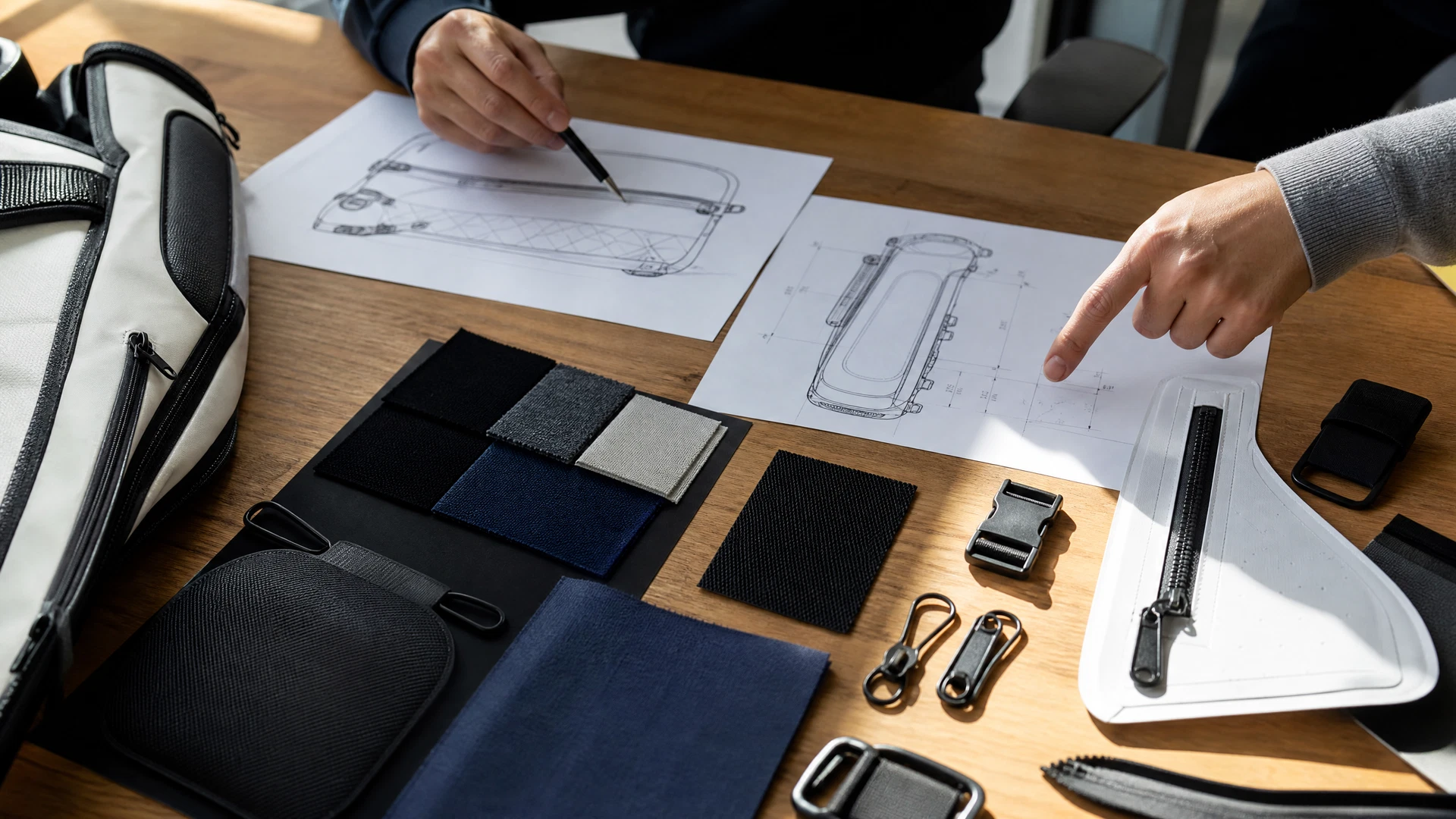
Quick Answer
What is the best way to ensure an accurate first prototype for custom golf and tennis bags? A robust buyer specification-review checklist establishes clear agreements on dimensions, materials, hardware, tolerances, and testing protocols before any sketch or sample is produced. This resource-announcement guide outlines a 14-point buyer-owned framework for B2B sports bag procurement, reducing costly sampling iterations and aligning procurement teams with manufacturing partners.
The modern B2B sports bag procurement landscape is expanding rapidly alongside surging participation in racket and club sports worldwide. Recent industry data indicates that golf has reached over 48M+ total participants, including 29.1M green-grass golfers, reflecting a notable +41% increase in total participation between 2019 and 2025 (NGF 2025). Simultaneously, tennis participation in the United States continues its upward trajectory with 27.3M US players, representing a +1.6M year-over-year increase, 14.5M core players, over 616M+ play occasions, and 4.9M first-time players (USTA 2025).
With demand surging across golf courses and tennis courts globally, procurement managers face heightened pressure to deliver durable, premium custom gear without prototype delays. To address this challenge, Links Sports Co is releasing a comprehensive resource announcement: our new Buyer Specification-Review Checklist for custom golf and tennis bag development. Rather than relying on internal manufacturer policies or unverified assumptions, this buyer-owned framework empowers procurement teams to systematically validate every technical parameter before physical sample creation begins.
Why Specification Reviews Matter Before Prototyping
In custom golf bag sampling and tennis bag OEM specification review, rushing straight from a concept sketch to a physical prototype frequently results in operational misalignment. Dimensional drift, incorrect material weights, improper zipper gauges, and ambiguous testing methods lead to rejected samples, missed product launches, and extended lead times.
By establishing a structured specification review before sampling, procurement professionals can define exact requirements. Buyers should agree, test, and validate each parameter with their chosen supplier to ensure complete operational clarity. Below is the complete 14-point buyer specification-review checklist designed specifically for B2B sports bag procurement and golf bag tech pack development.
The 14-Point Buyer Specification-Review Checklist
The following 14 points cover every critical dimension of sports bag design and manufacturing. Buyers should review and document each item collaboratively with suppliers to eliminate ambiguity.
- Customer & Target Audience Profile: Define the end-user demographic, target retail price point, and distribution channel to establish baseline quality expectations.
- Use Case & Environmental Exposure: Specify whether the bag is intended for cart golf, carry golf, tournament tennis, or daily travel, detailing expected wear conditions.
- Dimensional Specifications & Capacity: Agree upon exact length, width, height, pocket volume, club divider count, or racket compartment capacity.
- Materials & Fabric Selection: Document base fabrics, backing weights, and coating types. For water-resistant requirements, buyers should agree with suppliers to utilize standardized test protocols such as ISO 811 for hydrostatic pressure resistance.
- Branding & Logo Placement: Establish precise embroidery dimensions, screen-printing locations, rubber patch placements, and color matching references.
- Hardware & Trim Specifications: Define zipper gauges, puller materials, buckle types, strap adjusters, and D-ring load ratings.
- Packaging & Transit Protection: Outline carton dimensions, polybag thickness, desiccant requirements, and stacking limits for safe international shipping.
- Test Methods & Quality Criteria: Agree upon specific verification protocols for seam strength, zipper fatigue, drop tests, and colorfastness.
- Dimensional Tolerances: Document an acceptable tolerance band that reflects the product dimensions and intended use, so sample evaluation is not subjective.
- Regulatory & Compliance Framework: Anticipate evolving sustainability standards. For instance, the European Commission lists textile apparel as a priority product group in the ESPR Working Plan 2025–2030, where future Digital Product Passports (DPP) may cover product identification and characteristics, fibre composition where relevant, use, repair and maintenance, end-of-life and recycling, and origin and economic operators, with exact requirements coming from delegated acts (European Commission).
- Sample Sign-Off Protocol: Define who holds authorization to approve prototype milestones, including pre-production samples and shipping samples.
- Commercial Terms & Pricing Structure: Align on volume tier pricing, tooling cost amortizations, payment milestones, and FOB or CIF delivery terms.
- Iteration & Revision Limits: Agree the scope, ownership and decision process for prototype revisions within the sampling agreement.
- Final Tech Pack Baseline Agreement: Secure formal sign-off on the complete technical package to freeze the specification before mass production tooling begins.
Key Comparison of Procurement Stages
The table below outlines how implementing a pre-sketch specification review transforms traditional B2B sports bag procurement into a controlled, predictable workflow.
| Procurement Stage | Traditional Approach | Buyer Specification-Review Approach |
|---|---|---|
| Initial Brief | Conceptual sketch with rough notes | Comprehensive 14-point technical checklist |
| Material Validation | Informal visual inspection | Standardized verification (e.g., ISO 811 testing) |
| Tolerance Setting | Undefined subjective standards | Agreed numerical variances and limits |
| Regulatory Readiness | Reactive compliance checks | Proactive alignment with frameworks like European Commission DPP guidelines |
| Prototype Outcome | Multiple costly iterations | Streamlined sign-off and faster approval |
Action Checklist for Procurement Teams
To implement this specification-review framework effectively, procurement managers and product developers should execute the following operational steps:
- Audit Current Tech Packs: Review existing golf bag tech pack development templates to ensure all 14 checklist categories are represented.
- Engage Supplier Stakeholders: Share the checklist with manufacturing partners to confirm mutual understanding of testing standards and tolerances.
- Establish Baseline Metrics: Document specific performance thresholds, such as water resistance requirements referencing ISO 811.
- Incorporate Compliance Outlooks: Review upcoming regulatory developments, such as the European Commission ESPR Working Plan 2025-2030, for future traceability planning.
- Formalize Sign-Off Workflow: Implement clear authorization gates for sample approvals before transitioning to production.
Frequently Asked Questions
Q1: What is the primary purpose of the Buyer Specification-Review Checklist?
A1: The checklist provides a systematic, buyer-owned framework to align procurement teams and suppliers on 14 critical parameters—such as dimensions, materials, hardware, and tolerances—before any prototype or sketch is produced.
Q2: How does golf and tennis participation data impact B2B sports bag procurement?
A2: With NGF 2025 reporting 48M+ total participants and USTA 2025 noting 27.3M US players, rising consumer demand increases the need for efficient procurement workflows and rigorous quality control to meet retail volume requirements.
Q3: How should fabric water resistance be specified during procurement?
A3: Buyers should agree with suppliers to utilize standardized test methods such as ISO 811 for determining fabric resistance to water penetration under hydrostatic pressure.
Q4: How does EU sustainability legislation affect sports bag procurement planning?
A4: The European Commission lists textile apparel as a priority product group in the ESPR Working Plan 2025-2030, indicating that future Digital Product Passports may cover fibre composition, traceability, and end-of-life recycling requirements.
If you are developing a custom golf or tennis bag, contact Links Sports Co to discuss your brief.
Share this article