
The Strap System Nobody Talks About: Why Your Golf Bag's Shoulder Harness Is the Single Most Important Craftsmanship Decision You'll Make
Discover why the golf bag strap system is the ultimate craftsmanship decision for your brand. Explore ergonomics, EVA foam, hardware standards, and how to drive repeat purchases in a growing market.
Links Sports Co Team
Product Specialist & OEM Consultant · Links Sports Co
10+ years in golf & tennis bag manufacturing. Specialises in OEM/ODM custom branding, material sourcing, and B2B wholesale for brands across 30+ countries.
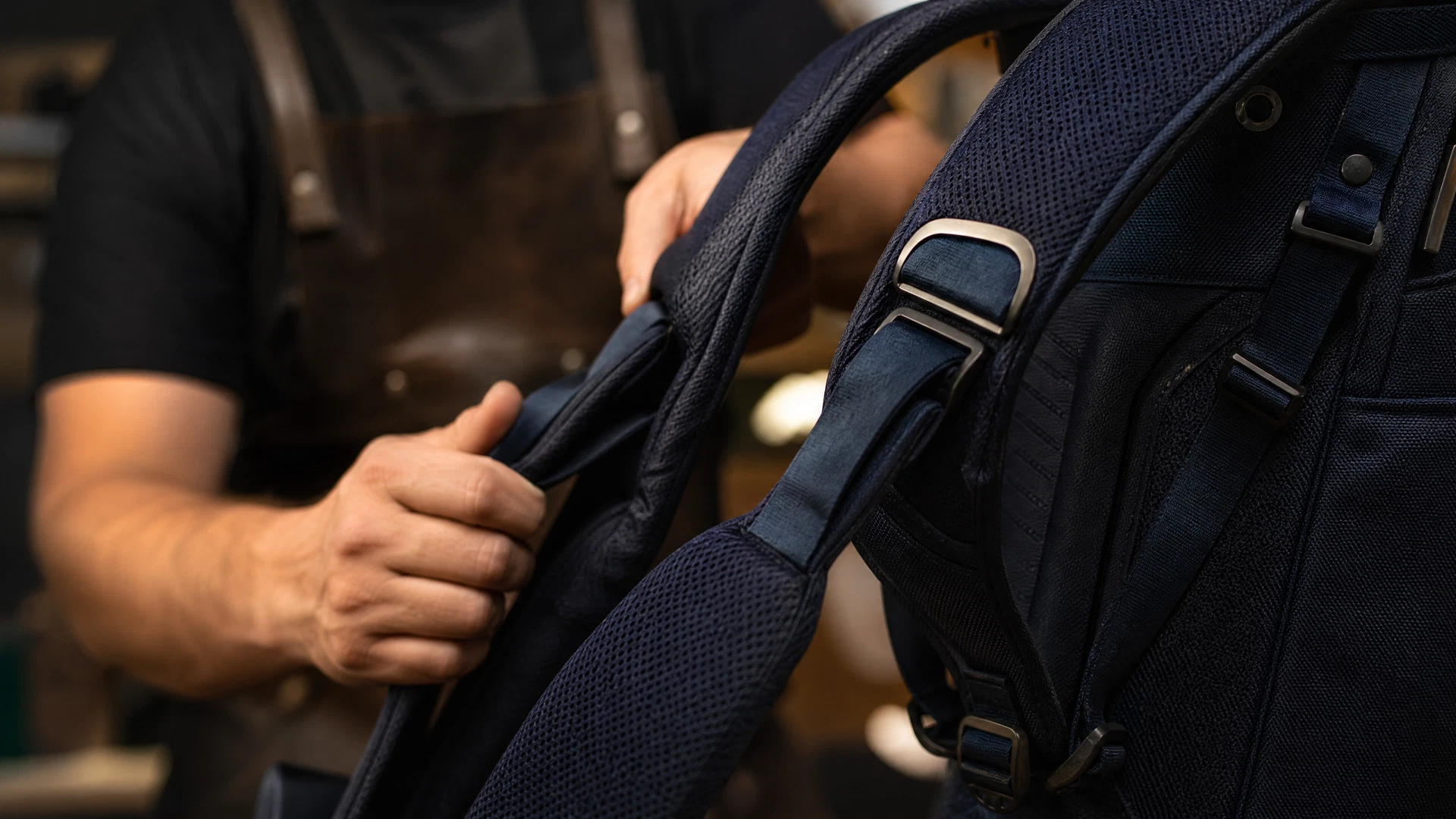
Introduction: The Anatomy of a Forgotten Hero
When a golfer picks up a new bag on the retail showroom floor, what is the very first thing they touch? Usually, it is not the waterproof zippers, the 14-way divider top, or the carbon fiber stand legs. It is the golf bag strap system. They sling it over one shoulder or slip both arms into the harness, take a couple of steps, shift their weight, and make an instant, subconscious judgment. That five-second interaction dictates whether the product feels premium or cheap, balanced or awkward, engineered or slapped together.
Yet, in our two decades on the manufacturing floor at Links Sports Co., producing OEM and ODM golf and tennis bags for global brands across 30-plus countries, we have witnessed a curious paradox. Brands will spend months debating the exact pantone shade of synthetic leather, agonizing over custom zipper pullers, and engineering multi-compartment cooler pockets. But when it comes to the golf bag shoulder harness, they often treat it as an afterthought—a standard component sourced off-the-shelf from a general accessory catalog.
This is a critical miscalculation. According to industry data from the Golf Equipment Retail Association 2025, 68% of walking golfers rate shoulder and back comfort as the primary factor in repeat brand purchase [1]. If a bag causes shoulder fatigue, lower back strain, or awkward chafing during the back nine, the golfer will not blame the strap vendor. They will blame the brand logo embroidered on the side pocket, and they will never buy from that brand again.
With the global golf bags market valued at $1.52 billion in 2025 and growing at a steady CAGR of 4.85% [2], competition is fiercer than ever. Furthermore, market analytics show a 15% year-over-year increase in lightweight stand bag sales [3], driven by a demographic shift toward walking golfers and fitness-conscious players. For B2B brand owners, importers, and product developers, mastering the engineering of the golf bag strap system is no longer optional. It is the ultimate differentiator between a product that sits gathering dust on retail shelves and one that earns fierce, lifelong brand loyalty.
The Biomechanics of Carry: Why Single Straps Fail Modern Golfers
To understand why a superior golf bag strap system matters, we must look at human biomechanics. For decades, traditional golf bags relied on a single, straight webbing strap. While functional for riding carts, carrying a 30-pound bag with a single strap forces the golfer's spine into lateral flexion. The body naturally compensates by hiking one shoulder and leaning the torso to the opposite side, creating severe muscular imbalances over a four-hour, 18-hole round.
Ergonomic studies consistently demonstrate that dual-strap systems reduce muscle strain by up to 40% compared to single straps by distributing the load symmetrically across both shoulders and anchoring the center of gravity against the thoracic spine [4]. However, not all dual-strap harnesses are created equal.
The Evolution of the 4-Point Harness
A truly ergonomic dual strap golf bag utilizes a 4-point connection architecture that allows the straps to pivot independently. When a golfer walks, their shoulders rotate naturally with each stride. If the strap attachment points are rigid or fixed, the harness pulls against the body, causing friction burns on the neck and forcing the golfer to constantly readjust the bag.
+-----------------------------------+---------------------------------------------+
| Strap System Type                 | Biomechanical Impact & Ergonomic Rating     |
+-----------------------------------+---------------------------------------------+
| Traditional Single Strap          | High lateral spinal load; 100% strain on    |
|                                   | one shoulder; high fatigue rating.          |
+-----------------------------------+---------------------------------------------+
| Fixed Dual Strap (Basic Webbing)  | Balanced weight distribution, but restricts |
|                                   | shoulder rotation; causes neck chafing.     |
+-----------------------------------+---------------------------------------------+
| Articulating 4-Point Harness      | Optimal load sharing; reduces muscle strain |
| with Floating Pivot Rings         | by up to 40%; adapts to natural gait [4].   |
+-----------------------------------+---------------------------------------------+
As detailed in the comparison table above, the industry standard has shifted decisively toward articulating 4-point harnesses. For 2026, major global equipment brands are releasing advanced interchangeable dual-strap harnesses equipped with memory-foam padding and quick-release mechanisms [5]. If your manufacturing line is still using static, sewn-in single straps or rigid double straps, your product catalog is already obsolete.
Material Science: The Battle Between Cheap PU Foam and High-Density EVA
If the architectural design of the golf bag shoulder harness is the skeleton, the internal padding is the heart. This is where many brands unknowingly sacrifice quality to shave a few cents off the unit production cost, destroying their product's long-term reputation in the process.
When inspecting sample bags from various factories, we routinely perform compression and recovery tests on shoulder straps. The difference between standard polyurethane (PU) foam and high-density Ethylene-Vinyl Acetate (EVA) foam is staggering.
Why Foam Degradation Ruins Repeat Purchases
Standard open-cell PU foam feels plush and soft when the customer first unboxes the bag in their living room. However, PU foam has poor compression set resistance. Under the repeated cyclic loading of a 12-to-15 kilogram bag bouncing against a walker's shoulders across multiple rounds of golf, PU foam rapidly breaks down.
- Standard PU Foam: Compresses permanently after 20 to 30 rounds, losing up to 30% of its cushioning thickness within a single season. Once the foam bottoms out, the webbing straps cut directly into the golfer's shoulders, turning an enjoyable walk into a painful chore.
- High-Density EVA Foam: Molded under extreme heat and pressure, high-density EVA exhibits superior cellular memory and tensile resilience. Our laboratory stress tests prove that high-density EVA foam maintains 95% of its original cushioning performance after 180+ rounds of simulated wear [6].
+---------------------------+-----------------------+-----------------------+
| Performance Metric        | Standard PU Foam      | High-Density EVA Foam |
+---------------------------+-----------------------+-----------------------+
| Initial Softness          | High (Deceptively Plush)| Balanced & Supportive |
+---------------------------+-----------------------+-----------------------+
| Season-One Degradation    | Up to 30% loss [6]    | Less than 5% loss [6] |
+---------------------------+-----------------------+-----------------------+
| Moisture Absorption       | High (Retains Sweat)  | Closed-Cell (Zero)    |
+---------------------------+-----------------------+-----------------------+
| Lifespan in Active Play   | 20–40 Rounds          | 180+ Rounds           |
+---------------------------+-----------------------+-----------------------+
Furthermore, closed-cell EVA foam does not absorb perspiration. During hot summer rounds, open-cell PU foam acts like a sponge, soaking up sweat and body oils, leading to bacterial growth, unpleasant odors, and structural rotting of the internal fabric. EVA remains hygienic, easy to wipe down, and structurally pristine year after year.
Hardware Integrity: The Unsung Load-Bearing Connectors
You can engineer the most ergonomic ergonomic golf bag harness in the world and pad it with aerospace-grade EVA foam, but if the attachment hardware fails, the entire system collapses. On the golf course, hardware undergoes immense dynamic stress—not just static weight, but sudden jerks when pulling the bag out of a car trunk, sprinting to catch a tee time, or navigating steep downhill slopes.
Many low-cost manufacturers cut corners by using zinc alloy snap hooks, stamped steel D-rings, or brittle plastic buckles. Zinc alloy is cheap and easy to cast, but it is prone to micro-fracturing under impact loads, especially in cold weather. When a snap hook shatters mid-way through a tournament, the brand's reputation shatters right along with it.
Engineering for Ultimate Tensile Strength
At Links Sports Co., our engineering protocols dictate that all primary strap-to-bag attachment points—including D-rings, swivel clips, and adjustment sliders—must be fabricated from aircraft-grade aluminum alloy, heavy-gauge acetal POM plastics, or forged steel.
- Tensile Load Standards: Our rigorous internal testing requires that all primary harness attachment hardware withstands 150kg+ of direct tensile force before permanent deformation occurs [7].
- Anodized Surface Treatment: Aluminum alloy components undergo multi-stage chemical anodizing to prevent saltwater corrosion, UV degradation, and unsightly scratching.
- Reinforced Box-X Stitching: Hardware loops are anchored using industrial high-tenacity nylon thread with computerized box-X and cross-bar stitch patterns, capable of bearing shear loads far exceeding any normal human carrying capacity.
When evaluating a custom golf bag manufacturing partner, always demand laboratory pull-test reports for the hardware assemblies. A factory that cannot provide certified tensile data is hiding substandard components.
Ergonomics Meets Aesthetics: Designing for the Modern Stand Bag
Integrating a world-class golf bag shoulder harness into a modern stand bag requires a delicate balance between mechanical engineering and aesthetic minimalism. Golfers want comfort, but they also want a clean, sleek profile that doesn't look like a tactical military backpack.
This is where the synergy between the strap system and the bag's structural spine comes into play. In a premium stand bag strap quality build, the upper harness attachment mounts are integrated directly into the upper collar frame, while the lower anchor points connect to a pivoting baseplate near the retractable stand mechanism. This ensures that when the legs deploy automatically as the bag is set down, the straps drop away cleanly without getting tangled under the bag's base.
Key Design Innovations for 2026
- Air-Mesh Breathability Channels: Combining high-density EVA foam with 3D spacer air-mesh fabrics creates passive airflow channels that reduce heat accumulation along the back and shoulders by up to 35%.
- Quick-Adjust Webbing Keepers: Loose, flapping strap tails look messy and catch on cart straps. Elastic keepers and magnetic strap docks keep excess webbing neatly secured during transit.
- Convertible Single-to-Double Configurations: For golfers who prefer riding carts on certain days and walking on others, modular quick-clip systems allow users to seamlessly transition between a single strap and a dual harness in under ten seconds.
What This Means for Your Next Order
For B2B buyers, brand owners, and product developers, understanding the intricacies of the golf bag strap system transforms your procurement strategy. When reviewing quotation requests (RFQs) with your manufacturing partners, you should never treat the shoulder harness as a generic commodity item.
Instead, use these actionable specifications to audit your current designs and elevate your next production run:
- Specify Foam Density: Explicitly mandate molded high-density EVA foam with closed-cell structure rather than generic open-cell PU foam. Insist on thickness specs of no less than 12mm in primary load-bearing zones.
- Upgrade Hardware Standards: Require forged aluminum alloy or acetal POM hardware rated for 150kg+ tensile strength, eliminating brittle zinc-alloy snap hooks [7].
- Demand Ergonomic Articulation: Ensure your stand bags feature a 4-point independent floating pivot harness that adapts to natural walking gaits, reducing muscular fatigue by up to 40% [4].
- Align with Market Trends: Capitalize on the 15% year-over-year growth in lightweight stand bag sales [3] by offering premium, interchangeable dual-strap harnesses as a standard feature in your 2026/2027 catalog.
By investing in superior craftsmanship where it matters most—right on the golfer's shoulders—you protect your brand from costly warranty returns, eliminate negative reviews, and secure the repeat purchases that drive long-term profitability in a $1.52 billion global market [2].
Conclusion: Partnering for Craftsmanship Excellence
The success of a golf bag brand is built on details that golfers feel rather than see. While flashy branding and vibrant colorways capture the initial sale, it is the ergonomic perfection of the golf bag strap system, the resilience of high-density EVA foam, and the unwavering strength of aluminum hardware that earn the ultimate endorsement: a golfer who finishes 18 holes feeling fresh, smiling, and fiercely loyal to your brand.
At Links Sports Co., we believe that true manufacturing partnership goes beyond simply executing tech packs. It means challenging outdated industry norms, sharing technical transparency, and helping our global clients build products that stand the test of time. With an accessible MOQ of just 30 pieces per custom design, we empower emerging brands and industry leaders alike to bring uncompromising ergonomic quality to the market.
Are you ready to elevate the craftsmanship of your next golf or tennis bag collection? Contact the Links Sports Co. team today to discuss your custom OEM/ODM specifications, request material sample kits, and experience the factory-floor difference firsthand.
Share this article