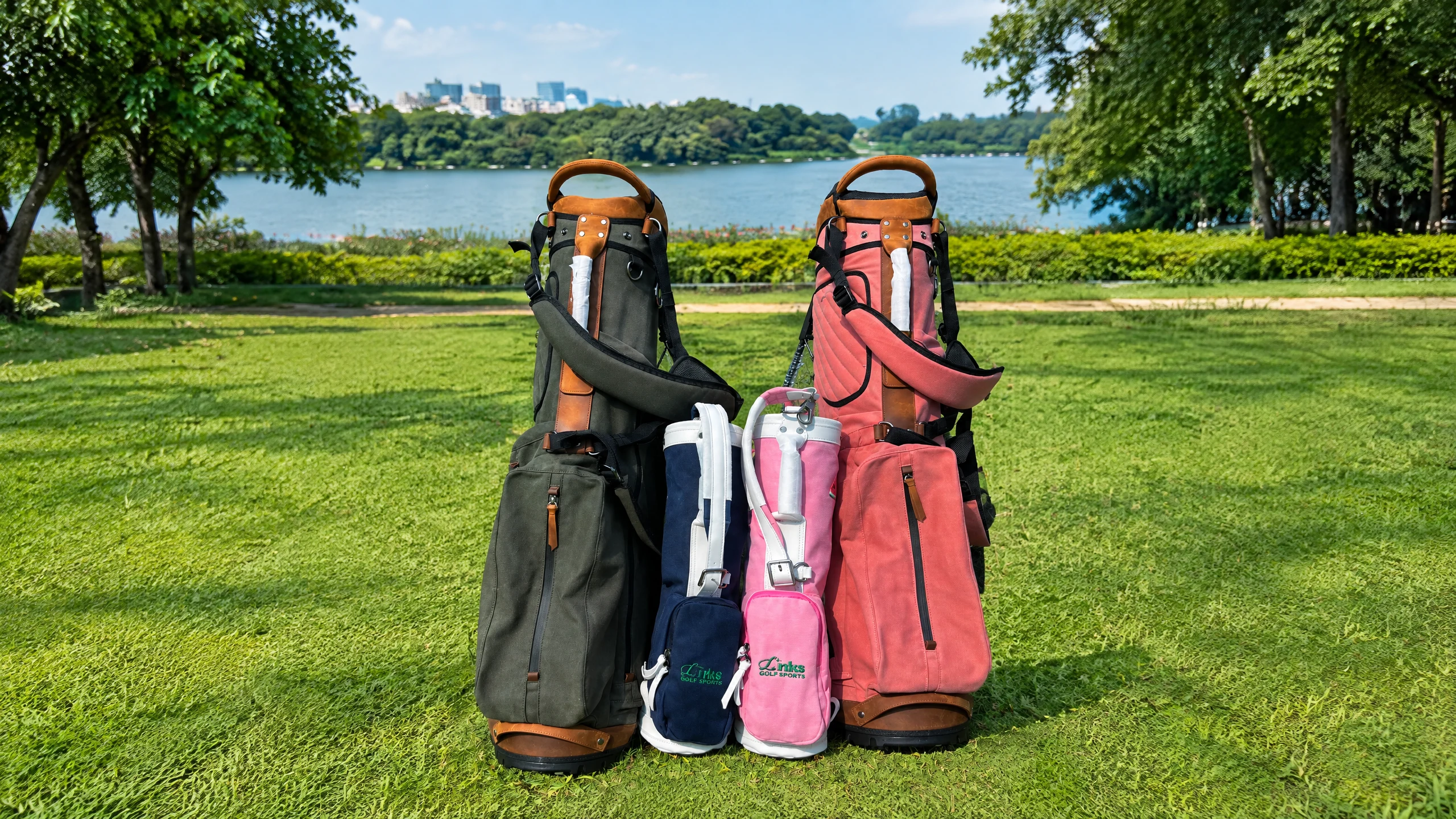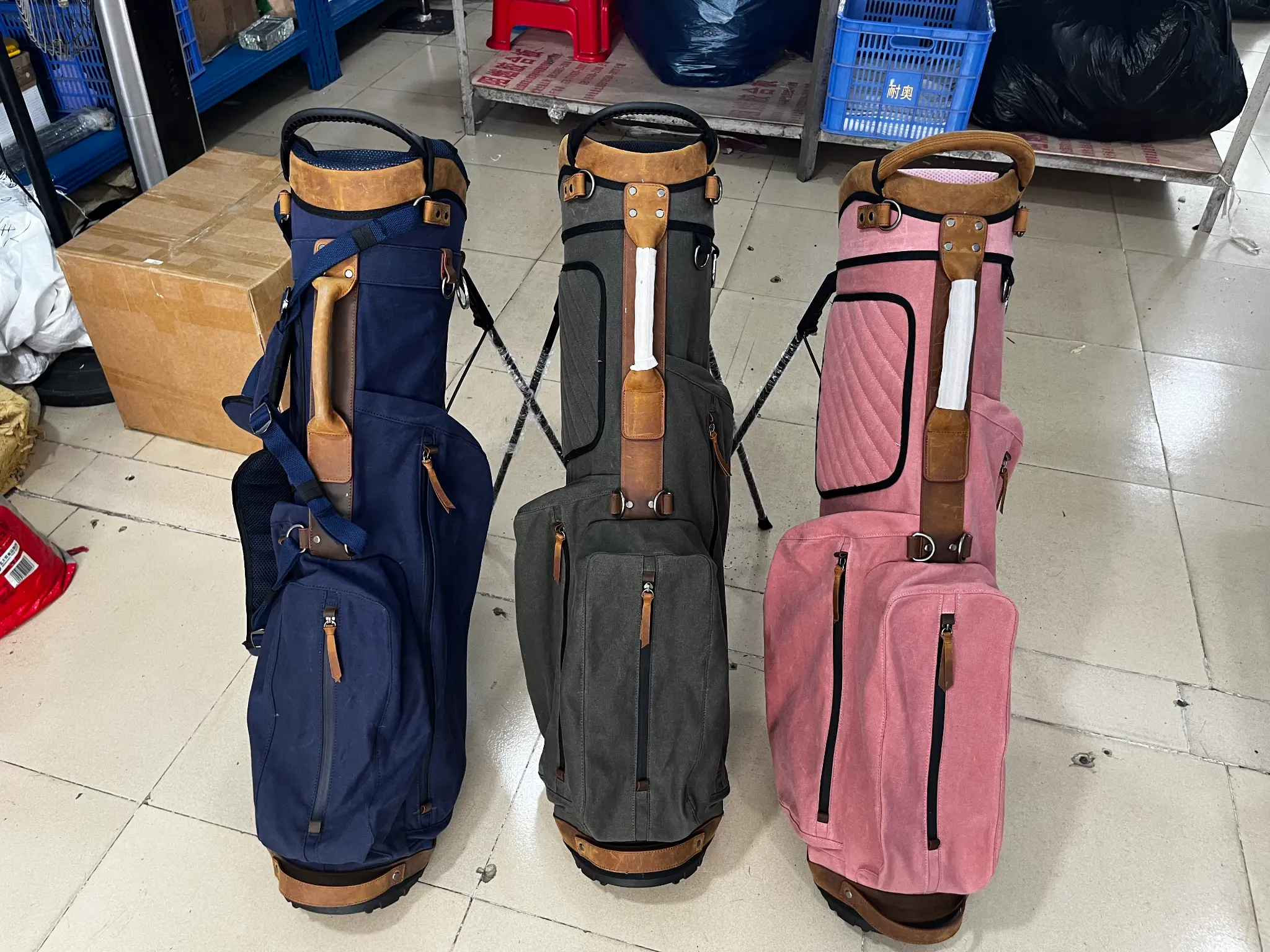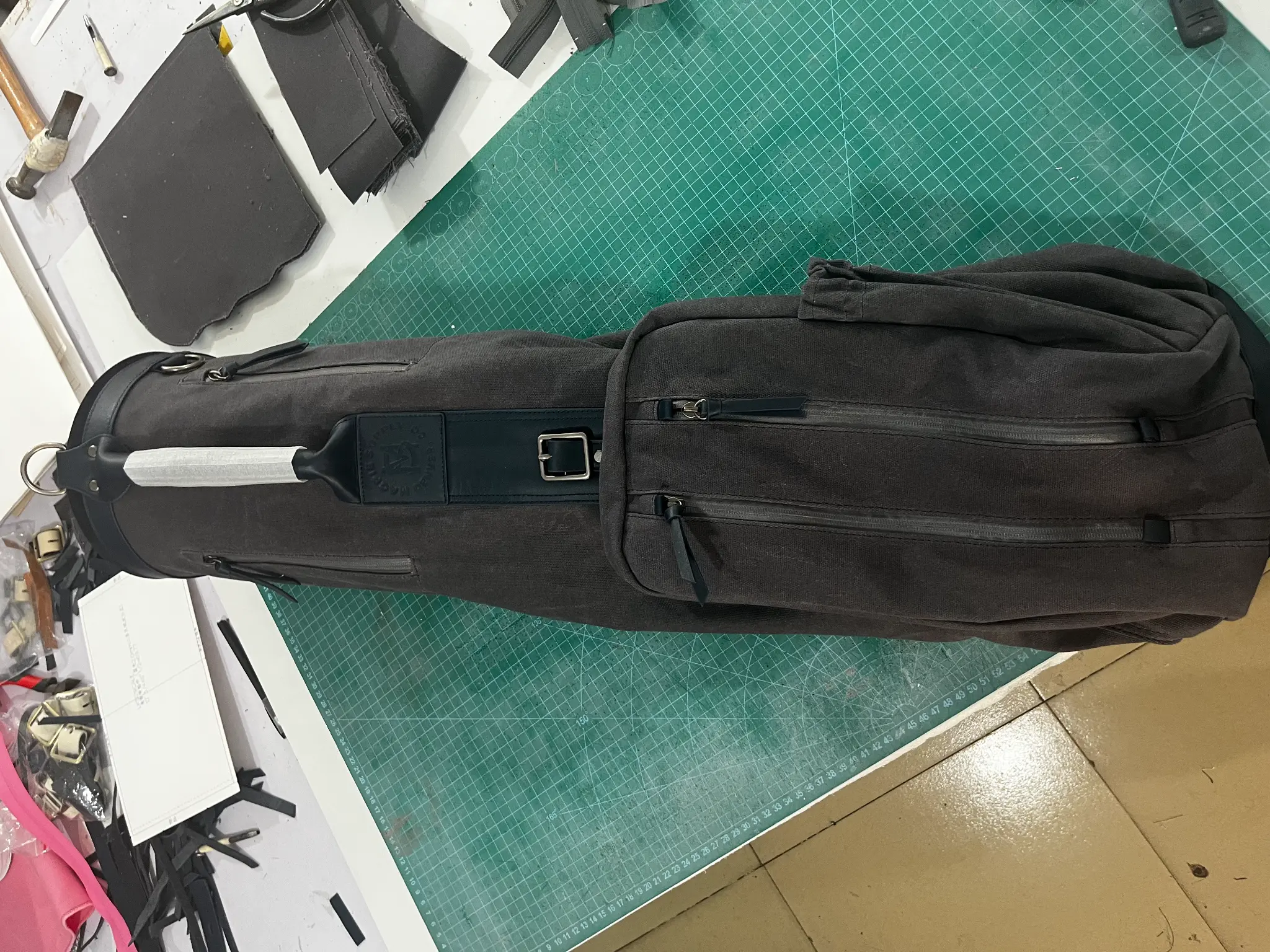
The 15-Minute Field Test: How Buyers Can Compare Custom Golf Bag Samples Before Mass Production
A buyer-led field-test protocol for comparing custom golf bag samples across carry, cart and clubhouse use before a private-label production release.
Links Sports Co
Product Specialist & OEM Consultant · Links Sports Co
10+ years in golf & tennis bag manufacturing. Specialises in OEM/ODM custom branding, material sourcing, and B2B wholesale for brands across 30+ countries.

A custom golf bag sample should be tested where it will be carried, loaded and handled—not only inspected on a showroom table. In roughly 15 focused minutes, a buyer can compare two proposed versions across carry, cart and clubhouse use, document what changed and return a concise revision brief before mass production is approved.
That is the purpose of a custom golf bag sample testing checklist. It is not a promise that one test proves durability or long-term performance. It is a repeatable way for a club buyer, private-label brand or procurement manager to notice the practical details that product photos cannot settle: how the bag balances, which pockets stay reachable, how the logo reads outdoors and whether the material choices support the intended customer experience.
The best time to run the test is after the first physical sample arrives and before the final production specification is released.
Why a showroom inspection is not enough
A golf bag may look excellent when empty and upright. The questions change once it is picked up, placed on a trolley or set beside a clubhouse table. Shoulder movement affects strap comfort. A cart strap can cross a pocket. A zipper may be easy to see but awkward to reach. A crest that feels balanced indoors may look too small or too dominant in daylight.
Those are not reasons to reject a sample automatically. They are reasons to create a practical record before the buying team gives feedback.
A private-label golf bag field test helps replace vague comments—“the bag feels off” or “the pocket seems small”—with observations that a development team can interpret. For example:
- “With a representative carry load, the upper strap attachment sits closer to the neck than expected; please review attachment position or padding direction.”
- “When mounted on the club trolley, the front valuables pocket is partly covered by the strap; test a pass-through or revise pocket placement.”
- “The embroidery reads cleanly at normal distance outdoors, but the thread contrast is too low against the final fabric colour; share one higher-contrast thread option.”
That level of feedback gives a factory team something actionable without claiming that a short review can replace a full quality programme.
What to prepare before the 15-minute test
Keep the setup simple and use representative items rather than trying to recreate every playing condition. The purpose is comparison, not spectacle.
| Prepare | Why it helps |
|---|---|
| The current sample and, if available, the previous or alternative sample | Lets the team compare a specific change rather than relying on memory. |
| A representative set of clubs or a realistic substitute load | Shows how the bag sits and opens under the intended use. |
| Basic course items: balls, water bottle, glove, light layer, phone case and towel | Tests the proposed storage zones with ordinary objects. |
| A club trolley or cart where relevant | Reveals access and strap interactions that cannot be seen on a flat floor. |
| Approved artwork reference and colour swatches | Keeps logo and material feedback connected to the agreed brand direction. |
| One evaluation card and one decision owner | Prevents scattered, contradictory comments after the review. |
Before starting, decide which questions matter most. A premium walking Sunday bag and a cart-oriented bag should not be judged by exactly the same criteria. The buyer should set priorities from the intended user and use case first.
For a custom programme, begin by looking at the applicable golf bag direction in our golf bag collection, then turn the selected silhouette into a brief rather than assuming a catalogue image resolves every design decision.
The 15-minute field test, step by step
The timing below is intentionally short. A compact, repeatable review is more likely to happen than a complicated protocol that is postponed until the production deadline is close.
Minutes 0–3: Visual and identity check
Place the sample where the team can see it from several angles. Look at it empty first, then with the representative load nearby.
Check the following:
- Is the overall silhouette consistent with the agreed bag category and member use?
- Do body material, trim, webbing, zipper tape and hardware look intentional together?
- Is the logo clear, correctly placed and proportionate to the panel?
- Are there any visible puckers, uneven edges, colour mismatches or components that need clarification?
- Does the bag still look balanced from the side and rear, not only from the front photo angle?
Avoid approving a logo only from a digital rendering. If embroidery, print or patch details are part of the programme, inspect the actual application in daylight and near the seams or pockets it must coexist with.
Minutes 3–7: Carry and walking check
Load the bag with representative clubs and essentials. Lift it from the normal handle, put the strap on as a player would and walk a short, safe distance.
Observe rather than assume:
- Does the bag feel balanced in the intended carry orientation?
- Is the shoulder strap length appropriate for the likely user group?
- Are attachment points, padding and adjustment hardware positioned where the design intended?
- Do the most frequently used pockets remain accessible while the bag is carried?
- Does the stand, base or lower structure sit as expected on a typical grass or hard surface?
Record what happened, not what a specification was meant to achieve. “The strap slipped when the sample was loaded” is more useful than “strap needs improvement.” Add the load used and the carry context so the feedback has a clear frame.
Minutes 7–11: Cart or trolley access check
If the bag may be used on a cart or trolley, mount it according to the facility’s normal method. This is often where a buyer discovers whether the storage layout supports the actual round.
Test the sequence a player will repeat: secure the bag, open the valuables or ball pocket, reach for water, replace an item and remove the bag again.
| Observation area | Review prompt |
|---|---|
| Strap interaction | Does the securing strap cover a pocket, zipper pull or logo placement? |
| Pocket access | Can a player retrieve small essentials without loosening the bag? |
| Stability | Does the bag sit in the expected orientation during the test? |
| Club removal | Is the top opening straightforward to use once the bag is mounted? |
| Visual presentation | Does the club logo remain presentable when the bag is on the trolley? |
A cart-access observation does not prove compatibility with every cart model. It gives the buyer a concrete input for the specific carts or trolleys the target club or customer actually uses.
Minutes 11–13: Clubhouse and handling check
The clubhouse moment matters because a premium bag is also handled before and after a round. Put the sample beside a locker, bench or café table. Open the key pockets with the bag upright. Pick it up from its top handle. Set it down again.
Ask whether the bag feels coherent in a social, retail or hospitality setting. This is where small material and finish choices often become clearer: the smoothness of a zipper pull, the way leather-look trim frames a canvas body, the position of a crest or the amount of visual noise from too many contrast details.
This step is especially valuable for custom golf bags for clubs that are intended as pro-shop merchandise or member gifts. The item should feel considered both on the course and in the spaces where members first encounter it.
Minutes 13–15: Decision and revision card
Finish the review by assigning one decision to each observation. Do not turn every comment into a revision. Separate the list into three categories:
| Decision type | Meaning | Example response |
|---|---|---|
| Approve | The detail meets the agreed use and visual intent. | Keep the current front-pocket layout. |
| Revise before production | The detail conflicts with a stated priority. | Move the logo away from the seam or adjust a pocket opening. |
| Hold for a later version | The idea may add value but is not necessary for this release. | Explore a second colourway or accessory after the initial programme. |
A small decision card keeps the approval discussion grounded. It also prevents a team from reopening every original design choice when only one or two details need attention.
A simple sample comparison scorecard
The following scorecard is not a universal quality standard. It is a way to make two samples easier to compare against the buying team’s own priorities. Use a 1–5 observation score, then add a one-sentence note explaining what the number means.
| Review area | Weight if this is a walking-led bag | Weight if this is cart-led | What to note |
|---|---|---|---|
| Carry balance and strap handling | High | Medium | How the bag felt with the representative load |
| Cart or trolley pocket access | Medium | High | Which access point was blocked or easy to reach |
| Material and brand harmony | High | High | How body, trim, logo and hardware read together |
| Pocket layout | High | High | Whether intended items had a clear, accessible home |
| Clubhouse handling | Medium | Medium | How the top handle, zips and silhouette performed off-course |
Weights should reflect the intended product. A buyer does not need to convert the card into a claim about performance. Its value is in making the approval decision traceable: the team can explain why one sample was selected and what the next revision must address.
Turn field observations into a factory-ready revision brief
A revision brief is most effective when it describes one detail, one context and one requested action. Avoid sending a gallery of photos without labels or a long collection of opinions from separate reviewers.
A useful comment format is:
Area: Front valuables pocket
Context: Sample mounted on the club trolley used for review
Observation: Securing strap covers the zipper pull
Requested review: Assess a pass-through or alternate zipper-pull location; provide the proposed solution on the next sample or technical drawing.
Use the same structure for logo position, material contrast, carry strap adjustment, pocket access and hardware. Where possible, mark the photo with a simple arrow and attach the exact approved artwork or colour reference. The goal is not to tell the factory how to engineer every part. The goal is to leave no doubt about what the buyer saw and what needs to be reviewed.
For teams preparing their first development conversation, our custom golf bag RFQ guide can help organise the broader product brief before the sample stage.
Who should take part in the test?
A compact team is usually stronger than a large committee. The ideal group depends on the programme, but it may include:
- A pro-shop buyer or merchandise manager who understands the customer and retail setting.
- A golf professional, coach or course representative who can describe real course use.
- A marketing or brand representative who confirms artwork and visual standards.
- One final decision owner who consolidates feedback for the factory.
Do not require every stakeholder to attend every minute. If a golf professional can test carry and cart use while a brand representative joins for the identity review, that is often enough. What matters is one combined release note rather than several competing instructions.
The value of a short, repeatable approval habit
A 15-minute field test does not replace material testing, factory inspection or the buyer’s own quality requirements. It does something different: it gives the buyer an intentional moment to use the sample as a product, not just as an object.
That moment can reveal the difference between a bag that looks branded and a bag that supports the intended golfer routine. It also creates a cleaner path to production. The approved sample, final colour references, artwork placement, pocket plan and revision notes become one version of the truth for the next production conversation.
When you are ready to review a proposed design, contact Links Sports Co with the use case, artwork assets and the parts of the sample your team wants to test first.
Frequently Asked Questions
Q: Can a 15-minute test prove that a custom golf bag is durable?
No. A short field test is not a substitute for long-term wear evaluation, material testing or factory quality checks. It is a practical buyer review that helps identify visible, handling and access issues before mass production is approved.
Q: Should buyers test a sample with real golf clubs?
Where practical, use representative clubs or a realistic substitute load. The aim is to understand balance, access and handling in the product’s intended context, not to make a universal performance claim.
Q: What is the most important output from a sample field test?
One consolidated revision and approval record. It should identify what is approved, what must change before production and what can be considered in a later version, with photographs or references where useful.
Q: Do cart bags and walking bags need different sample checks?
Yes. Both should be reviewed for material, logo and pocket details, but walking-led bags deserve closer attention to carry balance and strap handling, while cart-led bags should be mounted on the actual trolley or cart style relevant to the buyer’s programme.
Share this article