
Embroidery Under Load: How to Specify a Golf Bag Logo Panel That Stays Smooth
Learn how to specify custom golf bag logo embroidery that resists puckering. Focus on stabilizer selection, material interaction, and functional panel design.
Links Golf Sports
Product Specialist & OEM Consultant · Links Sports Co
10+ years in golf & tennis bag manufacturing. Specialises in OEM/ODM custom branding, material sourcing, and B2B wholesale for brands across 30+ countries.
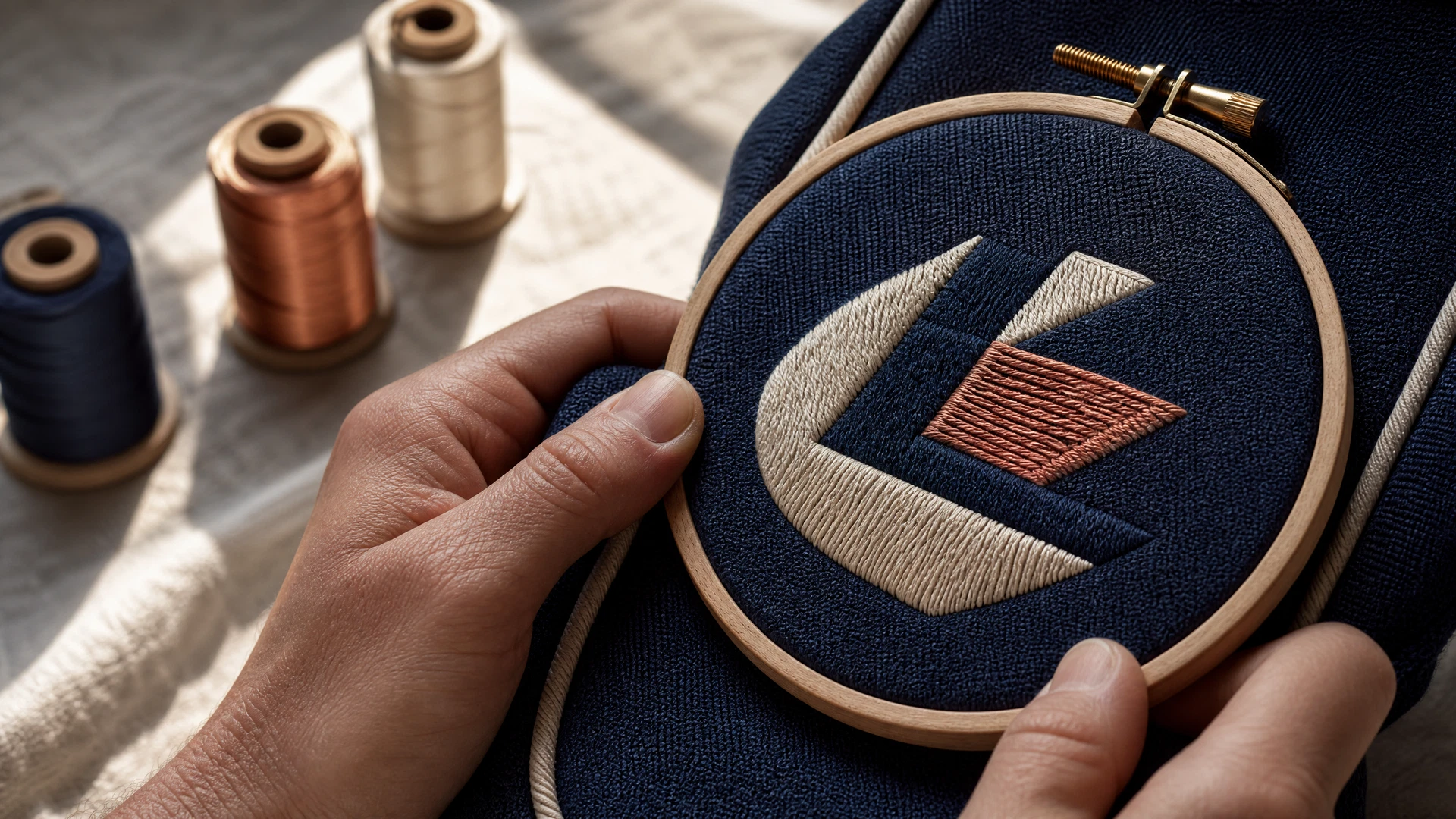
For professional golf equipment buyers, the visual integrity of a custom logo is a primary indicator of product quality. A common challenge in manufacturing custom golf bags is the tendency for embroidered panels to pucker or distort under use. This is especially evident when the bag is secured to a cart, where strap tension pulls against the structural layers. Achieving a smooth finish for custom golf bag logo embroidery requires a strategic approach to material specification rather than relying on generic standards.
A high-quality specification ensures the logo remains flat and legible. This involves understanding how components like base fabric and stabilization layers interact under load. By focusing on a procurement framework emphasizing sample validation, sourcing teams can avoid registration errors and surface distortion.
Stabilization and Structural Integrity
The foundation of successful embroidery is the selection of appropriate stabilization materials. Stabilizers prevent fabric from moving, puckering, or stretching during the embroidery process. According to OESD, stabilizer choice must be calibrated based on base fabric, design density, and hooping methods.
Procurement teams should avoid assuming a standard backing works for all materials. A heavy synthetic fabric may require a different stabilization approach than a softer material. If stabilization is insufficient for the stitch density, the result is often visible puckering or small holes. It is suggested that procurement teams confirm the compatibility of the stabilizer and base fabric on a physical sample, looking for registration issues where multi-colored elements fail to align.
Beyond internal stabilization, the external pressure from cart straps must be considered. Modern bags include a cart strap pass-through or channel to keep pockets accessible while fastened to a cart. This design allows the strap to slide behind the pocket, minimizing interference. From a customization perspective, the logo location relative to these high-tension zones is critical. If a panel is placed near a strap channel without adequate support, the mechanical stress can cause rippling. Sourcing teams should evaluate how the panel behaves when the bag is fully loaded and strapped into a cart, ensuring the internal structure distributes pressure without transferring tension to the threads.
Color Management and Material Interaction
Managing color across different materials is another critical aspect of the specification process. The visual appearance of a color can change depending on whether it is applied to a textile, leather, or synthetic accessory. As noted by Pantone, it is essential to distinguish between the Pantone Matching System (PMS) for graphics and the Fashion, Home + Interiors (FHI) system for textiles.
The logo's color, position, and the specific material must be confirmed together. A color that looks correct on a digital proof may appear different when rendered in embroidery thread on textured nylon. Procurement teams should request strike-offs—actual embroidered samples on production fabric—to verify color representation. This is vital for brand consistency, especially when matching logos with other components like zippers or piping that may use different materials.
Procurement Verification Framework
To ensure a professional finish, procurement teams should follow a structured verification framework during the sampling phase. This framework moves beyond technical data and focuses on the physical interaction of the bag components.
| Evaluation Factor | Impact on Logo Quality | Suggested Verification Point |
|---|---|---|
| Fabric Interaction | Determines how the needle penetrates the surface. | Review sample for fabric "pull" around dense stitch areas. |
| Stabilizer Type | Prevents the logo from warping after hooping. | Check for flatness after the panel is released from tension. |
| Stitch Density | Affects the hand-feel and flexibility of the panel. | Assess if the panel becomes too rigid or prone to cracking. |
| Color System | Ensures brand consistency across components. | Compare physical strike-offs against PMS or FHI standards. |
The following checklist should be used to audit physical samples:
- Visual Registration Audit: Inspect for gaps between colors that suggest fabric shift.
- Tension Simulation: Apply manual pressure to simulate a cart strap; observe for puckering.
- Material Synergy Review: Confirm the stabilizer does not create an excessively stiff "patch" feeling.
- Lighting Consistency Check: Evaluate the logo under multiple lighting conditions.
- Functional Access Test: Verify the embroidery does not obstruct the cart strap channel.
Frequently Asked Questions and Conclusion
Why does embroidery look wavy after removal from packaging? This often results from a mismatch between embroidery density and the stabilizer. If the stabilizer is too weak, the fabric contracts once the hoop tension is released. It is recommended to review the hooping method and stabilizer type with the manufacturer using a production-grade sample.
Should we use PMS or FHI color codes for embroidery? While PMS is standard for corporate branding, the FHI system is often more accurate for textiles. Procurement teams should work with suppliers to identify which system provides the best match for the specific threads and fabrics used.
How can we prevent the cart strap from damaging the logo? The best defense is a well-designed cart strap channel that allows the strap to pass behind the logo panel. If the logo must be in a high-contact area, confirm on a physical cart that the strap does not rub directly against the embroidery.
In conclusion, specifying custom golf bag logo embroidery extends beyond artwork submission. By focusing on stabilization, cart compatibility, and material-color interaction, procurement teams can ensure a high-quality result. Success lies in a rigorous sampling process where every decision is verified against real-world conditions. Rather than following rigid formulas, teams should adopt a flexible framework that prioritizes physical testing to achieve a professional finish that stands up to the rigors of the game.
Share this article


