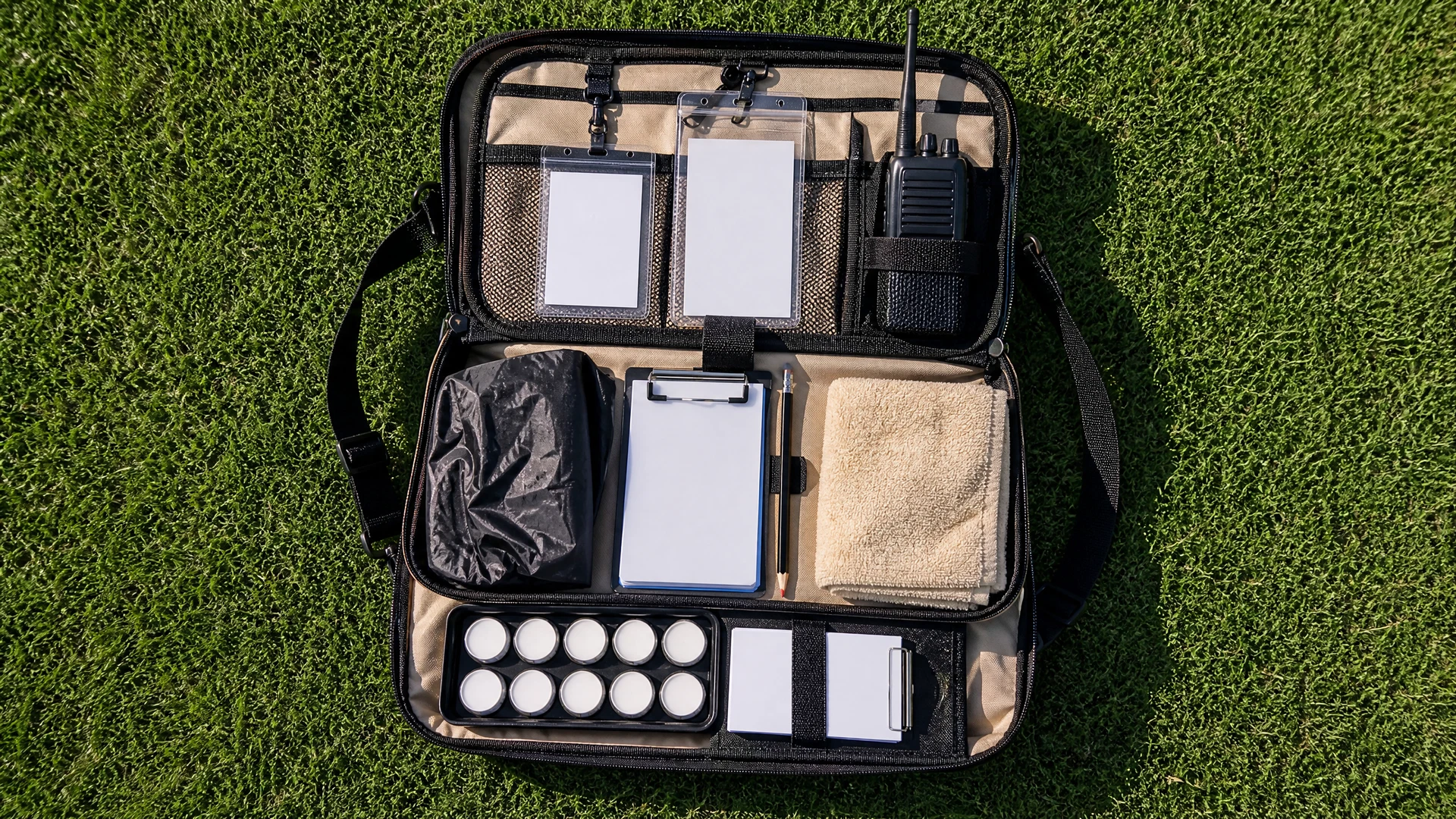
The Golf Event Bag Brief: How Tournament Operators Can Plan a Sponsor-Ready Kit Without Overordering
Learn how to plan a modular golf tournament gift bag program that integrates sponsors seamlessly while avoiding overordering through technical branding precision.
Links Golf Sports
Product Specialist & OEM Consultant · Links Sports Co
10+ years in golf & tennis bag manufacturing. Specialises in OEM/ODM custom branding, material sourcing, and B2B wholesale for brands across 30+ countries.

Organizing a successful tournament involves balancing logistics with the player experience. One of the most visible touchpoints is the golf tournament gift bag program. A well-executed gift bag serves as a tangible extension of the event's brand and a primary vehicle for sponsor integration. For tournament operators, the challenge lies in creating a kit that feels premium without succumbing to overordering or logistical misalignment. By shifting to a modular planning framework, organizers can ensure that every item delivered serves a specific functional or promotional purpose.
The Four Pillars of Modular Kit Planning
Effective planning for a tournament gift bag program requires a multi-dimensional approach. A comprehensive strategy should be built upon four critical dimensions: timeline management, activity-based budgeting, packaging selection, and sponsor integration. Each of these pillars must be addressed to avoid waste and last-minute stress, as detailed in the BirdieBox tournament planning guide.
The timeline is crucial, as it dictates the feasibility of custom branding. A modular approach allows operators to set firm cutoff dates for sponsor commitments, ensuring that branding requirements do not delay production. Budgeting should also be modular, segmented by activity or player tier. For instance, a pro-am participant might receive a different kit than a corporate guest, allowing for efficient resource allocation. Packaging should not be an afterthought; the choice between a reusable tote, a drawstring bag, or a premium box affects the initial presentation and long-term utility. Finally, sponsor integration must be woven into the planning phase, ensuring logos are placed prominently yet tastefully.
Branding Precision: From Embroidery to Color Management
The technical execution of a sponsor's logo is where the perceived value of the gift bag is solidified. For items requiring embroidery, such as headwear or premium bags, the choice of stabilizing materials is a critical factor that procurement teams must verify with manufacturing partners. Embroidery stability depends on the relationship between the fabric, design density, and hooping method. Without the appropriate stabilizer, the final product may suffer from puckering or misaligned elements. It is suggested that procurement teams request physical samples to confirm that stabilization is adequate for the specific fabric and logo complexity of the event.
Color management presents another layer of complexity. A single color code will not appear identical across all materials. The physical properties of the substrate—whether synthetic fabric, leather, or a hard-shell accessory—will significantly alter the visual presentation of a color. To maintain brand integrity, it is essential to distinguish between color systems. The Pantone Matching System (PMS) is typically used for graphic and printing applications, whereas the Fashion, Home + Interiors (FHI) system is designed for textiles, leather, and accessories, according to the Pantone color systems guide. Tournament operators should work closely with sponsors to confirm the correct color system, placement, and material compatibility for every branded item.
Operational Logistics and On-Course Functionality
The success of a gift bag program is also measured by how well items function during the tournament. For events where players use motorized carts, the bag design must account for physical logistics. A key feature is the cart-strap channel, designed to allow the cart's security strap to pass behind the bag's pockets. This ensures that even when the bag is secured, all pockets remain accessible to the player. Operators should verify the compatibility of bag selections with the specific cart models used at the venue to ensure a seamless experience.
Beyond the bag, tournament operations involve coordinating services like caddie registration and equipment distribution. These services are responsible for guiding caddies through registration and ensuring that necessary information and equipment are distributed efficiently. The gift bag program must be integrated into this logistical flow, with designated distribution points that do not interfere with practice areas or player registration. By aligning the distribution strategy with broader tournament operations, organizers can avoid bottlenecks and ensure that every player receives their kit professionally.
Strategic Allocation by Event Type
| Event Type | Primary Focus | Suggested Kit Components | Branding Emphasis |
|---|---|---|---|
| Corporate | Networking | Headwear, pouch | Subtle placement |
| Pro-Am | Visibility | Stand bag, towel | Multi-sponsor |
| Member-Guest | Exclusivity | Leather, tech | Personalized |
| Junior | Function | Carry bag | Bold graphics |
Procurement Checklist
- Confirm Branding Specs: Identify whether PMS or FHI systems are required and confirm logo placement.
- Verify Embroidery: Request physical samples to check for puckering or alignment issues.
- Assess Cart Compatibility: Verify that strap channels allow pocket access on specific cart models.
- Audit Distribution: Coordinate registration and distribution points with caddie workflows.
- Review Packaging: Ensure packaging is suitable for the weight and volume of kit components.
- Establish Cutoffs: Set firm dates for sponsor logo submissions to prevent production delays.
Frequently Asked Questions
How do we ensure logo consistency across items? Consistency is achieved by using the appropriate color system for the material. Use PMS for printed items and FHI for textiles. It is suggested that procurement teams confirm the final color appearance on a material sample before proceeding with full production.
What causes embroidery distortion? Distortion, such as puckering or misaligned stitches, is often caused by inadequate stabilization. The stabilizer must be matched to the fabric and design density. Teams should verify the hooping and stabilization methods used for each specific item.
Why is the cart-strap channel important? It allows the cart strap to pass behind pockets, keeping them accessible while mounted. This prevents players from having to loosen the strap every time they need to access their gear. It is suggested to confirm this functionality on the actual carts used.
Conclusion
Planning a golf tournament gift bag program is a strategic exercise that requires balancing sponsor expectations with operational realities. By adopting a modular planning framework that prioritizes technical precision in branding and functional logistics on the course, tournament operators can deliver a premium experience that reflects the prestige of their event. The key to success lies in early coordination, rigorous verification of samples, and a clear understanding of technical requirements. Through careful planning and a focus on quality over quantity, organizers can ensure that their sponsor-ready kits leave a lasting impression on every participant.
Share this article