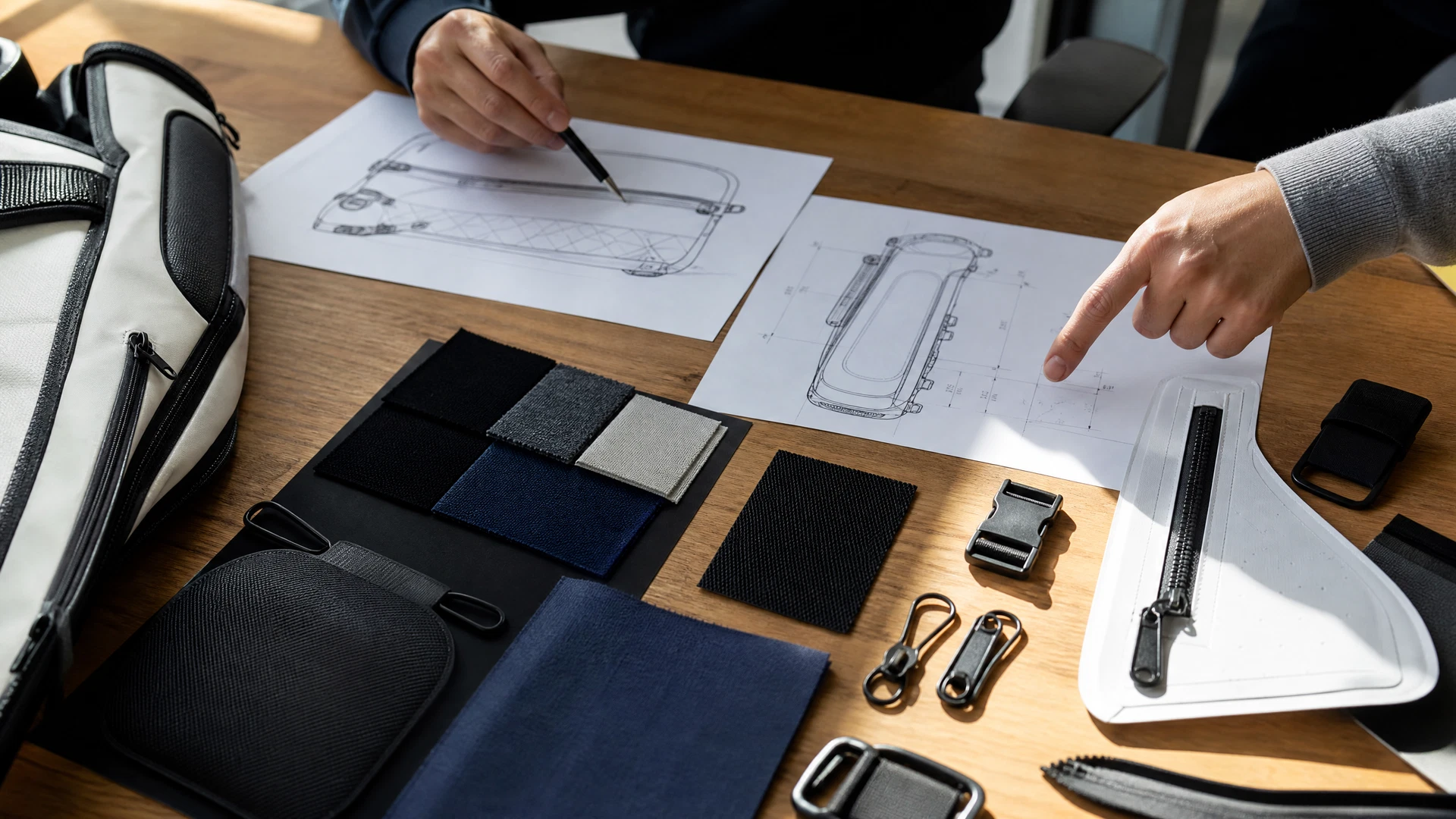
The Caddie-Yard Operations Bag: A Functional Product Brief for Tournament Weeks
A functional product brief for golf tournament caddie operations bags, focusing on registration, distribution, and practice-area mobility for procurement teams.
Links Golf Sports
Product Specialist & OEM Consultant · Links Sports Co
10+ years in golf & tennis bag manufacturing. Specialises in OEM/ODM custom branding, material sourcing, and B2B wholesale for brands across 30+ countries.
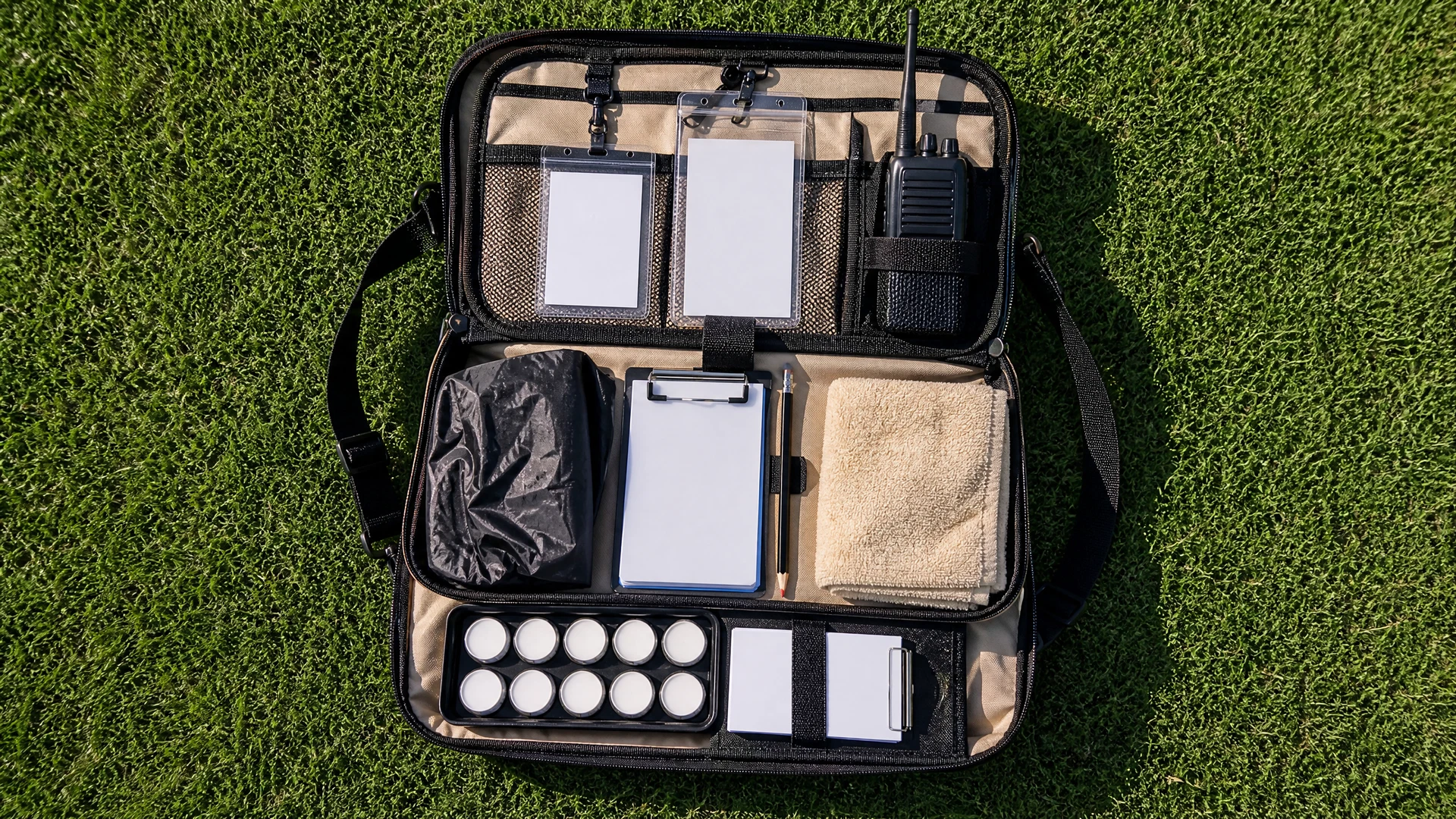
As the primary hub for player-caddie coordination, the caddie yard requires specialized equipment that bridges the gap between static registration desks and high-mobility on-course support. The caddie-yard operations bag is a functional tool designed to facilitate the rapid distribution of equipment, the management of player information, and the seamless movement of supplies across the practice facility. Developing a product brief for such an item requires understanding the operational boundaries defined by tournament committees and the technical limitations of modern textile manufacturing.
Operational Scope and Distribution Logistics
According to USGA organizational frameworks, caddie services are primarily responsible for guiding caddies through the registration process, which involves the dissemination of vital information and the distribution of official equipment. This phase requires a bag that can organize diverse items—ranging from bibs and yardage books to communications devices—while remaining accessible in a crowded environment. Staff members are also tasked with on-course distribution and providing support within practice areas, necessitating a bag that can transition from a stationary registration point to a mobile cart or a walking official without compromising the integrity of its contents.
Effective tournament planning treats the operations bag as part of a larger logistical ecosystem, where the choice of packaging and the method of distribution are just as critical as the bag’s physical features. For procurement teams, the product brief must be flexible enough to accommodate varying budget tiers while ensuring the final product can handle the high-volume environment of a championship week.
Design Elements for Mobility and Brand Integrity
One of the most critical functional features, as seen in professional designs by PING, is the integration of a cart-strap channel. The primary purpose of this design element is to ensure the bag remains secure when mounted on a motorized cart while allowing the user to access all external pockets without interference. By providing a dedicated pathway for the cart’s securing strap to pass behind the pocket structure, the bag maintains its utility even under the tension of a tightened belt. It is recommended that procurement teams verify the specific geometry of this channel against the actual carts used during the tournament to ensure the strap does not obstruct zippers or compression straps.
The success of machine embroidery is a balance between the base fabric, the design density, and the selection of stabilizer materials. Stabilizers are essential for preventing the fabric from shifting, puckering, or stretching during the high-speed stitching process. The specific type of stabilizer—whether tear-away, cut-away, or water-soluble—must be confirmed based on the weight of the chosen textile and the intricate details of the tournament logo. The management of color across different materials is also a significant challenge. While the Pantone Matching System (PMS) is the standard for graphic printing, the Fashion, Home + Interiors (FHI) system is often more appropriate for textiles and soft goods. Procurement teams should work closely with manufacturers to confirm that the chosen color codes are accurately translated across all material types, ensuring the sponsor’s identity remains uniform regardless of the surface texture or lighting conditions at the venue.
Functional Comparison of Operational Bag Features
| Operational Duty | Functional Requirement | Procurement Verification Point |
|---|---|---|
| Caddie Registration | Multi-compartment organization. | Confirm pocket depth for yardage books. |
| Equipment Distribution | Rapid-access openings. | Test zipper smoothness under load. |
| Practice Area Support | Stability on uneven turf. | Evaluate base structure on range grass. |
| On-Course Mobility | Cart-strap pass-through. | Verify strap clearance on cart models. |
Procurement Framework and Verification
Rather than relying on generic specifications, teams should adopt a framework that emphasizes practical testing and material validation. This ensures the bag meets the aesthetic requirements of the event and stands up to the rigors of a multi-day operation.
Procurement Checklist for Tournament Operations Bags
- Mobility Verification: Confirm cart-strap channel allows pocket access when secured.
- Material Compatibility: Request swatch test for embroidery tension on base fabric.
- Color Calibration: Cross-reference logos between PMS and FHI systems.
- Structural Integrity: Evaluate stability when fully loaded with registration materials.
- Operational Flow: Verify internal layout accommodates tournament equipment like radios.
- Sponsor Integration: Confirm branding placement does not interfere with functional handles.
Frequently Asked Questions and Conclusion
How does the choice of stabilizer affect the longevity of the bag’s branding? Stabilizers prevent fabric distortion during embroidery. Choosing the correct stabilizer is essential for maintaining logo crispness and preventing puckering over time.
Why is it necessary to use different color systems for the same logo? Different materials reflect light uniquely. Using the FHI system for textiles and the PMS system for hard components ensures a consistent visual result across the product.
Can the cart-strap channel be used on any type of tournament vehicle? While the channel facilitates secure mounting, strap placement varies. It is recommended to confirm compatibility with the specific fleet deployed.
By focusing on the verified operational needs of registration and distribution, and by applying a rigorous framework for material and color validation, procurement teams can ensure their equipment supports a seamless tournament experience. Success in this category is not defined by following generic industry standards, but by the careful confirmation of every design element against the actual conditions of the caddie yard.
Share this article