Beyond 'Water-Resistant': Golf & Tennis Bag Specification
Explore professional specifications for golf and tennis bags, comparing face-fabric tests like ISO 811 with finished-bag performance and component durability.
Links Golf Sports
Product Specialist & OEM Consultant · Links Sports Co
10+ years in golf & tennis bag manufacturing. Specialises in OEM/ODM custom branding, material sourcing, and B2B wholesale for brands across 30+ countries.
Quick Answer
What is the difference between face-fabric laboratory testing and finished sports bag water resistance? While laboratory methods like ISO 811 measure raw textile resistance to water penetration under hydrostatic pressure, a finished golf or tennis bag relies heavily on assembly techniques such as seam sealing, zipper construction, and molded base design. Buyers specifying sports equipment must ensure that laboratory fabric ratings are validated against fully constructed bag prototypes rather than raw material specifications alone.
The Rising Demand for Durable Sports Equipment Protection
Participation in racquet and club sports continues to expand across major markets. According to data published by USTA 2025, total US tennis participation reached 27.3 million players, representing an increase of 1.6 million players year-over-year, alongside 14.5 million core players, over 616 million play occasions, and 4.9 million first-time players. Similarly, golf engagement has experienced sustained expansion. Figures reported by NGF 2025 indicate that total golf participants surpassed 48 million, including 29.1 million green-grass golfers, with total participation recording a 41 percent increase between 2019 and 2025.
This growing participant base demands high-performance gear that withstands rigorous outdoor environments. Procurement professionals developing a golf bag weather resistance specification or a tennis bag waterproof testing protocol frequently encounter discrepancies between raw fabric claims and field performance. Furthermore, upcoming regulatory frameworks such as the European Commission guidelines highlight textile apparel as a priority product group in the ESPR Working Plan 2025–2030, where Digital Product Passports (DPP) may cover product identification, characteristics, fibre composition, use, repair, maintenance, end-of-life recycling, origin, and economic operators, pending final delegated acts European Commission. Consequently, establishing rigorous evaluation standards is essential for brand credibility and compliance.
Face-Fabric Testing vs. Finished-Bag Performance
A common pitfall in sports bag procurement is assuming that raw material test metrics translate directly to finished goods. Procurement teams must understand how standardized laboratory procedures operate and where their limitations lie when applied to complex assembled structures.
Understanding ISO 811 and AATCC 127
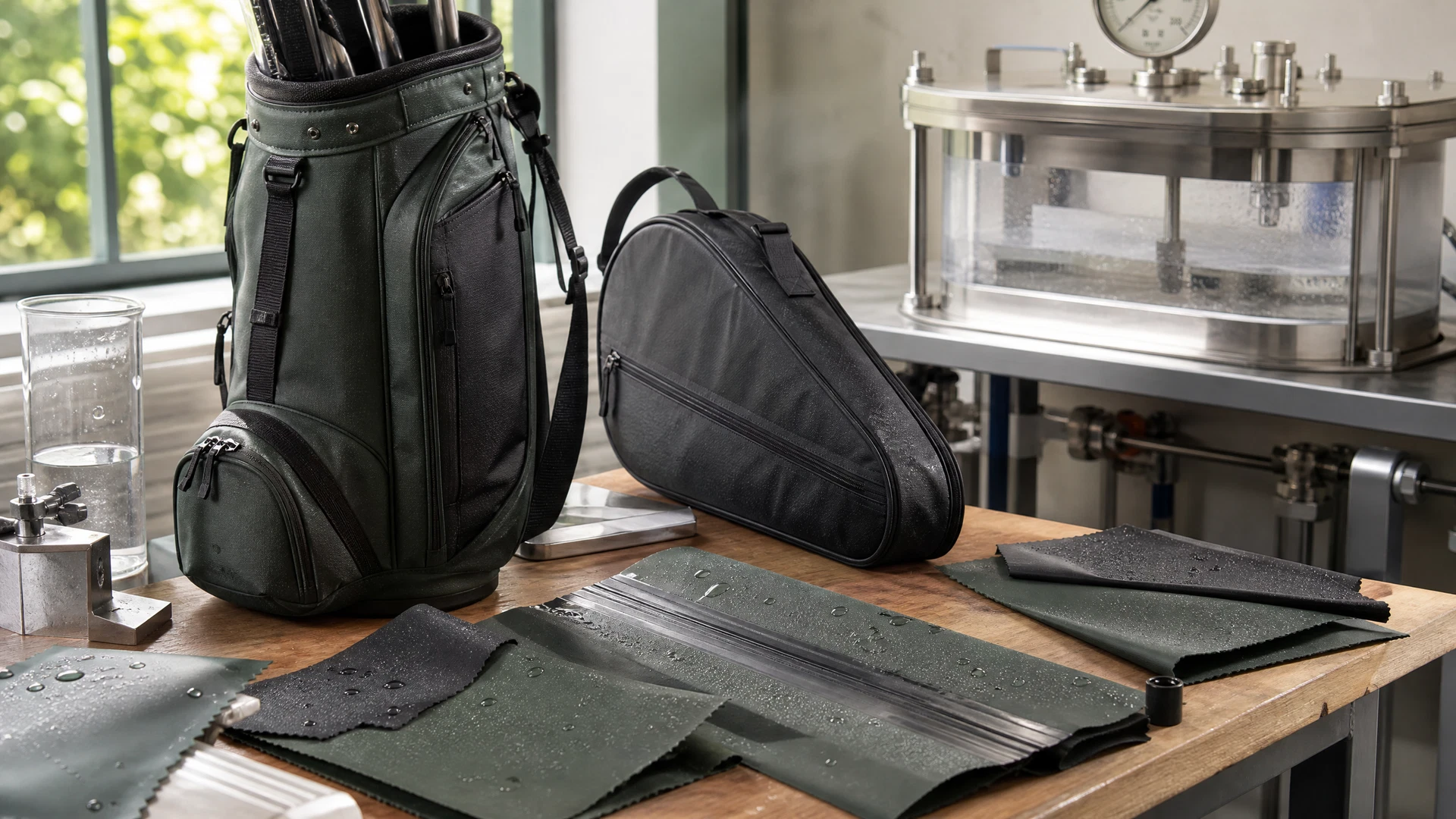
The evaluation of weather-resistant textiles typically relies on standardized hydrostatic pressure tests. The ISO 811 standard specifies a hydrostatic pressure method to determine fabric resistance to water penetration by subjecting a clamped textile specimen to increasing water pressure until leakage occurs. Similarly, the AATCC 127 water penetration test evaluates hydrostatic pressure resistance under standardized laboratory conditions.
However, these tests isolate the flat textile substrate under controlled tension. They do not account for mechanical stress, needle holes, hardware attachment, or seam junction distortion encountered during manufacturing. Therefore, a buyer should agree, test, and validate with the supplier how raw fabric test reports correlate with assembled sub-assemblies.
Why Fabric Rating Differs from Assembled Gear
When a textile is cut, stitched, and shaped into a bag, its structural integrity changes. Needle penetrations puncture the fabric membrane, creating potential pathways for moisture ingress unless properly addressed. Furthermore, hardware integration, strapping reinforcement, and zipper attachment points introduce localized stress concentrations. A fabric that performs exceptionally well in an ISO 811 hydrostatic head test can still allow moisture penetration if the finished construction omits critical secondary defenses. Therefore, the buyer should agree, test, and validate with the supplier that prototype testing encompasses completed structural configurations under simulated environmental conditions.
Critical Component Specifications: Seams, Zippers, and Bases
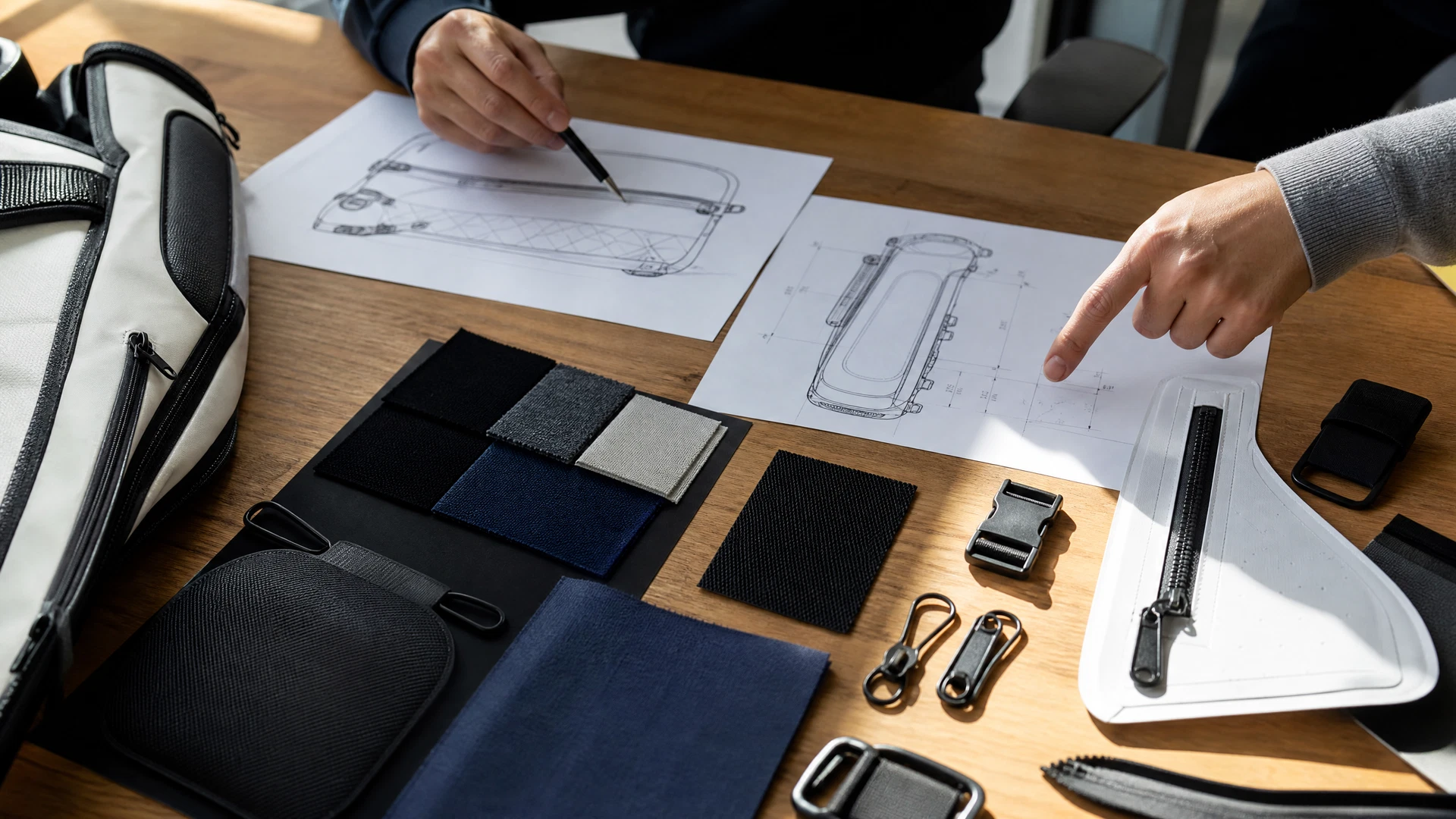
Achieving robust protection against moisture and environmental wear requires careful specification of structural sub-components. Procurement teams must look beyond the primary shell fabric and evaluate how seams, entry points, and load-bearing bases are engineered.
| Component Area | Primary Specification Focus | Procurement Validation Requirement |
|---|---|---|
| Seam Sealing | Application of waterproof tape, welded bonding, or high-frequency welding to needle lines | Buyer should agree, test, and validate with supplier on seam tape adhesion strength and hydrostatic integrity across joints. |
| Zippers | Integration of a water-resistant zipper featuring coated tape or protective garage covers | Buyer should agree, test, and validate with supplier regarding tooth engagement, slider durability, and tape sealing performance. |
| Base Design | Implementation of a molded bag base made from rigid, high-density polymer materials | Buyer should agree, test, and validate with supplier on impact resistance, ground moisture barrier properties, and corner stability. |
Seam Sealing and Stitch Integrity
Seams represent the most vulnerable architectural feature in any outdoor sports bag. Even the most advanced weather-resistant fabric fails if needle holes remain exposed. Manufacturers employ various finishing methods, including thermal tape sealing, polyurethane lamination overlay, or ultrasonic welding. When drafting specifications, a buyer should agree, test, and validate with the supplier whether seam constructions withstand dynamic flexing and sustained moisture exposure without delamination or edge fraying.
Water-Resistant Zipper Selection
Zippers serve as primary access points for pockets, apparel compartments, and ball storage. Standard coil or molded zippers allow moisture to pass freely through teeth and tape weaves. Specifying a water-resistant zipper requires careful consideration of polyurethane-coated tape surfaces, reverse-coil configurations, and protective storm flaps or zipper garages. Because performance varies across construction types, a buyer should agree, test, and validate with the supplier on cycle durability, ease of operation under load, and moisture barrier effectiveness.
Molded Bag Base Engineering
Golf and tennis bags frequently rest on wet turf, clay courts, or concrete surfaces. Without adequate ground protection, moisture wicks upward into internal compartments. Incorporating a molded bag base fabricated from durable thermoplastic elastomers or high-density polyethylene provides a rigid physical barrier. Furthermore, molded feet elevate the main fabric body above standing water. A buyer should agree, test, and validate with the supplier that base designs resist cracking under low temperatures and maintain structural rigidity when the bag is fully loaded.
Practical Procurement Checklist for Sports Bag Buyers
To ensure comprehensive quality control and compliance when sourcing technical golf and tennis bags, procurement teams should follow a structured verification workflow.
- Material Verification: Confirm that raw fabric testing certificates align with standardized methods, and ensure the buyer should agree, test, and validate with the supplier on sample lot consistency.
- Construction Inspection: Review prototype sewing layouts, needle gauge sizes, and reinforcement patches to minimize stress tearing at high-tension junctures.
- Seam Evaluation: Inspect finished seam assemblies for uniform tape application, bubble-free bonding, and adequate width coverage across critical load paths.
- Closure Assessment: Evaluate zipper slider alignment, coating durability, and garage protection to ensure reliable weather defense over extended use cycles.
- Base Integrity: Test the rigidity, impact resistance, and water-blocking performance of the molded bottom structure under realistic load conditions.
- Documentation Review: Prepare compliance records anticipating evolving traceability frameworks, ensuring the buyer should agree, test, and validate with the supplier on material provenance.
Frequently Asked Questions (FAQ)
What is the main difference between ISO 811 and finished-bag testing?
ISO 811 measures the hydrostatic pressure resistance of a flat, unprocessed textile specimen in a controlled laboratory setting. Finished-bag testing evaluates the complete assembled product, accounting for structural seams, zipper interfaces, hardware attachments, and mechanical stress points that affect overall weather performance.
Why are seams considered a critical weak point in waterproof bag design?
When fabric panels are stitched together, needle penetrations create microscopic openings in the material. Without proper seam sealing, such as heat-applied waterproof tape or welded bonding, moisture can easily wick through these stitch lines into the internal compartments.
How should procurement teams approach zipper specifications for outdoor sports bags?
Procurement teams should specify coated or reverse-coil construction elements and verify tape integrity. Rather than relying on generic descriptions, a buyer should agree, test, and validate with the supplier regarding cycle testing, tape adhesion, and weather protection under actual operating conditions.
What role does a molded bag base play in gear protection?
A molded bag base lifts the textile body away from wet turf, court surfaces, or puddles while providing a durable physical barrier against abrasion and impact shock, thereby preventing ground moisture from absorbing into stored equipment.
If you are developing a custom golf or tennis bag, contact Links Sports Co to discuss your brief.
Share this article