Designing Junior Tennis Tournament Bags for 2026 Procurement
Learn how B2B buyers translate youth tennis participation data into testable design briefs for tournament bags, focusing on ergonomics and compliance.
Links Golf Sports
Product Specialist & OEM Consultant · Links Sports Co
10+ years in golf & tennis bag manufacturing. Specialises in OEM/ODM custom branding, material sourcing, and B2B wholesale for brands across 30+ countries.
Quick Answer
For B2B sports equipment buyers and procurement managers, translating macro participation figures into actionable product specifications is essential when sourcing tournament gear. Based on data from the United States Tennis Association in USTA 2025, total U.S. tennis participation reached 27.3 million players with an increase of 1.6 million year-over-year, alongside 14.5 million core players, 616 million-plus play occasions, and 4.9 million first-time players. When developing a junior tennis tournament bag, wholesale buyers should treat these figures as macro context while establishing rigorous, testable parameters with manufacturing partners regarding youth ergonomics, racket storage capacity, and evolving regulatory frameworks such as the European Commission's Digital Product Passport (DPP) priorities under the ESPR Working Plan 2025-2030 (European Commission).
Introduction to the Fictional Composite Brief
In competitive youth sports manufacturing, bridging the gap between national participation metrics and physical gear performance requires structured product development methodologies. To illustrate this process without relying on proprietary client data, this article presents a fictional composite brief representing a hypothetical 2026 junior tennis tournament bag. This composite scenario integrates real market context from the USTA 2025 report—highlighting 27.3 million total US players and 4.9 million first-time participants—to examine how B2B procurement teams structure buyer-supplier evaluations.
While broader sporting goods sectors experience significant growth, such as the National Golf Foundation reporting 48 million-plus total participants, 29.1 million green-grass golfers, and a 2019–2025 total participation surge of 41 percent (NGF 2025), the tennis category demands distinct ergonomic considerations. Junior players face unique physical strain carrying equipment across multi-day tournaments. Therefore, B2B buyers must transform stakeholder feedback into measurable specifications rather than assuming unverified performance metrics.
From Participation Trends to B2B Manufacturing Requirements
When evaluating junior tennis backpack wholesale opportunities, procurement specialists must analyze how growing participation volumes translate into physical wear-and-tear expectations. With the USTA 2025 report recording 616 million-plus annual play occasions and 14.5 million core players, tournament bags undergo frequent, intensive utilization. Young athletes frequently travel between coaching academies, school courts, and regional competition venues, placing high stress on zippers, strap anchor points, and base fabrics.
To manage this operational reality, a buyer should agree, test, and validate with their supplier regarding material specifications and construction integrity. Rather than relying on generic durability claims, procurement teams should establish clear testing protocols for seam strength and abrasion resistance. Furthermore, as sustainability regulations evolve, buyers must remain mindful that the European Commission has designated textile apparel as a priority product group in the ESPR Working Plan 2025-2030 (European Commission). While exact requirements will come from delegated acts, future Digital Product Passports (DPP) may cover product identification, fibre composition where relevant, use, repair, maintenance, end-of-life recycling, and economic operators (European Commission).
Youth Ergonomics and Tournament-Grade Gear Storage
Designing for youth players requires careful attention to musculoskeletal ergonomics. Junior athletes typically range in age and stature, meaning a rigid adult-sized tournament bag or oversized backpack can induce postural strain. B2B tennis bag manufacturing must therefore incorporate adjustable shoulder harnesses, molded back panels, and balanced weight distribution systems.
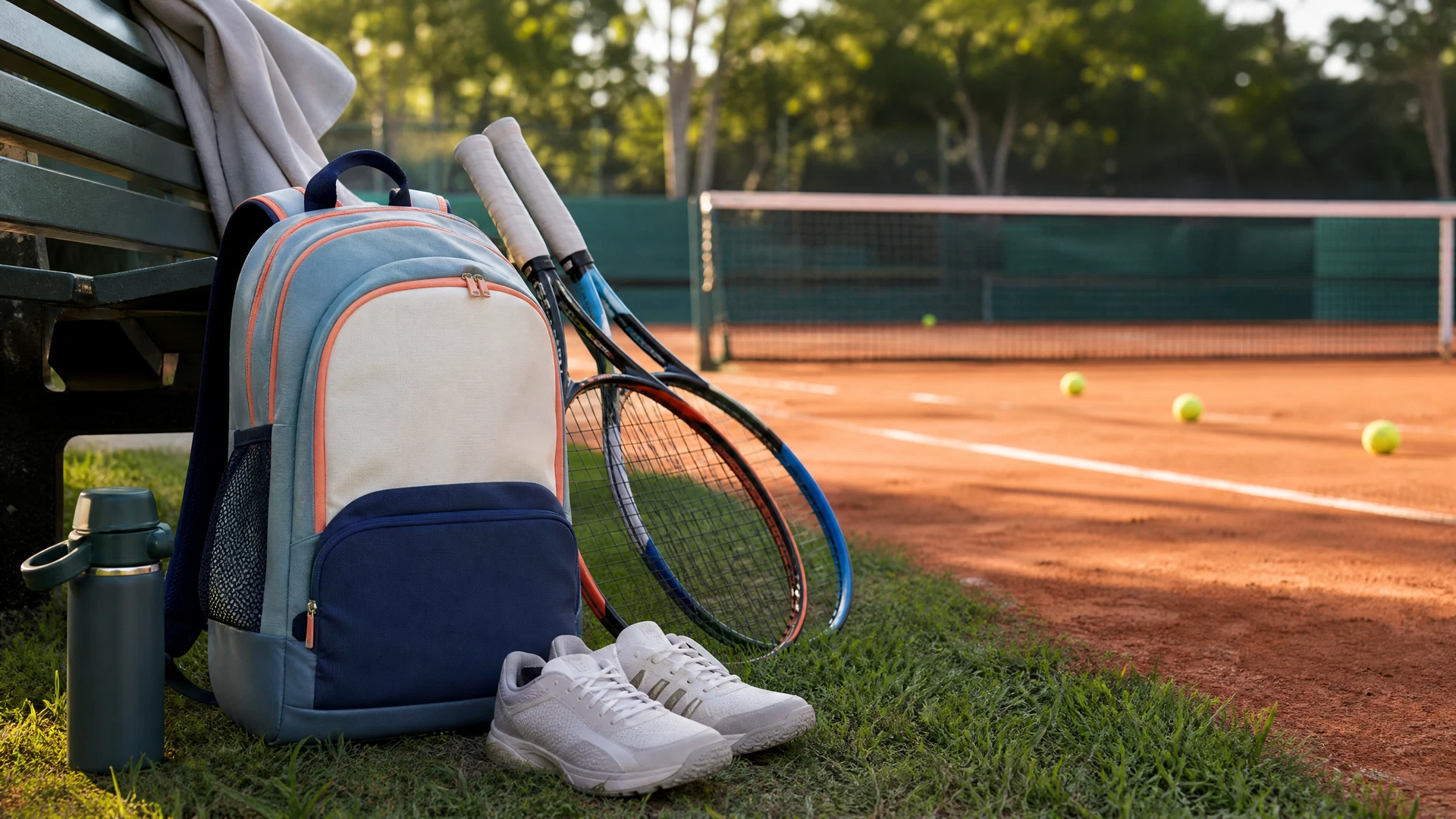
Tournament-grade tennis gear storage also necessitates dedicated compartments for damp apparel, footwear, and multiple junior rackets. To protect equipment from adverse weather during outdoor tournament circuits, exterior fabrics must offer dependable water resistance. Buyers should establish testable benchmarks with suppliers, such as using the ISO 811 hydrostatic pressure method to determine fabric resistance to water penetration (ISO 811). Because factory testing conditions vary, every buyer should agree, test, and validate with the supplier on specific hydrostatic head thresholds and test reports before confirming bulk production orders.
Evaluation Framework: Testable Questions and Sample Review Plan
To ensure that a junior tennis tournament bag meets practical operational standards, procurement managers should implement a structured review plan. The following table outlines testable questions, stakeholder focus areas, and recommended validation steps for B2B manufacturing evaluations.
| Stakeholder Focus | Core Need | Testable Question | Sample Review Plan & Buyer Action |
|---|---|---|---|
| Youth Player | Comfort & Load Balance | Does the harness distribute weight evenly without shoulder chafing during transit? | Buyer should agree, test, and validate with supplier through wearer trials using a test load and duration agreed for the intended age group. |
| Parent & Guardian | Durability & Organization | Can the bag withstand frequent ground abrasion and segregate wet apparel from rackets? | Buyer should inspect fabric tear resistance data and verify compartment barrier linings with independent laboratory swatches. |
| Coach & Academy | Quick Access & Capacity | Does the main compartment accommodate two junior rackets and training aids securely? | Buyer should test zipper cycle durability using an agreed cycle plan and rack insertion ease with sample prototypes. |
| Procurement Manager | Regulatory & Material Compliance | Are material declarations aligned with emerging ESPR and DPP transparency frameworks? | Buyer should review preliminary material compliance dossiers and validate supply chain traceability parameters with supplier. |
Regulatory Awareness and Compliance Validation
Navigating international supply chains requires proactive alignment with emerging environmental and consumer disclosure standards. As noted in regulatory guidance regarding the European Commission framework, textile apparel is identified as a priority product group in the ESPR Working Plan 2025-2030 (European Commission). Procurement teams should note that while exact requirements will come from delegated acts, future Digital Product Passports (DPP) may cover product identification, fibre composition, repair guidelines, and economic operators (European Commission).
To maintain compliance readiness, buyers must avoid assuming that current manufacturing setups will automatically satisfy future DPP mandates. Instead, procurement specialists should maintain active dialogues with manufacturing partners to review material traceability and documentation readiness.
Action Checklist for B2B Procurement and Bag Manufacturing
When executing a custom junior tennis tournament bag procurement project, supply chain managers should follow a disciplined verification workflow:
- Define precise dimensional and volumetric requirements based on junior racket sizes and tournament gear loads.
- Establish performance testing protocols with the supplier for fabric water resistance using the ISO 811 hydrostatic pressure method (ISO 811).
- Review preliminary material compliance frameworks and monitor European Commission updates regarding the ESPR Working Plan 2025-2030 (European Commission).
- Validate ergonomic shoulder harness and back panel padding through physical sample testing with representative youth user groups.
- Confirm zipper, buckle, and strap anchor durability specifications directly with the manufacturing partner prior to bulk production sign-off.
Frequently Asked Questions
How should B2B buyers utilize USTA participation data when designing junior tennis bags?
Procurement teams should use macro participation figures—such as the USTA 2025 report noting 27.3 million total US players and 616 million-plus play occasions—as market context for aggregate demand forecasting. However, physical product specifications must be established through direct prototype testing and agreed-upon buyer-supplier validation protocols rather than participation statistics alone.
What water resistance standards should be applied to tournament tennis bags?
Buyers should specify standardized testing methods such as ISO 811 to measure fabric resistance to water penetration (ISO 811). Because performance varies by coating and weave, every buyer should agree, test, and validate with the supplier on specific hydrostatic head thresholds before finalizing production orders.
How does the European Commission ESPR Working Plan affect sports bag manufacturing?
The European Commission has designated textile apparel as a priority product group in the ESPR Working Plan 2025-2030, indicating that future Digital Product Passports (DPP) may cover product identification, fibre composition, repair guidelines, and end-of-life recycling (European Commission). Procurement managers should monitor upcoming delegated acts for definitive compliance timelines.
Is the design story described in this brief based on an actual customer engagement?
No. The design scenario outlined in this article is a fictional composite brief created solely for illustrative B2B procurement analysis. All product requirements, testing plans, and evaluations must be customized to meet individual brand specifications and verified through direct supplier collaboration.
If you are developing a custom golf or tennis bag, contact Links Sports Co to discuss your brief.
Share this article