The Custom Golf Bag Packaging Brief: Protecting Premium Bags Without Overpacking
A procurement guide for B2B buyers on balancing golf bag protection with shipping efficiency, featuring a decision framework and checklist for custom packaging briefs.
Links Golf Sports
Product Specialist & OEM Consultant · Links Sports Co
10+ years in golf & tennis bag manufacturing. Specialises in OEM/ODM custom branding, material sourcing, and B2B wholesale for brands across 30+ countries.

For B2B buyers in the sports equipment sector, packaging presents a complex balancing act. While the primary goal is to ensure a premium golf bag reaches its destination in pristine condition, excessive packaging leads to inflated shipping costs and logistical inefficiencies. A well-constructed packaging brief is a strategic tool that aligns product safety with bottom-line performance.
The Logic of Balanced Protection
In international logistics, "overpacking" refers to materials or box dimensions that exceed the actual protective needs of the product. For golf bags, which are bulky but relatively light, shipping costs are frequently determined by volumetric weight. A carton that is even slightly larger than necessary can shift a shipment into a higher pricing tier, particularly for container-load quantities.
However, under-packing is equally detrimental. Premium bags often feature delicate components like synthetic leathers, carbon fiber legs, or intricate embroidery. These elements are susceptible to scuffing, crushing, or moisture damage during long-haul freight. The objective for a procurement manager is to define a "just enough" threshold—where the packaging absorbs the risks of the journey without adding unnecessary bulk.
Structuring the Packaging Brief
When communicating with a manufacturing partner, the packaging brief should move beyond simple dimensions. It should address the specific vulnerabilities of the bag design and the anticipated conditions of the supply chain. Buyers can consider the following framework when drafting their requirements:
- Internal Layering Strategy: Decide between protective film, non-woven covers, or cushioned wrap based on the bag's surface material.
- Structural Support: For stand bags, the leg mechanism requires specific bracing to prevent bending under the weight of stacked cartons.
- Moisture Management: Long-duration sea transit can expose products to humidity, suggesting the inclusion of desiccants or perforated bags.
- Carton Specification: The choice between single-wall and double-wall corrugated cardboard depends on the total weight and the number of units per master carton.
Packaging Layer Decision Matrix
The following table outlines common packaging configurations based on bag type and protection priorities.
| Bag Category | Primary Vulnerability | Suggested Internal Layer | External Box Consideration |
|---|---|---|---|
| Premium Staff Bag | Structural deformation, surface scuffing | Thick protective bag with top/bottom support | Reinforced double-wall corrugated |
| Cart Bag (Synthetic) | Hardware scratches, humidity | Non-woven fabric bag + Silica gel packets | Conventional double-wall corrugated |
| Lightweight Stand Bag | Leg mechanism misalignment | Protective bag + Cardboard leg bracing | High-burst strength single-wall |
| Sunday / Pencil Bag | Creasing, fabric abrasion | Simple protective bag | Multi-unit master carton to reduce volume |
Addressing Component-Specific Risks
A comprehensive brief should highlight areas that require extra attention. For example, the top cuff of a golf bag is the widest point and the most likely to experience pressure when cartons are stacked horizontally. Buyers could request reinforced cardboard "collars" to maintain the cuff's shape.
Similarly, the base of the bag, often made of molded plastic, can be brittle in cold temperatures. If the shipment passes through regions with extreme climates, the brief might specify a minimum clearance between the bag base and the carton floor, perhaps achieved through a simple cardboard spacer. These details depend on the specific project and the intended shipping route.
Environmental Considerations in Procurement
Modern procurement logic favors sustainability for alignment with waste reduction goals. When reviewing packaging samples, buyers should evaluate the ease of disposal for the end-user. Could internal plastic supports be replaced with folded cardboard? Can protective bags be made from recycled materials? While these changes should be confirmed with the supplier regarding their impact on protection, they represent an opportunity for supply chain optimization.
Actionable Checklist for Packaging Sample Review
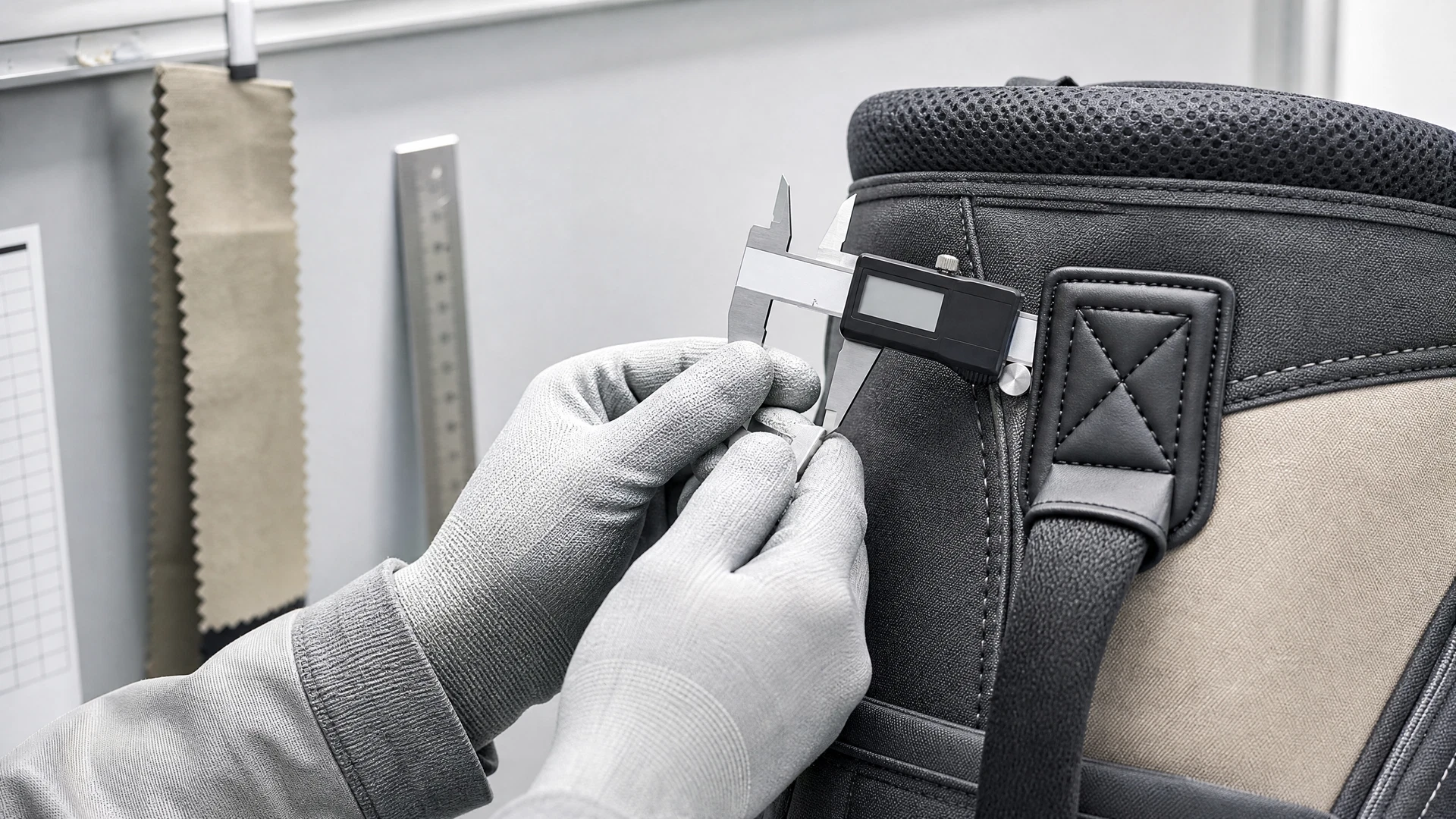
Before approving mass production, a physical review of the packaging sample is recommended. This checklist provides a framework for evaluating the proposed brief:
- Fit and Clearance: Does the bag fit snugly without being compressed? Is there a reasonable buffer space on every side?
- Material Integrity: Does the carton show signs of softening or buckling after being stacked for a period of time?
- Surface Protection: After a simulated vibration, are there any dull spots or scuffs on the bag’s high-friction areas?
- Ease of Unpacking: Can a retail partner remove the bag without using tools that could damage the fabric?
- Labeling Accuracy: Are the shipping marks and handling instructions clearly visible and correctly placed?
Frequently Asked Questions
How can we reduce shipping costs without compromising the bag's safety? One effective method is to optimize the "nesting" of the bags if shipping multiple units per carton, or to ensure the carton dimensions are as close to the bag’s compressed size as possible. It is often useful to discuss whether certain removable parts, like the rain hood, can be tucked inside the bag to save space.
What is a common cause of packaging failure for premium bags? In many cases, failure occurs due to moisture accumulation inside the protective bag, leading to surface degradation. This can often be mitigated by using perforated bags or high-quality desiccants, depending on the transit route and seasonal conditions.
Is it advisable to use double-wall cartons for every international shipment? Not necessarily. While double-wall cartons offer superior stacking strength, they also add weight and thickness. For lighter stand bags or Sunday bags, a high-quality single-wall carton with reinforced corners could be sufficient. The decision should be based on the total weight of the shipment and the expected number of transfers.
Collaborating on Your Next Project
Finalizing a packaging strategy is a collaborative process between the procurement team and the manufacturer. By focusing on the specific logistical path and the unique features of the bag, buyers can create a brief that ensures product integrity while maintaining cost-efficiency. For those looking to refine their current packaging approach or explore new material options for upcoming collections, a detailed discussion regarding project-specific requirements is a recommended next step.
Share this article