
Product Development Note: What Belongs in an Artwork Reference Pack Before the First Custom Bag Sample
A professional guide for procurement teams on preparing artwork reference packs for custom golf bags, covering color systems, placement maps, and application notes.
Links Golf Sports
Product Specialist & OEM Consultant · Links Sports Co
10+ years in golf & tennis bag manufacturing. Specialises in OEM/ODM custom branding, material sourcing, and B2B wholesale for brands across 30+ countries.
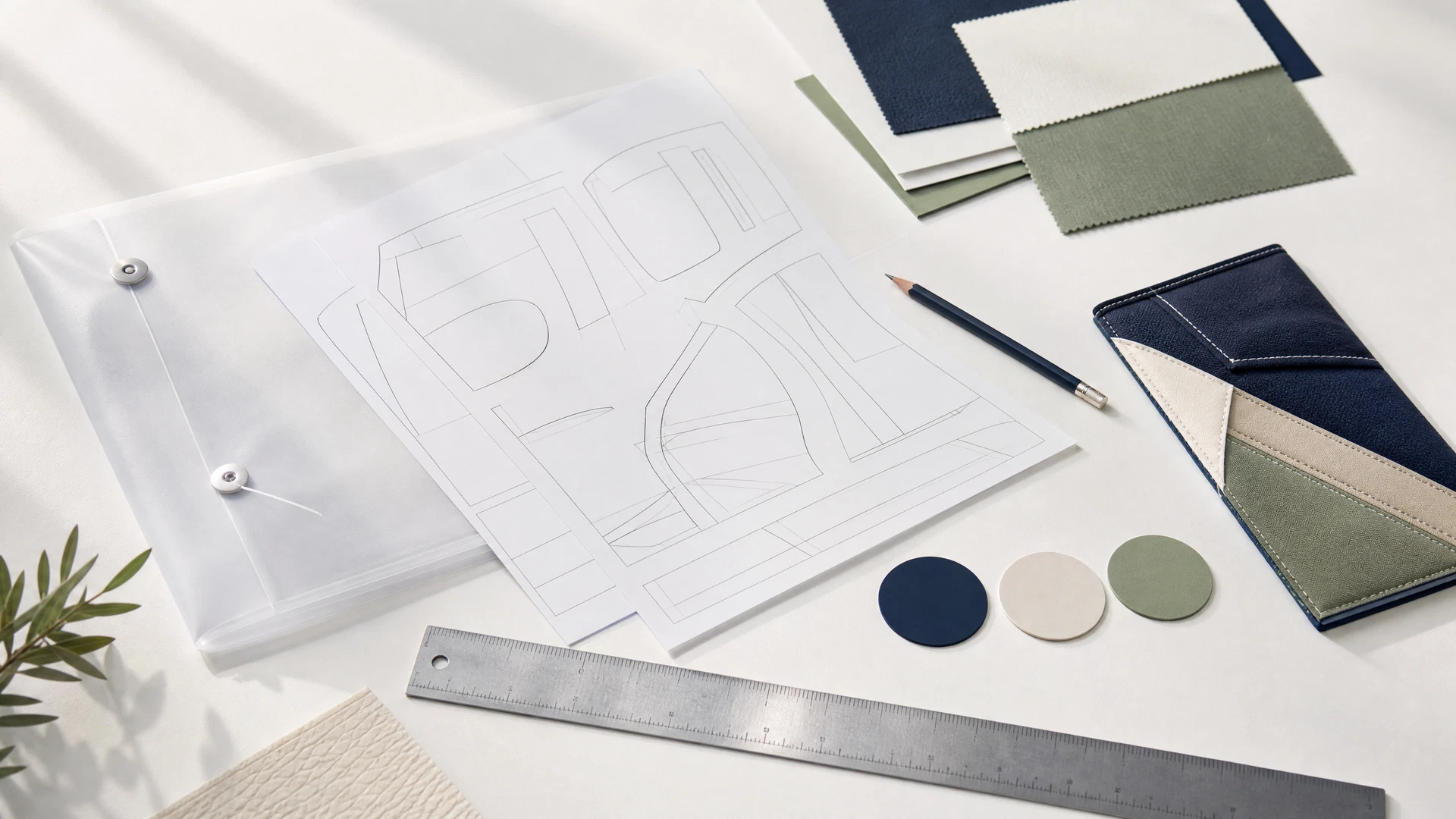
In B2B golf equipment procurement, the transition from conceptual design to a physical prototype is a critical phase. For procurement teams, the "Artwork Reference Pack" serves as the foundational blueprint bridging the gap between creative intent and manufacturing reality. Rather than a static set of files, it should be a comprehensive framework for verification. Before the first custom bag sample is produced, establishing clear artwork requirements ensures that branding elements—ranging from intricate embroidery to structural placements—align with the functional and aesthetic goals of the final product.
The Color Matrix: Navigating PMS and FHI Systems
One frequent challenge in custom golf bag development is the discrepancy between digital designs and physical materials. Different materials inherently change the final appearance of a color. A brand's signature blue may appear differently when applied to a synthetic textile compared to a genuine leather accent. To mitigate these variations, procurement teams must distinguish between different color systems based on the application surface.
The Pantone Matching System (PMS) is the standard for graphics and traditional printing. However, when dealing with the textiles, leathers, and accessories that comprise a high-quality golf bag, the Fashion, Home + Interiors (FHI) system is often more appropriate. While PMS provides a baseline for printed logos, the FHI system accounts for the unique reflective and refractive properties of fabrics and soft goods. It is highly recommended that procurement teams confirm the specific color system used for each material component during the sampling phase to ensure consistency across the entire bag.
| Material Type | Recommended Color System | Verification Focus |
|---|---|---|
| Printed Panels | Pantone Matching System (PMS) | Ink absorption and vibrancy |
| Textile Body | Fashion, Home + Interiors (FHI) | Fabric dye lot and texture |
| Leather Accents | Fashion, Home + Interiors (FHI) | Surface finish and grain |
| Plastic Hardware | PMS or Custom Masterbatch | Opacity and light fastness |
Placement Mapping and Functional Application
Beyond color accuracy, the physical placement of artwork requires understanding the bag’s structural utility. A primary example is the integration of branding around the cart-strap channel. The functional purpose of a cart-strap channel, as noted in designs by manufacturers like Sun Mountain, is to allow a golf cart's security strap to pass behind the bag’s pockets. This ensures the user maintains full access to their gear while the bag is secured to the vehicle.
When mapping artwork near these channels, procurement teams should avoid placing critical branding where it might be obscured or damaged by the friction of the strap. It is a recommended practice to confirm the accessibility of pockets and the visibility of logos on an actual golf cart during the prototype review stage. The placement map should be treated as a guide requiring physical validation to ensure branding remains prominent without compromising core functionality.
Embroidery Stabilization and Application Notes
Embroidery remains a prestigious method for branding custom golf gear, yet its success depends on factors beyond the digital stitch file. The quality of the final embroidery is heavily influenced by the stabilization materials used during manufacturing. The choice of a stabilizer is not a fixed, universal decision; rather, it is determined by the specific fabric of the bag, the density of the stitch design, and the hooping method employed by the factory.
Inadequate stabilization can lead to several common defects, including puckering of the fabric, the creation of small holes, or significant misalignment between different color layers of the logo. Procurement teams should frame these as discussion points for the manufacturing team. It is essential to confirm that the chosen stabilization method is compatible with the bag’s outer shell material and can withstand the rigors of regular use during tournament play or daily practice.
Procurement Checklist for Artwork Reference Packs
Procurement teams should verify the following elements within their artwork reference pack:
- Asset File Verification: Confirm all logo files are provided in a format allowing for scaling. Technical requirements should be confirmed with the factory's pre-press department.
- Material-Color Mapping: Ensure every branding element is mapped to a specific material and a corresponding color code (PMS or FHI).
- Placement Map Accuracy: Verify logo positions are clearly defined in relation to structural features like seams, zippers, and cart-strap channels.
- Application Method Specification: Clearly distinguish between embroidery, screen printing, or heat transfer for each branding location.
- Functional Testing Plan: Schedule a time to verify the artwork’s durability and visibility on a physical sample and on an actual golf cart.
Frequently Asked Questions (FAQ)
Why can't I use the same Pantone code for all parts of the bag? Materials interact with light and dyes differently. A code designed for paper printing (PMS) may not translate perfectly to a woven polyester. Using the FHI system for textiles and PMS for printed parts helps ensure the closest possible match.
How do we prevent our logo from being covered when the bag is on a cart? The cart-strap channel is critical. Your placement map should ensure logos are positioned on pockets that remain accessible while the strap is routed through the channel. We recommend verifying this on multiple cart models.
What causes embroidery to look "bunched up" on certain fabrics? This typically results from improper stabilization or a mismatch between stitch density and fabric weight. Because every fabric reacts differently, it is vital to confirm the stabilization approach with your manufacturer during the first sample run.
Conclusion
Creating a robust artwork reference pack is a strategic step in the B2B product development lifecycle. By focusing on the nuances of color systems like PMS and FHI, understanding the functional role of structural features like cart-strap channels, and addressing the complexities of embroidery stabilization, procurement teams can significantly reduce the risk of costly revisions. Ultimately, the goal of the reference pack is to provide a clear, verifiable framework that allows both the brand and the manufacturer to move forward with confidence toward the first physical sample.
Share this article