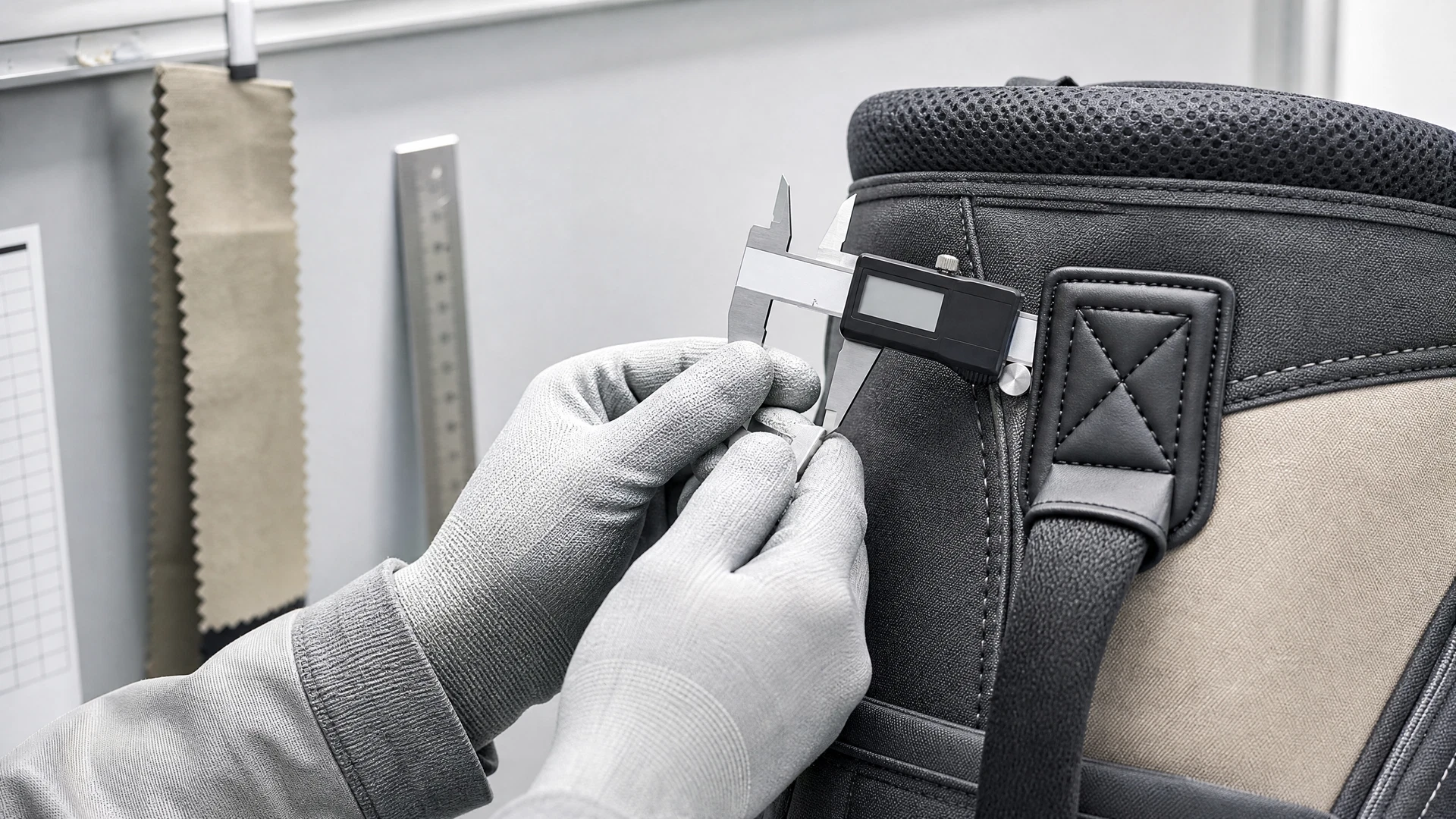
The Cart-Strap Pass-Through Brief: 9 Measurements to Define Before You Sample a Custom Golf Bag
Define a golf bag cart-strap pass-through with a 9-point sample framework for pocket access, cart fit, and functional verification.
Links Golf Sports
Product Specialist & OEM Consultant · Links Sports Co
10+ years in golf & tennis bag manufacturing. Specialises in OEM/ODM custom branding, material sourcing, and B2B wholesale for brands across 30+ countries.

For B2B procurement teams, transitioning from conceptual design to a physical sample is where technical oversights become costly. One of the most critical yet frequently under-specified components of a modern cart bag is the cart-strap pass-through. This guide establishes a measurement framework for procurement teams to define before initiating the sampling process.
The Functional Role of the Pass-Through Channel
A cart-strap pass-through, or strap tunnel, provides a dedicated pathway for the cart’s securing strap to sit behind the bag's primary pockets. According to industry leaders like PING, a well-designed channel allows the bag to be secured while maintaining full access to pockets that would otherwise be compressed. Similarly, Sun Mountain emphasizes that this design prevents the strap from interfering with organizational features during play.
In a B2B context, the pass-through must be treated as a variable technical specification. Because cart strap heights and buckle sizes vary, a universal approach can create avoidable functional compromises. Sourcing teams should identify and verify critical dimensions during the prototyping phase to ensure compatibility with their specific cart fleets.
The 9-Point Measurement Framework for Custom Sampling
To ensure seamless integration, procurement teams should define the following nine measurements. These are verification points to be confirmed against actual cart models and physical samples rather than treated as universal industry standards.
1. Channel Entry and Exit Height
The vertical height of the openings determines the range of strap positions accommodated. If too narrow, the strap may bind, compromising stability. Verify this height against standard strap widths of common cart brands.
2. Internal Tunnel Width
The internal tunnel must be wide enough for the strap buckle to pass through easily. A tight tunnel makes it difficult to secure the bag quickly. Test buckle clearance on a prototype to ensure smooth operation without snagging.
3. Depth Behind the Pocket
The depth between the bag body and the pocket's back wall prevents compression. If insufficient, strap tension pulls the pocket tight, making it difficult to access gear. This should be verified by applying standard strap tension to a sampled bag.
4. Vertical Placement from the Base
The distance from the bag bottom to the pass-through center ensures the bag sits correctly on the cart. Incorrect positioning prevents alignment with cart attachment points. Verify this placement on actual cart models during sampling.
5. Lateral Clearance for Pocket Zippers
Proximity to pocket zippers affects ease of opening while strapped in. There should be a defined clearance between the strap channel edge and the zipper track. This ensures the zipper remains unobstructed when the strap is tightened.
6. Wall Material Thickness and Rigidity
The pass-through material must withstand friction from repeated strap use. Rather than specifying a fabric weight, procurement teams should evaluate the tactile durability and rigidity of the wall material on a sample to ensure it does not collapse under tension.
7. Reinforcement Point Width
The entry and exit points are high-stress areas. The width of reinforcement, through stitching or material overlays, should be defined to prevent tearing. Inspect these points for structural integrity after simulated cart-loading cycles.
8. Strap Tension Allowance
When the strap is tightened, the bag body may undergo slight deformation. The design should account for this allowance to ensure internal dividers do not warp. Procurement teams should measure the bag's circumference before and after tightening to verify dimensional stability.
9. Buckle Housing Clearance
Some carts feature larger buckles requiring more space. Defining the clearance around the entry point for these larger housings prevents incompatibility with premium cart models. This is a critical verification step for resort or tournament use.
Structural Design Comparison
The choice between an integrated tunnel and an external loop system depends on the project's aesthetic and functional requirements.
| Feature | Integrated Tunnel | External Loop System |
|---|---|---|
| Pocket Access | High (Behind pocket) | Moderate (Over pocket) |
| Aesthetic | Streamlined | Visible |
| Complexity | Higher effort | Lower effort |
Procurement Verification Checklist
Before approving a custom bag, the procurement team should complete these steps on a physical sample:
- Cart Compatibility: Confirm the pass-through aligns with strap heights of two different cart manufacturers.
- Strap Smoothness: Ensure a standard strap can be pulled through the channel without snagging.
- Pocket Functionality: Verify that all front-facing pockets can be opened fully while the bag is tightly strapped to a cart.
- Structural Integrity: Inspect the entry and exit points for signs of thread tension or material stress.
- Visual Alignment: Ensure the pass-through does not distort branding or embroidery when under tension.
Frequently Asked Questions
Does the pass-through design affect the bag's overall weight? The addition of an internal tunnel requires extra material, which may slightly increase weight. However, the functional benefit of pocket access often outweighs this. Procurement teams should verify the final weight of the sample if weight is a critical constraint.
Can the pass-through be customized with branding? The areas surrounding the entry points can often be used for subtle branding. Procurement teams should ensure that any embroidery or logos do not interfere with strap movement or compromise reinforcement stitching. For these branding elements, it is essential to distinguish between PMS and FHI color systems, as the final color appearance will vary depending on the material.
Is a pass-through necessary for all cart bags? While not strictly required, a pass-through is highly recommended for frequent cart use. Without it, the strap limits gear access. For B2B orders targeting frequent golfers, this feature is often a relevant consideration for cart-focused products.
Conclusion
Defining the technical specifications of a cart-strap pass-through is a vital step in the custom golf bag development process. By focusing on these nine critical measurements and conducting thorough sample verifications, procurement teams can avoid common functional pitfalls. We suggest that all sourcing teams treat these measurements as a foundational framework for their next sampling cycle, ensuring every detail is verified in the field.
Share this article