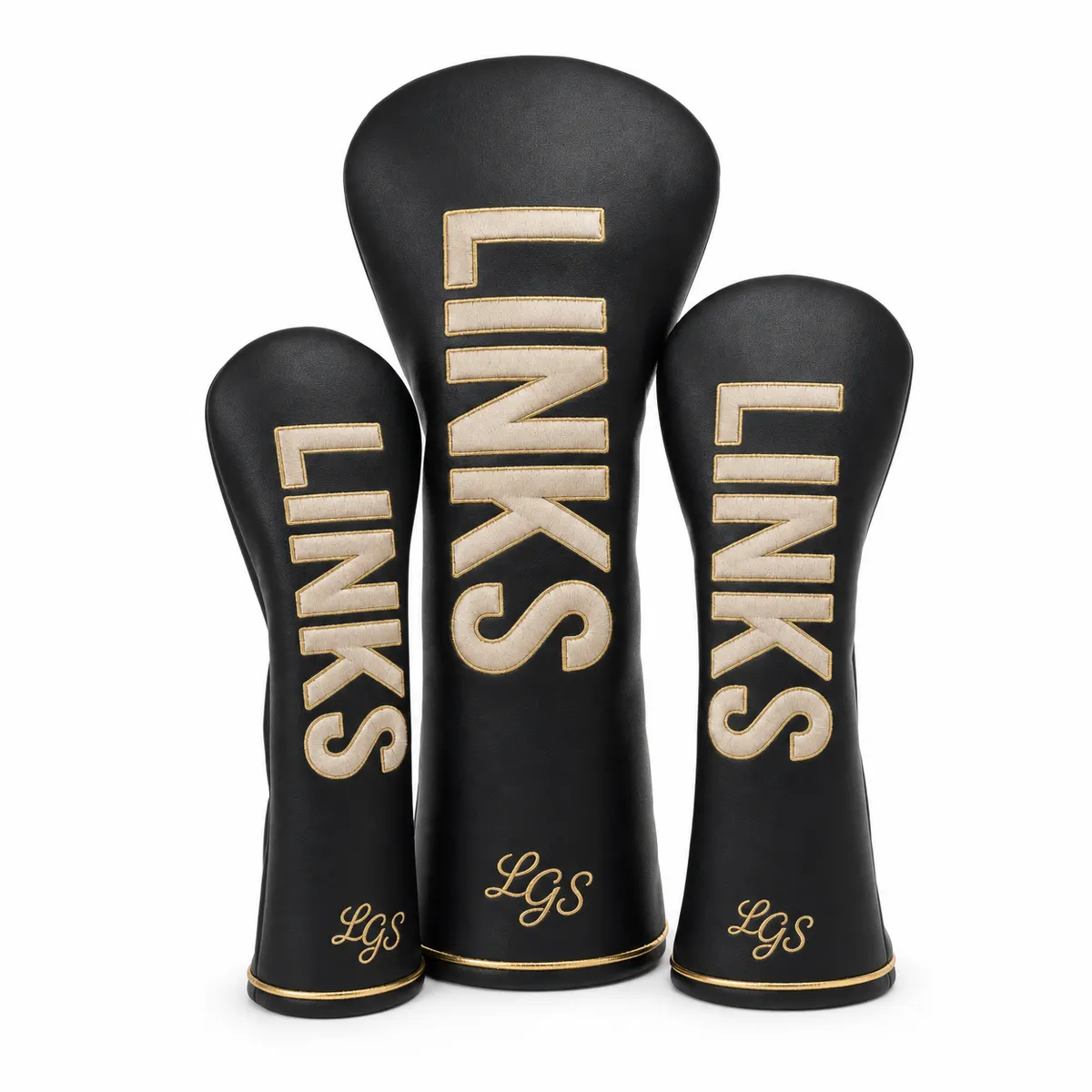
Personalized Golf Bags for Clubs: Member Name-List Guide
A practical club buyer’s guide to managing custom golf bags with member names, from name-list format and proofs to distribution-ready handover.
Links Sports Co
Product Specialist & OEM Consultant · Links Sports Co
10+ years in golf & tennis bag manufacturing. Specialises in OEM/ODM custom branding, material sourcing, and B2B wholesale for brands across 30+ countries.

Personalized golf bags for clubs work best when the member name list is treated as controlled product artwork—not as an informal spreadsheet sent at the end of the order. Before a club requests names or initials alongside its crest, it should decide who qualifies, where the personalisation belongs, how names will appear, who approves the final list and how late changes will be handled. A clear sequence protects the club’s identity and gives the factory a single, unambiguous production reference.
A club crest creates a shared signal. A member name adds a private one. Combining the two can create a considered gift, a distinctive bag-room programme or a premium retail offer. It also changes the project. The buyer is no longer approving one logo application repeated across every unit; they are managing a variable-data process in which each bag may have a different line of text.
The operational question is not simply “Can names be embroidered?” The better question is “Can our club provide one final, traceable version of each name exactly as it should appear?”
When a club is planning personalized golf bags, the first choice is not only the name treatment. Confirm the shared bag style, crest artwork, approved placement, display-name format, and one final list owner before requesting a proof. A club may choose personalized golf bags or custom golf bags with names for a defined member programme, while a crest-only order may suit stock or later resale. Review the available custom golf bag options and prepare an artwork reference pack before the supplier review.
Decide whether personalisation fits the programme
Not every custom golf bag needs an individual name. A crest-only programme may be more appropriate for pro-shop inventory, tournament merchandise or a broad retail launch. A name programme can make sense when the club knows who will receive each unit and when the individual ownership is part of the experience.
Use this short decision table before adding names to the development brief:
| Programme type | Crest-only may suit when | Names or initials may suit when |
|---|---|---|
| Member gift | The club wants one universal presentation | The recipient list is defined and individual recognition matters |
| Bag-room programme | Bags may move between users or be held as club property | Each bag is assigned to one member and returned to that person |
| Pro-shop retail | The range must remain available for later sale | The club offers a controlled made-to-order option |
| Team or committee order | The group identity is the main visual signal | The team needs quick personal identification alongside the shared mark |
This is a business and experience choice, not a claim that personalisation will increase sales or retention. The club should begin with the intended recipient and the distribution method, then decide whether the additional data management is worthwhile.
Lock the bag and club crest before opening the name list
The safest sequence is to settle the common elements first: bag silhouette, materials, club crest, logo method and main placement. The name programme should then be built around a stable, approved product.
Why? A name position that looks balanced on a digital drawing can become awkward if the bag’s pocket line, seam, trim or crest size changes later. If the common design is still moving, the personalised element becomes another changing variable.
Before collecting member names, agree on:
- The exact bag style and colourway to be used for all recipients.
- The approved club crest file and application method.
- The personalisation location: for example, a pocket panel, side panel, removable tag or another reviewed area.
- The visual relationship between crest and individual name: hierarchy, spacing and alignment.
- The lettering approach, including whether names will use full first and last name, surname only, initials or another club-defined format.
- The proofing method for the first physical sample and the final production list.
For a useful starting point, review what belongs in an artwork reference pack before asking a supplier to price or sample the work.
Build one source-of-truth name list
A name list should not be reconstructed from email replies, handwritten notes and several spreadsheets. Assign one list owner and one version identifier. The factory should work only from the final released copy, not from a series of incremental updates.
A practical golf bag embroidery name-list template can include the following columns:
| Field | Why it belongs in the list |
|---|---|
| Unit number | Connects the record to one bag or one packaging label |
| Recipient reference | Lets the club reconcile its distribution list without adding unnecessary information to the production instruction |
| Approved display name | States the letters exactly as they should appear on the bag |
| Personalisation format | Confirms full name, surname, initials or the club’s chosen standard |
| Location code | Links the name to the approved panel or placement drawing |
| Proof status | Shows whether the entry has passed the club’s review checkpoint |
| Notes / exception flag | Captures a pre-approved exception, rather than leaving it in a separate email thread |
Keep the display name separate from any informal contact record. The supplier needs the approved text and placement instructions required to produce the bag; the club should decide what personal information is appropriate to share and use a controlled transfer method.
Set a naming convention before names arrive
The most common avoidable errors happen when the format is not decided at the beginning. One person submits “A. J. Smith,” another submits “Alex Smith,” and a third asks for a nickname. Those can all be valid choices, but the club should choose a rule rather than let each line become a separate design decision.
A convention can answer these questions:
- Will every bag use surname only, first name plus surname, or initials?
- How will punctuation, accents, hyphens and spaces be handled?
- What happens when two members have the same display name?
- Are honorary titles, post-nominals or team roles included, or deliberately excluded?
- Who is authorised to approve a requested exception?
- What is the final date after which a change moves to a later programme rather than interrupting the current production list?
The point is consistency. A considered club bag should feel intentional when the bags are arranged together, even though each one belongs to a different person.
Use a proof checkpoint that tests both design and data
A personalisation proof is not only an art approval. It is also a data check. The club’s project owner should compare the proof against the locked name list and the approved placement reference.
For a first sample, confirm that the visible treatment is appropriate: the stitch or mark reads clearly against the selected material, the letters have enough breathing room and the relationship with the crest feels balanced. This sample establishes the design language, but it does not approve every individual name automatically.
Before production, run a final list proof. A simple method is to have two people compare the released file line by line: one reads the approved display name aloud, and the other checks it against the final member record. Then lock the file, record its date and give the supplier only that version.
Use the following final-release checklist:
- The common bag specification and crest placement are approved.
- The name location and format are approved on the sample or placement drawing.
- The final list has a version name, date and responsible owner.
- Duplicate names and special-character entries have been checked against the club’s chosen convention.
- Any exception has a written approval, not merely an informal request.
- The club has confirmed who will receive each finished bag and how the list will be reconciled at distribution.
Treat late changes as a project decision, not a production note
Member programmes often generate late additions, spelling changes or substitutions. A rushed message such as “please swap one name” can create a mismatch if it reaches only one person in the chain.
Agree in advance how changes will work. For example, the club may set a final list date and designate one person who can issue a revised file. If an update is necessary after release, it should be sent as a complete new version, not a single edited line without context. The manufacturer can then review whether the change is still possible within the specific production stage. No universal lead-time promise should be assumed.
That approach is not bureaucratic. It simply makes the most personal part of the bag traceable.
Plan distribution while the list is being finalised
The name list can also support an orderly handover. A unit number or internal recipient reference may be used on a packing list or club-side distribution sheet, where appropriate. The exterior bag should follow the approved visual design rather than becoming covered in operational labels.
Before delivery, the club should decide who will receive the goods, how the bags will be checked and what record confirms each handover. If the programme is a member gift, the presentation moment can remain elegant because the administrative matching was solved earlier.
A personalised programme can also begin with a small, defined group before the club expands it. The first objective is not to create the largest possible list. It is to create a repeatable, accurate process that the team understands.
For an example of how a club-oriented Sunday bag can balance identity and everyday carrying, see our custom club-exclusive canvas carry-bag story. To begin an original programme, explore custom golf bag options and send Links Sports Co the common bag brief plus the proposed name-list structure.
Frequently Asked Questions
Q: Can a club add both its crest and individual member names to a golf bag?
A crest and a name or initials can be considered together when the buyer provides approved artwork, a reviewed placement plan and a final list of the exact display text. The appropriate application method and final appearance should be approved on the relevant material or sample.
Q: What information should be included in a golf bag embroidery name list?
At minimum, use a unit or recipient reference, the exact display name, the selected name format, the approved placement code and a proof-status field. The club should provide only the information needed for production and keep one controlled final version of the list.
Q: How should duplicate member names be handled?
Decide the rule before production. A club might use first initials, a full first name, another agreed identifier or a crest-only treatment for a specific programme. The important step is to record the decision in the final name list rather than making an informal change at the last minute.
Q: Can names be changed after the list is released?
Possible changes depend on the current production stage and the project-specific construction and application method. Establish a final list date and route any later request through one authorised club contact, who issues a complete revised file for review rather than an isolated message.
Share this article