Why We Stopped Accepting Rush Orders Under 30 Days — And What We Do Instead
We used to say yes to rush orders. We don't anymore. This is an honest account of what we learned, what goes wrong when production is rushed, and what we offer buyers instead.
Links Sports Co Editorial Team
Product Specialist & OEM Consultant · Links Sports Co
10+ years in golf & tennis bag manufacturing. Specialises in OEM/ODM custom branding, material sourcing, and B2B wholesale for brands across 30+ countries.

An Honest Account
Three years ago, a buyer contacted us in late October needing 200 custom golf bags for a corporate event in early December. Six weeks. We said yes.
We delivered on time. The bags looked right in photos. But when the buyer's team unboxed them at the event venue, they found problems: two bags with misaligned logos, four with zipper sliders that caught on the first pull, and one with a strap attachment that had been bar-tacked incorrectly and would likely fail under load.
We replaced the defective bags at our cost. But the damage to the relationship — and to our own standards — was harder to repair. That order was the last rush order we accepted.
What Actually Happens When Production Is Rushed
This is not a story about lazy workers or careless management. Every person on our production floor takes quality seriously. The problem with rush orders is structural, not motivational.
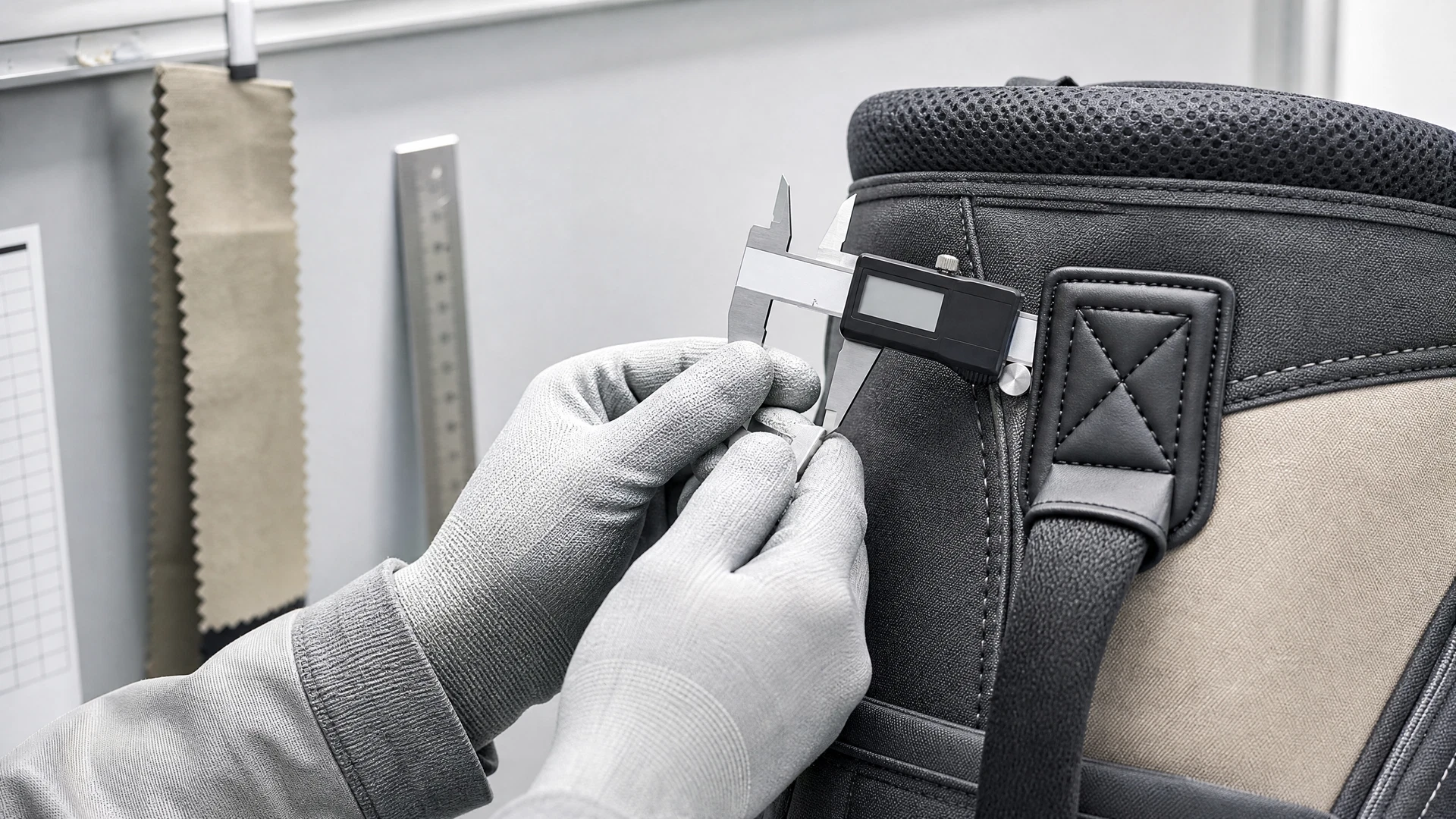
A standard golf bag production run at our facility follows a sequence: material sourcing and inspection, cutting, assembly, hardware attachment, quality inspection, and packing. Each stage has a natural pace determined by the complexity of the product and the capacity of the team.
When a rush order compresses this timeline, one of three things happens:
Stage compression. Steps that normally have buffer time — material inspection, QC sampling, rework cycles — get shortened or eliminated. The first casualty is usually the incoming material check. The second is the final QC pass.
Parallel processing errors. To meet the timeline, multiple production stages run simultaneously rather than sequentially. This increases the chance that a defect introduced early in the process (a miscut panel, an incorrect hardware specification) propagates through the entire run before it's caught.
Fatigue. Extended production hours to meet a deadline are a real factor. Stitching errors, missed bar tacks, and alignment issues all increase when workers are operating under time pressure.
None of these are excuses. They're explanations. And they're why we stopped accepting rush orders.
Our Standard Lead Times
For buyers who are new to working with us, here is what our standard production timeline looks like:
| Order Type | Lead Time | Notes |
|---|---|---|
| Standard colorway, existing style | 30–35 business days | From order confirmation and deposit |
| Custom colorway, existing style | 45–50 business days | Includes color matching and approval |
| New style development + production | 60–75 business days | Includes sample approval stage |
| Reorder of previously produced style | 25–30 business days | If materials are in stock |
These timelines assume prompt sample approval from the buyer. Delays in approval extend the lead time accordingly.
What We Offer Instead of Rush Orders
When buyers come to us with tight timelines, we don't simply say no. We offer three alternatives:
In-stock program. We maintain a small inventory of our most popular styles in standard colorways. These can be shipped within 5–7 business days with basic customization (hang tag, label, simple embroidery). This is the fastest path to a finished, branded product.
Partial delivery. For larger orders where the full quantity isn't needed immediately, we can ship a partial delivery of 30–50% of the order within the compressed timeline, with the balance following on the standard schedule. This works well for events where a display quantity is needed before the full order arrives.
Forward planning. For buyers who have recurring needs — annual corporate events, seasonal merchandise programs, tournament gifts — we offer a planning calendar service. We schedule production slots 3–6 months in advance, locking in capacity and pricing. This eliminates the rush order problem entirely.
A Note on Pricing
Some buyers ask whether they can pay a premium for faster production. The honest answer is that money doesn't solve the structural problems described above. Paying more for a rush order doesn't add capacity, eliminate fatigue, or create time for proper QC.
What it does do is create pressure on our team to say yes to something they know is likely to produce a substandard result. We'd rather lose the order than deliver a product we're not proud of.
Planning Is the Solution
The best golf bag orders we've ever fulfilled were planned 90–120 days in advance. The buyer had time to review samples carefully. We had time to source materials, run production at a sustainable pace, and conduct thorough quality checks. The result was product that both parties were genuinely proud of.
If you're reading this because you have an upcoming need, the best thing you can do right now is contact us — even if the event or deadline is months away. The earlier we start the conversation, the better the outcome for everyone.
We're not in the business of making bags as fast as possible. We're in the business of making bags that last.
Share this article