How a Queensland Golf Resort Turned a Custom Sunday Bag Into Their Best-Selling Pro Shop Item — And What Every Club Can Learn From It
Discover how a Queensland golf resort transformed a low-MOQ custom Sunday bag into their best-selling pro shop item, driving retail revenue and member loyalty.
Links Sports Co Team
Product Specialist & OEM Consultant · Links Sports Co
10+ years in golf & tennis bag manufacturing. Specialises in OEM/ODM custom branding, material sourcing, and B2B wholesale for brands across 30+ countries.

How a Queensland Golf Resort Turned a Custom Sunday Bag Into Their Best-Selling Pro Shop Item — And What Every Club Can Learn From It
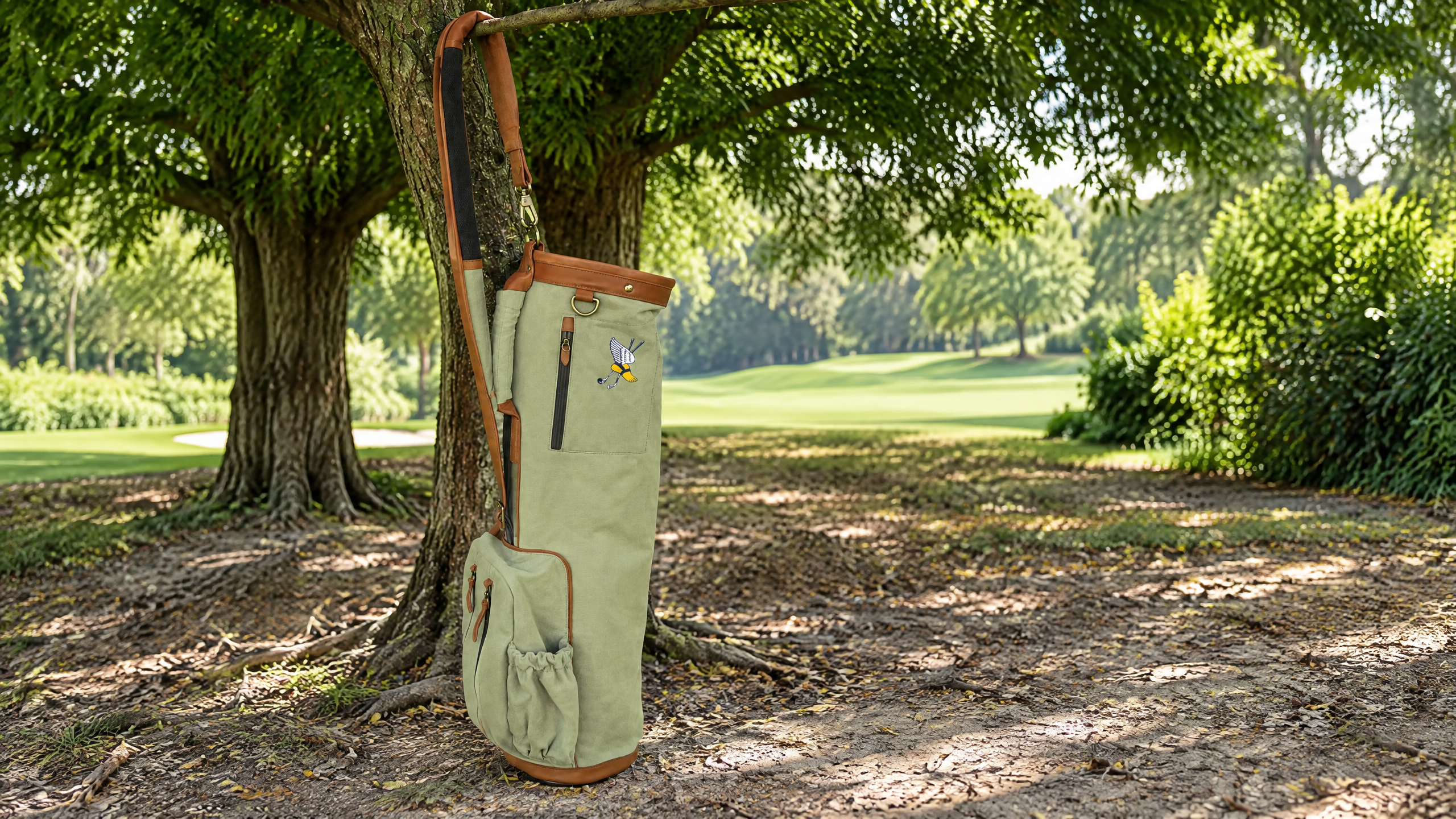
It sits quietly in the corner of the pro shop, right beside the branded umbrellas and the sleeve-three ball packs that everyone buys out of sheer necessity. It is not an oversized tour staff bag weighing 10 pounds when empty. It is a sleek, minimalist custom Sunday bag crafted in deep navy canvas with distressed caramel leather accents and an understated, embroidered club crest on the side pocket.
For the past twelve months, this single piece of equipment has quietly outsold every other soft good in the resort's retail inventory. Members buy it for quick twilight rounds. International visitors snap it up as the ultimate souvenir. And the pro shop manager, who initially hesitated to order a custom minimum quantity of 30 units, is now placing reorders every quarter.
If you run a golf club, resort, or pro shop, you already know the retail struggle. According to the Association of Golf Merchandisers (AGM) 2025 benchmarking data, the average green-grass pro shop generates $1.6M in gross merchandise sales with a healthy 37% profit margin [1]. Yet, achieving those margins often feels like an uphill battle against commoditized apparel, stagnant accessory sales, and visitors who treat the pro shop as a showroom before buying online.
This is a narrative-driven case study of how a leading Queensland golf resort transformed their merchandising strategy using a custom Sunday bag, backed by market data, exact design decisions, and pricing strategies that you can replicate at your own club.
The Pro Shop Merchandise Dilemma: Why Generic Stock Fails
Walk into ten different golf resort pro shops across Australia, the UK, or the United States, and you will likely see the same lineup: polo shirts embroidered with the course logo, branded ball markers, and heavy cart bags emblazoned with oversized vendor branding. While apparel remains a staple—representing a massive slice of the global golf apparel and soft goods market, which is projected to grow from $4.4 billion to $6.6 billion by 2030 at a CAGR of 6.9% [2]—it is also a notoriously difficult inventory to manage. Sizes run out, seasonal trends shift rapidly, and markdowns eat into the 37% profit margin [1].
The Queensland resort in our case study faced a classic retail bottleneck. Their international golf traveler segment—who spend an average of $5,000 per trip at destination resorts [3]—were bypassing traditional pro shop souvenirs. They did not want another logoed cotton polo shirt that would shrink in the wash. They wanted something authentic, functional, and deeply tied to the experience of playing a world-class coastal layout.
At the same time, global market shifts were signaling a major change in player preferences. According to Mordor Intelligence (2026), stand bags and lightweight carry bags hold approximately 40% of the global golf bags market share [4], driven by a surge in walking golfers, twilight players, and traveling enthusiasts. Furthermore, the lightweight and carry golf bags market is on a steep upward trajectory, projected to expand from $1.49 billion to $2.49 billion by 2034 at a compound annual growth rate (CAGR) of 5.8% [5].
The resort leadership realized they were sitting on an untapped opportunity. They needed a hero product—something that bridged the gap between high-end equipment and bespoke destination merchandise.
The Strategy: Designing the Ultimate Custom Sunday Bag
To capture the attention of high-spending visitors and loyal members alike, the resort partnered with an OEM manufacturer specializing in low-minimum custom production (starting at an MOQ of just 30 pieces). Rather than rushing into production, the resort's retail committee outlined four core design and merchandising pillars.
| Design & Merchandising Pillar | Traditional Pro Shop Approach | The Queensland Resort Strategy |
|---|---|---|
| Product Category | Heavy tour bags or generic nylon cart bags | Minimalist, structured custom Sunday bag with stand mechanism |
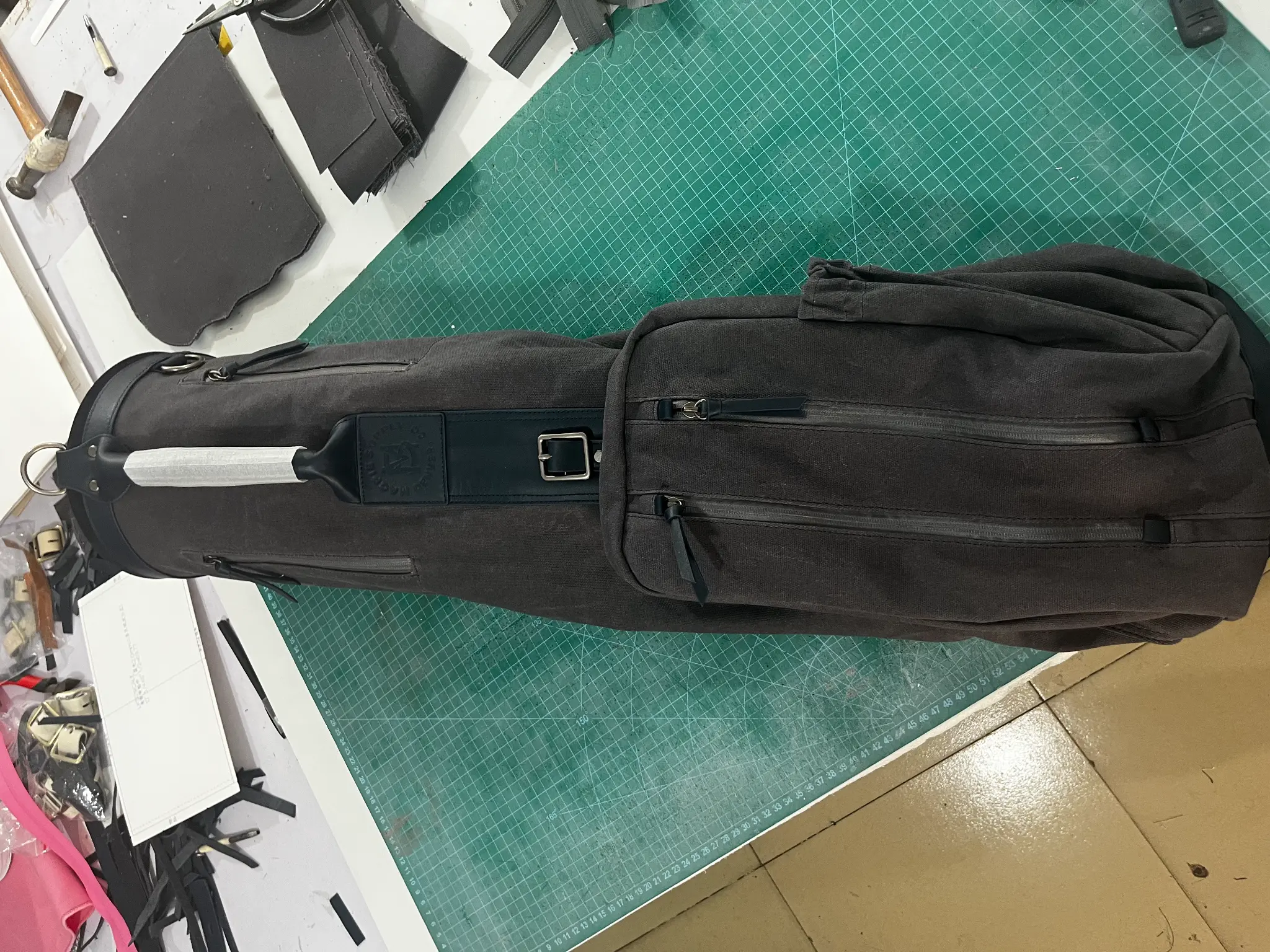
| Material Selection | Cheap synthetic nylon with shiny screen-printed logos | Weather-resistant waxed canvas, full-grain leather trim, and waterproof zippers |
| Branding | Oversized vendor logos and glaring neon colors | Subtle tonal embroidery, antique brass hardware, and bespoke leather zipper pulls |
| Inventory Risk | Bulk ordering 200+ units with high upfront capital | Low MOQ 30 initial batch to test market demand and eliminate dead stock |
1. Striking the Balance Between Utility and Aesthetics
A Sunday bag is often dismissed as a practice-range accessory. The resort decided to elevate it into a premium secondary bag. They specified a lightweight carbon-fiber stand mechanism, a reinforced structured top divider, and a concealed waterproof valuables pocket. It was sturdy enough for an 18-hole walking round, yet compact enough to slide effortlessly into the trunk of a rental car.
2. Capitalizing on the Trans-Tasman Luxury Tourism Surge
In early 2026, golf tourism across the Asia-Pacific region experienced a significant demand surge, particularly among high-net-worth travelers moving between New Zealand, Australia, and Southeast Asia. These travelers value luggage and accessories that reflect understated luxury. By utilizing custom logo golf bags Australia manufacturing pathways, the resort ensured premium craftsmanship—such as reinforced stitching and custom-molded rubber base bottoms—without inflating retail costs.
3. Smart Cost Management and COGS Benchmarking
Resort pro shops typically operate within a cost of goods sold (COGS) benchmark of 55.5% to 68.8% [1]. To protect their margins, the resort worked directly with a factory partner to negotiate factory-direct pricing on a modest initial batch of 30 units. This low MOQ eliminated the risk of tying up working capital in unsold inventory, allowing them to test custom colorways (navy/caramel and olive/tan) before scaling up reorders.
Financial Breakdown: How 30 Custom Bags Sparked a Retail Turnaround
When the first shipment of 30 custom Sunday bags arrived at the pro shop, staff placed three units on a solid oak display table near the front entrance, paired with a leather luggage tag and a small placard highlighting the resort's coastal coordinates.
The financial performance surpassed all expectations:
- Initial Batch: 30 units
- Factory Cost (COGS): Premium tier custom pricing with waterproof hardware and embroidery included.
- Retail Price: Set at a 2.2x markup over COGS, comfortably aligned with resort boutique pricing standards.
- Sell-Through Rate: All 30 units sold out within 14 days, primarily to visiting golfers from Melbourne and Sydney.
- Reorder Velocity: The resort immediately placed a reorder for 100 units, introducing a seasonal charcoal-grey variant for the winter months.
By tapping into the broader golf resort custom merchandise trend, the pro shop transformed a sluggish accessory category into a high-margin revenue driver. More importantly, every time a golfer took that Sunday bag to another club back home, it acted as a mobile billboard for the resort.
What This Means for Your Next Order: Actionable Takeaways for Club Managers
If your pro shop is struggling to break away from commoditized apparel and low-margin accessories, the success of this Queensland resort offers a clear roadmap. Here are four actionable takeaways you can apply to your next retail buying cycle:
- Test the Waters with Low MOQs: Do not lock yourself into large factory minimums. By partnering with manufacturers offering an MOQ of 30 pieces, you can test new product concepts, limited-edition colorways, and custom logo placements without risking excessive holding costs.
- Target the Traveler's Wallet: International and destination golfers spending $5,000+ per trip [3] are looking for meaningful, high-utility keepsakes. A premium custom Sunday bag or lightweight carry bag commands a higher price point than a cap or a t-shirt while offering superior perceived value.
- Prioritize Durability and Understated Branding: Modern golfers reject gaudy, billboard-style merchandise. Focus on tactile materials—such as water-resistant canvas, genuine leather accents, and subtle tonal embroidery—that elevate the product into lifestyle gear.
- Leverage the Stand Bag Boom: With stand bags representing ~40% of the global market [4] and growing rapidly [5], stocking lightweight, versatile bag models aligns your pro shop with how modern golfers actually play and travel.
Conclusion
Merchandising in green-grass pro shops is no longer just about stocking inventory; it is about curating an experience. When a golf resort aligns its retail strategy with the desires of modern travelers and walking golfers, ordinary accessories transform into legendary pro shop staples.
Whether you are looking to boost your resort's average transaction value or create an exclusive membership milestone gift, starting small with a bespoke collection is the smartest way to begin.
Ready to elevate your club's retail offering? Contact our manufacturing team today to discuss low-MOQ custom bag programs tailored to your brand.
Share this article