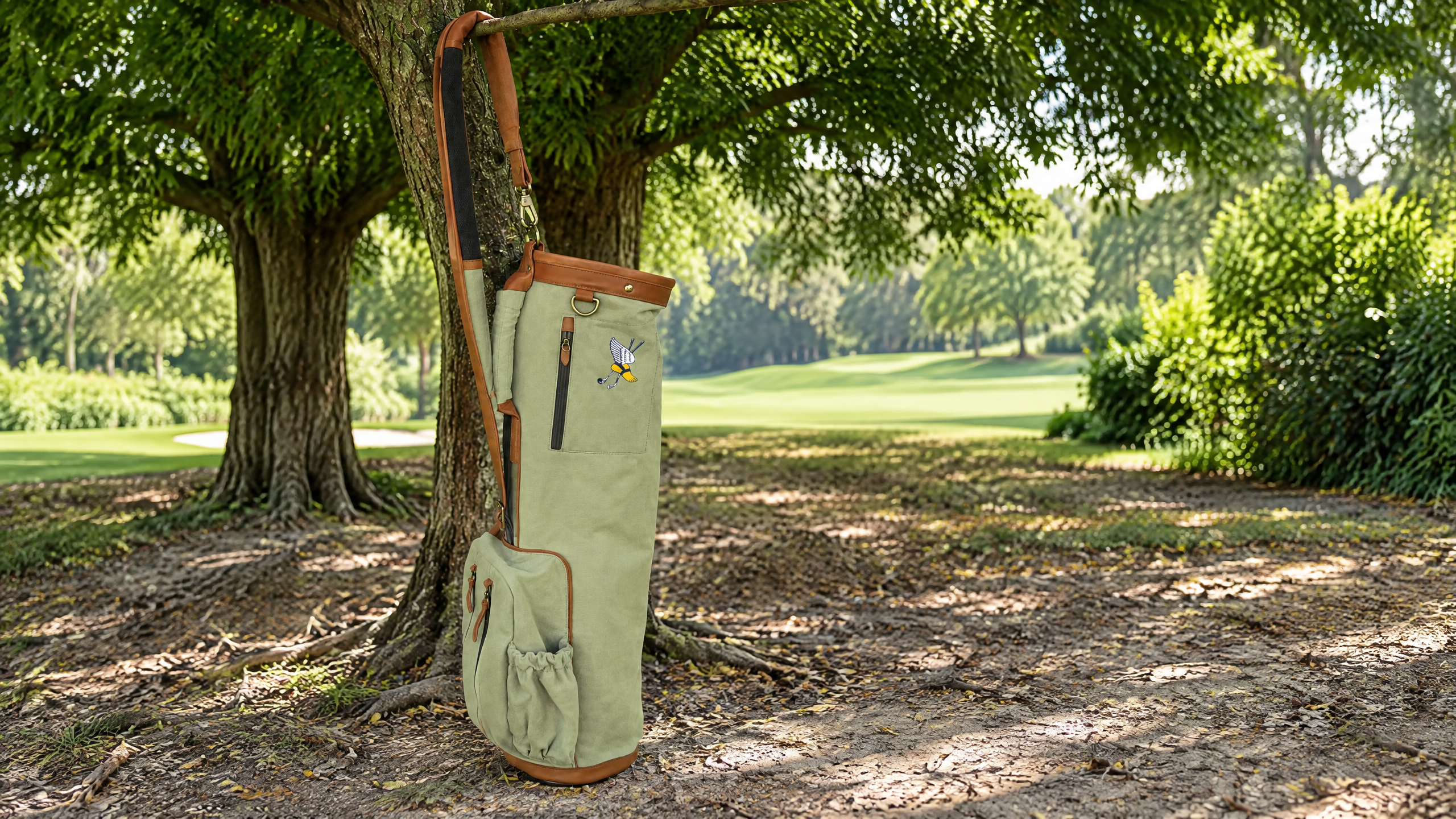
From a 10-Day Sample to a 12-Piece Launch: A Practical Playbook for Custom Waxed Canvas Sunday Bags
How Magpie Supply moved from a custom waxed canvas Sunday Bag sample to a 12-piece production run in 20 days—plus a practical small-batch development checklist.
Links Golf Sports
Product Specialist & OEM Consultant · Links Sports Co
10+ years in golf & tennis bag manufacturing. Specialises in OEM/ODM custom branding, material sourcing, and B2B wholesale for brands across 30+ countries.
A small first production run is not a reason to lower the development standard. It is the moment a new golf brand learns whether its product idea can become something real, repeatable, and worthy of its name.
When Magpie Supply approached Links Sports Co about developing a custom version of our Heritage Waxed Canvas Sunday Walking Golf Bag, the assignment was more focused than a standard catalogue order. The team wanted a bag with the character of a heritage walking piece, but with a distinctly darker, more understated brand direction. The final brief centred on black waxed canvas, considered trim and hardware details, brand-specific finishing, and a construction standard that would hold up when the bag was handled at close range.
The project moved from confirmed brief to physical sample in 10 days. After sample approval, the first 12-piece production run was completed in 20 days. Those numbers are specific to this project, its approved specification, and the materials available at the time; they are not a universal lead-time promise. What makes the project useful, however, is the process behind the numbers. It is a practical example of how an independent golf brand can use a small run to validate a product without treating quality, customization, or production control as optional.
Why a 12-Piece Run Still Needs a Full Development Process
Small-batch production is often misunderstood. People sometimes assume a 12-piece order can be handled informally: choose a base bag, apply a logo, and move straight to production. That approach is risky, especially for a product such as a waxed canvas Sunday Bag. Its perceived quality comes from the relationship between multiple visible details: the fabric’s texture and tone, the way the trim meets the body, the shape of the pockets, the zipper line, the strap balance, the hardware finish, and the consistency of the branded elements.
When the first run is small, each bag carries more commercial weight. It may go to a founder, early customer, retailer, golf club, photographer, or prospective partner. A mismatch in color, an unclear logo treatment, or an uncomfortable carrying experience does not stay hidden inside a large shipment. It becomes part of how the market first understands the brand.
For that reason, our working principle on this project was simple: small quantity, full discipline. The same sequence used for a larger private-label program still applies—clear brief, component confirmation, physical sample, structured approval, production preparation, in-process checks, final inspection, and packing review. The scale changes; the need for clarity does not.
Starting With a Proven Platform—Then Making It Brand-Specific
The starting point was our Links Heritage Waxed Canvas Sunday Walking Golf Bag, a lightweight walking design built around waxed canvas and full-grain leather trim. A proven platform can accelerate development because its core pattern, functional proportions, and carrying concept are already established. But it should not be confused with a finished custom product.
For Magpie Supply, the value was in deciding what needed to remain stable and what needed to change. The bag needed to preserve the practical qualities expected from a Sunday Bag: a compact profile, a comfortable carrying setup, useful storage, and a material story suitable for walking golf. At the same time, the visible language needed to shift toward Magpie Supply’s own identity.
The custom development discussion therefore focused on five questions.
What should the customer feel when they first touch the bag? Waxed canvas is not a flat synthetic surface. Its character comes from texture, slight tonal variation, and the way it develops over time. Choosing a black direction meant checking the visual depth of the fabric and how the surrounding trim would frame it.
Which details would make the bag recognisably Magpie Supply? Branding is more than placing a mark in the most obvious location. The treatment must work with the material and with the bag’s overall restraint. On a heritage-inspired product, oversized or overly bright branding can fight the design rather than strengthen it.
Which features are essential for the intended user? Pocket position, zipper access, attachment points, shoulder contact areas, and how the bag stands or rests on the ground all need to be considered in relation to how a golfer actually carries a Sunday Bag.
Which components need an approved reference before bulk production? Fabric, trim, webbing, zipper pulls, buckles, logo elements, and lining choices can each create variance if they are described only in broad terms.
What does “approved” mean? A sample is not approved because it looks good in one photo. It is approved when the brand and factory agree on the exact aspects that cannot change in production.
The 10-Day Sample: Turning an Idea Into an Inspectable Object
The 10-day sampling window was valuable because it replaced assumptions with a physical object. A digital mock-up can communicate an idea, but it cannot fully show the hand feel of waxed canvas, the way a finished bag folds, the weight distribution on a shoulder, or the interaction between a zipper, leather trim, and pocket panel.
For any custom golf bag project, the sample should answer more than “Does it look right?” A useful approval review should cover the following areas:
| Review area | Questions a brand should ask before approving a sample |
|---|---|
| Material | Is the fabric weight, texture, color, and finish right for the intended product position? |
| Branding | Is the logo method clear, durable, correctly sized, and placed where it supports the design? |
| Function | Can the golfer access the pockets, carry the bag comfortably, and use the product as intended? |
| Construction | Are stitching, edge finishing, panel alignment, seams, and trim transitions clean and repeatable? |
| Components | Are the zippers, pulls, rings, buckles, straps, and webbing consistent with the approved direction? |
| Production reference | Has the approved sample become the shared reference for the production team and the client? |
This is also the stage where a small brand can make its most cost-effective decisions. Changes to an approved sample may take thought and coordination, but changes found after production begins are far more disruptive. A clear sample review protects both the brand and the manufacturer: it gives the brand a chance to define the product precisely and gives the factory a usable standard rather than a collection of informal preferences.
From Sample Approval to 20-Day Production
Once the Magpie Supply sample was approved, the project moved into the first production run of 12 bags. The 20-day production period was not simply a waiting period between order and shipment. It was the stage where the approved reference had to be translated into a repeatable build.
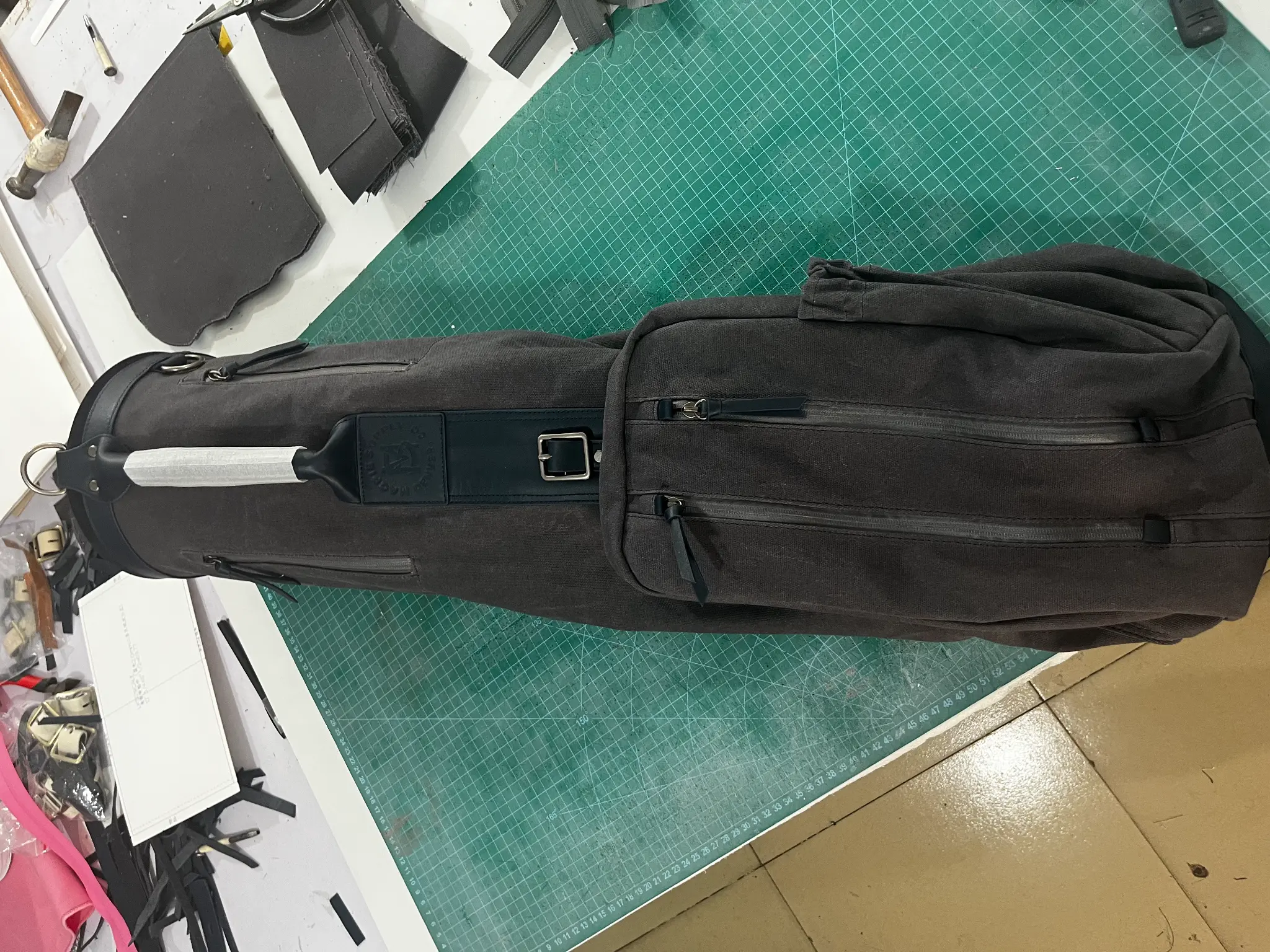
For waxed canvas products, repeatability deserves particular attention. Material character is part of the appeal, but production still needs control. Panels must be cut with consistent grain direction and color consideration. Trim pieces must sit evenly. Hardware must match the approved finish. Zipper placement needs to remain clean across every piece. Branding details need to remain legible and positioned consistently.
In a small run, it can be tempting to rely on individual craftsmanship alone. Craft matters, but a reliable result also depends on documentation. The approved sample should be supported by a concise production reference: material callouts, component choices, logo location, critical dimensions, visible finishing points, and packaging requirements. This does not need to become an overly complicated technical file for a first launch. It does need to be clear enough that each person involved in cutting, sewing, assembly, finishing, and inspection is working toward the same product.
The final Magpie Supply pieces shown in the accompanying photo and video reflect that approach. The black waxed canvas gives the product a quiet, durable character. The trim and hardware details are deliberately restrained. The body maintains the compact proportions expected of a walking bag, while the visible finish reinforces that this is a brand-specific product rather than a generic item with an added mark.
What “Quality” Should Mean for a Small Custom Golf Bag Order
Quality is often described too generally. For a small custom golf bag order, “high quality” should not be a marketing phrase. It should be translated into checks that a founder, buyer, or brand manager can actually review.
For a waxed canvas Sunday Bag, those checks may include whether the main panels sit smoothly, whether the waxed surface is handled carefully during assembly, whether pocket zippers move cleanly, whether strap and handle anchor points are secure, whether trim edges are even, whether hardware is free from obvious scratches, whether the logo treatment is consistent, and whether the bag’s overall silhouette matches the approved sample.
Just as important is the definition of acceptable variation. Natural materials and waxed textiles may show character that a uniform synthetic material does not. The goal is not to erase every sign of material personality. The goal is to distinguish natural character from avoidable inconsistency. That distinction should be agreed during sampling—not argued after delivery.
A Practical Checklist for Brands Planning Their First Custom Run
Magpie Supply’s project offers a useful pattern for other independent golf brands, pro shops, clubs, and design-led retailers. Before requesting a sample, prepare the following six items.
First, define the product’s job. Is it a minimalist walking bag, a club gift, a premium retail item, a travel companion, or a branded event product? A clear use case guides every decision that follows.
Second, prioritize three non-negotiables. For one brand, that may be waxed canvas, a specific logo treatment, and compact carry comfort. For another, it may be a shoe pocket, team colors, and trolley compatibility. Trying to make every feature equally important usually creates a diluted brief.
Third, provide brand assets early. Supply the correct logo files, colour references, placement expectations, and examples of the visual tone you want. A factory can manufacture details reliably only when those details are defined.
Fourth, approve a physical sample with a checklist. Review it in hand, not only by photo. Open the pockets, test the zippers, lift it by the handle, wear it on the shoulder, and photograph the exact details that must be repeated.
Fifth, document changes before approval. If the sample needs a different trim, repositioned logo, revised pocket, or alternative hardware, record that change in one agreed place. A sample approval should result in one source of truth.
Sixth, treat the first run as a learning launch. A 12-piece production order can provide real feedback without forcing a brand to commit to a large inventory position. The insight gained from the first customers can guide the next colorway, feature revision, or larger production order.
The Bigger Lesson: Specific Beats Generic
Independent golf brands do not need to compete by offering every kind of product to every golfer. They can compete by being specific: specific about the player, the material story, the use case, the visual identity, and the details they are unwilling to compromise.
That is what made the Magpie Supply project rewarding. The objective was not to make a generic Sunday Bag faster. It was to translate a focused brand point of view into a practical product, then build it with enough clarity that the first 12 pieces could carry that point of view consistently.
For brands considering their own custom golf bag, the most useful first question is not “What is the minimum order?” It is: What needs to be true about this bag for a customer to recognize it as ours? Once that answer is clear, the sample process, component choices, quality checks, and production plan become much easier to define.
The Magpie Supply project shows that a 10-day sample and a 20-day first production run can support a thoughtful launch when the brief is clear, the sample is treated as a decision tool, and quality is built into the process—not added at the end.
Are you developing a custom Sunday Bag, stand bag, or club-branded golf collection? Start with a focused specification and a physical sample before committing to bulk production.
Share this article