Behind a Custom Winged Foot Sunday Bag: Developing a Club-Exclusive Canvas Carry Bag
A Product Story on developing a club-exclusive olive canvas Sunday bag, from crest placement and material direction to sample approval for golf-club buyers.
Links Sports Co
Product Specialist & OEM Consultant · Links Sports Co
10+ years in golf & tennis bag manufacturing. Specialises in OEM/ODM custom branding, material sourcing, and B2B wholesale for brands across 30+ countries.
A custom Sunday bag should begin with a club’s point of view
Links Sports Co develops custom Sunday bags for golf clubs from the ground up: club identity, canvas and leather choices, pocket function, embroidery placement and a physical sample are brought together before bulk production is approved. This Winged Foot project demonstrates what a club-exclusive canvas carry bag can become when the objective is not merely to place a crest on an existing silhouette, but to create a considered piece of golf equipment that feels native to the club.
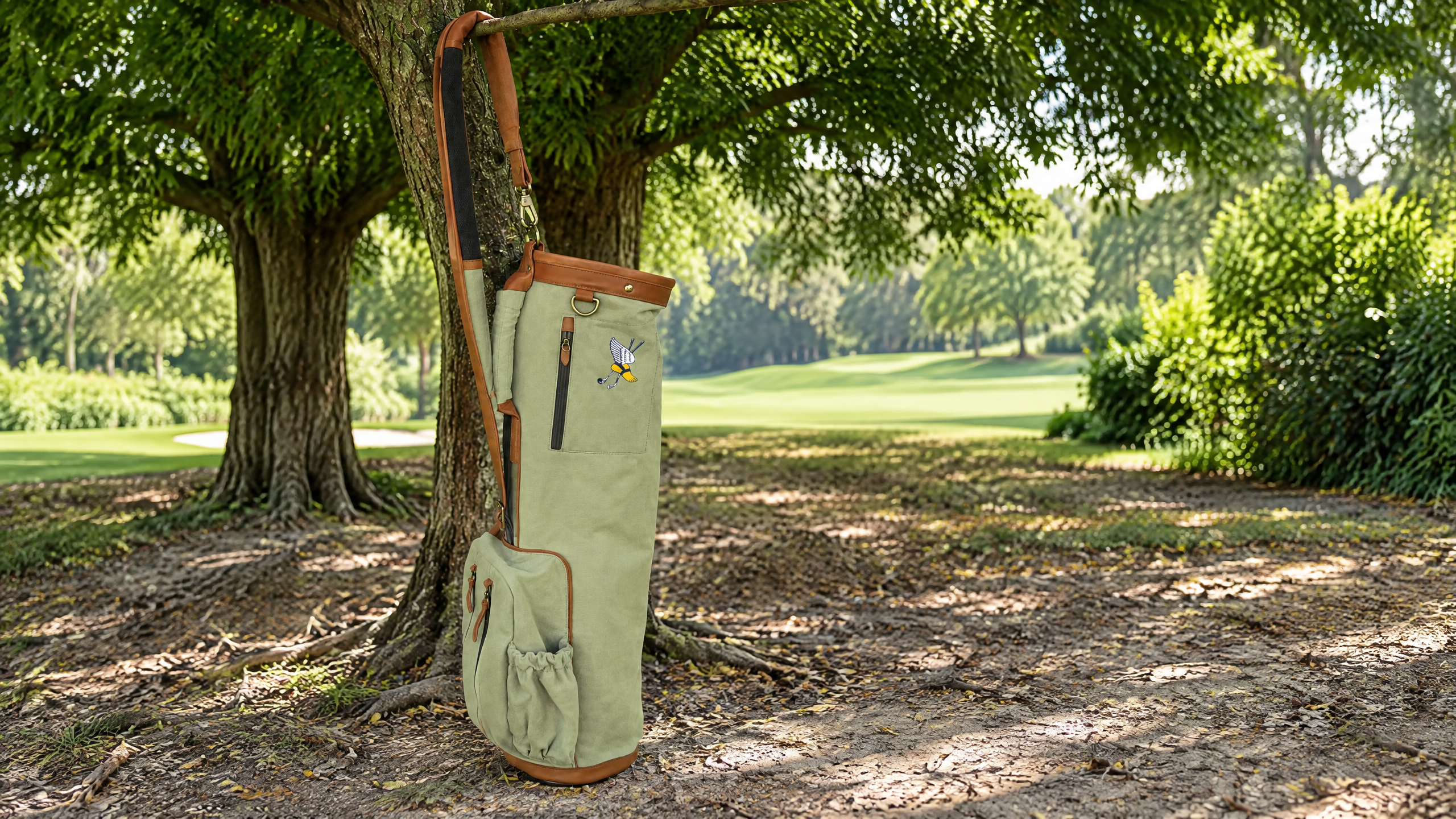
The visual brief was clear. The bag needed an olive-green canvas body that could sit naturally in a mature course setting, warm leather trim with a traditional character, and an embroidered club crest that would read with confidence without taking control of the entire bag. The result is a Sunday bag with a deliberate contrast: soft, natural materials and a restrained palette alongside robust carry hardware, practical pockets and a clean vertical profile.
That balance matters. A club bag has to carry a name, but it also has to earn its place in a member’s weekend routine. It may be picked up for a quick nine holes, used as a guest gift, offered through a pro-shop programme or carried on a member trip. In every case, the bag needs to be recognisable, useful and specific to its setting.
The difference between a logo application and a club-exclusive carry bag
A crest is essential, but it is only one part of a coherent club product. The most memorable custom golf bags are built around a connected set of choices. On this canvas Sunday bag, the olive body provides a calm foundation. Tan leather at the rim, base and strap creates a warmer visual frame. Dark zipper tape brings definition to the front pocket. Brass-tone hardware keeps the construction visually consistent with the traditional carry format.
The embroidered winged-foot crest is positioned on the upper front panel, where it remains visible when the bag is carried but leaves the rest of the exterior quiet. That placement is purposeful. It protects the club identity from being lost in functional details, while allowing the bag to feel like an object a golfer would choose to carry even away from a formal event.
For golf clubs, this is the central advantage of a club-exclusive golf bag development programme. A custom product is not defined by the number of custom features. It is defined by whether the material, trim, logo technique and function support the same club point of view.
Reading the brief through the finished bag
The following design decisions show how a focused specification can turn a familiar Sunday-bag category into a one-of-one club item.
| Design decision | What it contributes to the club programme |
|---|---|
| Olive canvas body | A natural, heritage-led foundation that works with an outdoor course environment and gives the bag a distinct pro-shop presence. |
| Leather rim, base and strap detailing | A more considered hand-feel and visual contrast at the parts members see and touch most often. |
| Front zip pocket | A defined storage zone for smaller essentials without disrupting the clean vertical silhouette. |
| Side utility pocket | Easy-access capacity for items a golfer wants close at hand during a short round. |
| Embroidered club crest | A tactile, durable presentation of club identity that can be reviewed on the physical sample before production release. |
| Restrained hardware palette | A consistent finish that supports the canvas-and-leather story rather than competing with it. |
The bag in the photograph is a useful reminder that custom logo embroidery on golf bags should be discussed with the construction, not after it. Stitch density, backing choice, panel reinforcement, logo size and the distance from seams each affect the final result. The right approach is to assess the artwork at the same time as the panel and material plan, then confirm the appearance on the first sample.
How custom Sunday bag sampling turns an idea into an approved specification
A physical sample is where a club’s concept becomes a manufacturing instruction. Digital renderings are valuable for direction, but they cannot fully show how canvas softens around a pocket, how a leather trim sits at a binding edge, how an embroidered crest reads against a specific body colour or how the shoulder strap feels under a realistic carry load.
Our golf bag sample development process is designed to make those decisions visible early. It begins with a working brief. The club or buying team can share a logo file, preferred colours, material references, intended use and any ideas about members, event guests, retail or gifting. If a detail is open, we help define it through the product’s purpose rather than treating it as decoration.
Next, the construction is translated into a sample specification. That covers the body material, trim material, logo method, pocket arrangement, hardware direction and any required size or carry considerations. Before the sample is released, the approval team should know what is fixed and what is still being evaluated. This distinction keeps useful conversation focused and prevents last-minute changes from becoming production surprises.
When the sample is ready, the review moves from concept to evidence. The club can assess the bag in the same terms members will experience it: the clarity of the crest, the relationship between canvas and leather, the accessibility of each pocket, the balance of the carry strap and the overall character from several viewing angles. Feedback can then be consolidated into one revision list before the bulk specification is locked.
This is particularly important for a private-label canvas golf carry bag. Canvas, leather-look trims, embroidery and antique-style hardware have visual character, but they also need a disciplined approval path. A single sample review that covers both appearance and function is more valuable than trying to correct separate details after production begins.
A practical sample-review checklist for club buyers
When reviewing a custom Sunday bag sample, a procurement team can make the meeting more productive by checking five areas together.
First, examine club identity at normal viewing distance. The crest should be legible, correctly positioned and proportionate to the panel. If artwork ownership or usage approval is required, the club should confirm that before manufacturing proceeds.
Second, assess material harmony. Canvas tone, leather trim colour, zipper tape and metal finish should look intentional as a group. A material may look attractive alone and still feel disconnected beside another component.
Third, test the carry experience. Pick up the bag as a golfer would. Consider strap length, attachment points, balance and how the bag sits at the hip or shoulder. Sunday bags are simple by design, so each carry detail has a visible effect.
Fourth, test real pocket access. Open and close the front pocket. Reach into the side pocket. Check whether the intended items can be retrieved without fighting the strap, zipper pull or bag structure.
Fifth, document the production-ready version. Once the sample is approved, the final artwork placement, materials, hardware and construction notes should be consolidated. This creates a clear release point for the bulk programme and reduces ambiguity between the club, buyer and factory team.
Why Sunday bags make strong club merchandise and member gifts
Full-size bags are important in a golf assortment, but a Sunday bag offers a different kind of value. It invites an easier round. It suits walking, practice, travel and short-format play. It can also become a distinctive part of a club retail or event programme because it feels personal without becoming overly formal.
For a club buyer, the category opens several possibilities. A member event may call for a finite club-exclusive piece. A retail team may want a refined canvas carry bag that complements existing apparel and accessories. A hospitality programme may seek a keepsake with more longevity than a conventional giveaway. In each case, the best starting point is the desired member experience, followed by the product specification.
The Winged Foot project illustrates how that thinking can translate into a finished item. The bag’s materials communicate a relaxed heritage sensibility, while the tailored crest presentation makes its club connection immediately clear. It is not a generic bag with a late-stage badge; its customisation is visible in the whole composition.
From custom brief to bulk production with a clearer handover
Custom golf bag manufacturing works best when decisions are staged. Begin with the intended use and club identity. Use a sample to settle material, logo and functional details. Then confirm the production quantity, packaging approach and delivery plan against the approved specification.
We do not treat a minimum order quantity or delivery schedule as a generic promise. They depend on the exact Sunday bag construction, material selections, embellishment method, approved sample status and programme requirements. This approach protects both the club and the product: the commercial plan is tied to the version that was actually reviewed, rather than an early concept that may still change.
For teams planning their first custom Sunday bags for golf clubs, early clarity has the greatest value. Provide the best available logo artwork, indicate the intended member or event use, identify the elements that cannot change and nominate one person to consolidate sample feedback. Those simple inputs create a much more efficient development path and preserve the club’s design intent from first conversation to final bag.
A Sunday bag may be compact, but it has an unusually direct relationship with the golfer carrying it. That is why the most effective custom programmes put equal care into the visible identity, the materials and the small functional details. The finished bag becomes more than branded merchandise. It becomes a carry piece with a reason to belong at that particular club.
To explore material directions and carry formats, view our canvas Sunday golf bag collection, browse custom golf bag options, or start a club product-development conversation.
Frequently Asked Questions
Q: Can a golf club develop a custom Sunday bag rather than add a logo to an existing bag?
Yes. A custom development brief can combine the club crest with selected body materials, trim, pocket configuration, hardware direction and carry details. The sample is the point at which those choices are reviewed together before bulk production is approved.
Q: What artwork should a club supply for golf bag embroidery?
A clear vector artwork file is preferred whenever available. The club should also confirm the approved logo version, intended size, placement and any colour guidance. We review the artwork with the chosen panel and embroidery method so the sample reflects the planned production result.
Q: What should a buying team inspect on a custom Sunday bag sample?
Review crest clarity and placement, material colour harmony, stitching and trim alignment, pocket access, hardware finish and strap comfort. Consolidating feedback into one signed-off specification before production reduces preventable revisions later in the programme.
Q: How are MOQ and lead time confirmed for a club-exclusive golf bag?
They are confirmed after the bag construction, materials, custom details and sample status are defined. This keeps the quote and production plan connected to the exact approved product rather than a preliminary concept.
Share this article