One Group, One Golf Shag Bag: Planning Better Short-Game Practice
Give each short-game group a clear ball supply. A practical club guide to bag assignment, coordinated extra-ball issue, safe collection and checked returns.
Links Sports Co
Product Specialist & OEM Consultant · Links Sports Co
10+ years in golf & tennis bag manufacturing. Specialises in OEM/ODM custom branding, material sourcing, and B2B wholesale for brands across 30+ countries.
A short-game clinic can become untidy before anyone notices. One pair borrows a few balls from another, a coach adds an extra handful for a demonstration, and the bags finish the session beside the practice green with nobody quite sure what belongs where. The difficulty is not necessarily the equipment. It is the absence of a shared routine.
Giving each group one golf shag bag creates a clear place to start that routine. The bag holds the group's practice balls; a named person and a simple record establish who controls them. For club coaches and buyers planning a programme, the useful question is not just which bag to order, but how it will move through the lesson.
The quick answer: one group, one accountable ball supply
Assign one bag, one opening ball count and one named group lead to each small group. Issue extra balls through the coach or session coordinator rather than allowing informal borrowing. Before anyone collects, stop all hitting in the shared practice area and obtain explicit confirmation from the person responsible for it. Then collect manually, return balls by group, record discrepancies and hand the bags back to a named storage custodian.
Club and coach safety rules govern every step. A bag is a container, not a mechanical or no-bend ball collector.
Set ownership before players arrive
Start at the storage point, not at the first drill. The session coordinator checks which bags and practice balls are available, then assigns each bag to a group. Ownership here means responsibility for the session, not personal ownership of club equipment.
Give each group a lead who can acknowledge the opening issue, request additions and help check the return. For a junior clinic, that responsibility may sit with an assistant coach rather than a player. Keep the role appropriate to the participants and the club's supervision requirements.
Count the actual balls being issued. Do not use a bag's apparent fullness as a substitute for a count, and do not treat the opening issue as a statement of bag capacity. The coach decides how many balls the activity needs within local rules and available space. Record that number before the bag leaves storage.
Check the practice balls for obvious damage and follow the club's policy for setting unsuitable balls aside. Confirm where each group will practise, where bags may be placed and who can authorise collection. A golf practice ball bag should remain outside playing lines and walking routes, at a position the coach approves.
When commissioning equipment from Links Sports Co, include this intended routine in the brief. Colour, identifiers and storage arrangements should support the lesson plan; the club remains responsible for local supervision and safety.
A hypothetical lesson with six players
Imagine a lesson with six players divided into three groups of two. This is a hypothetical planning example, not a report of measured results.
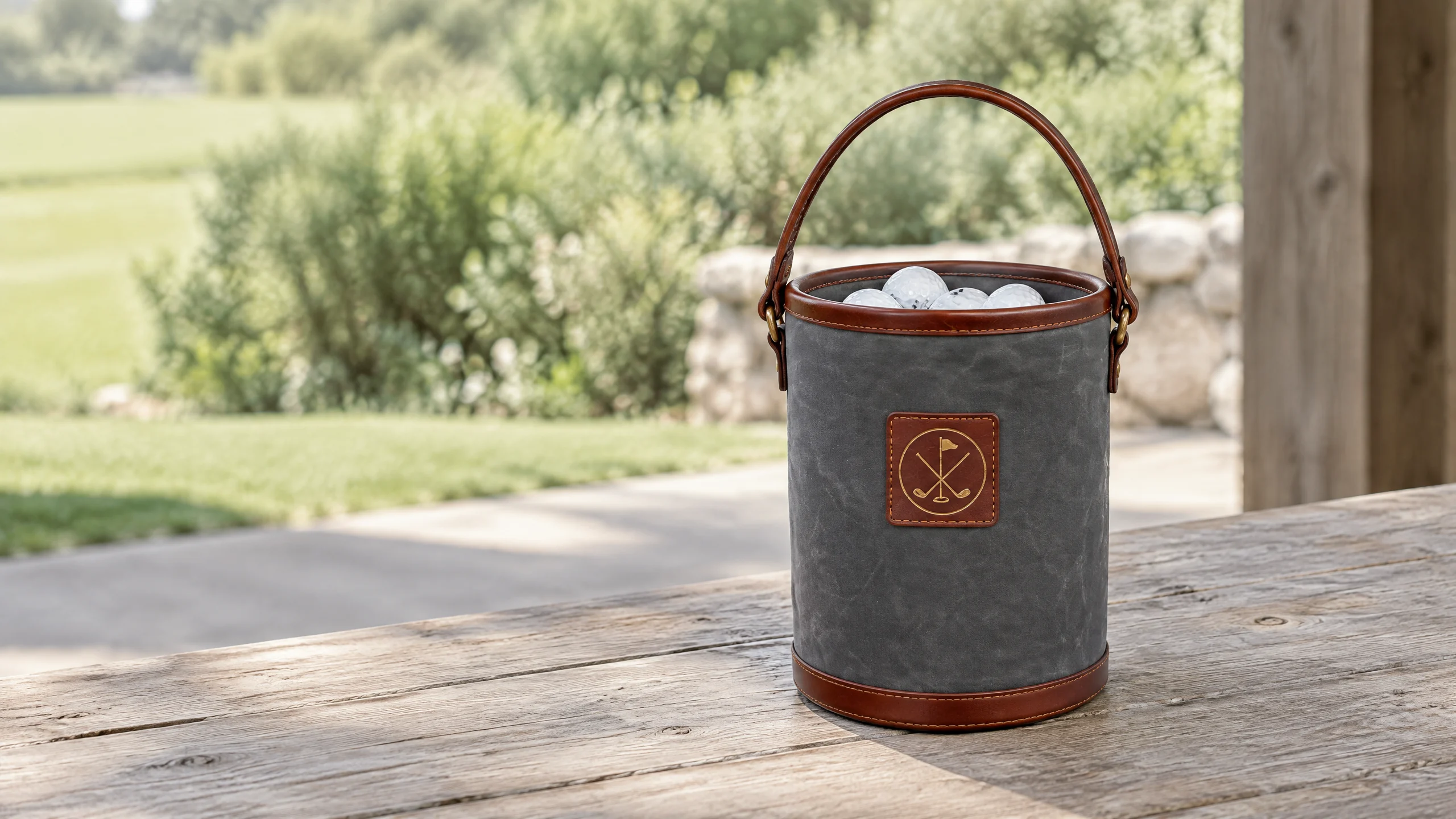
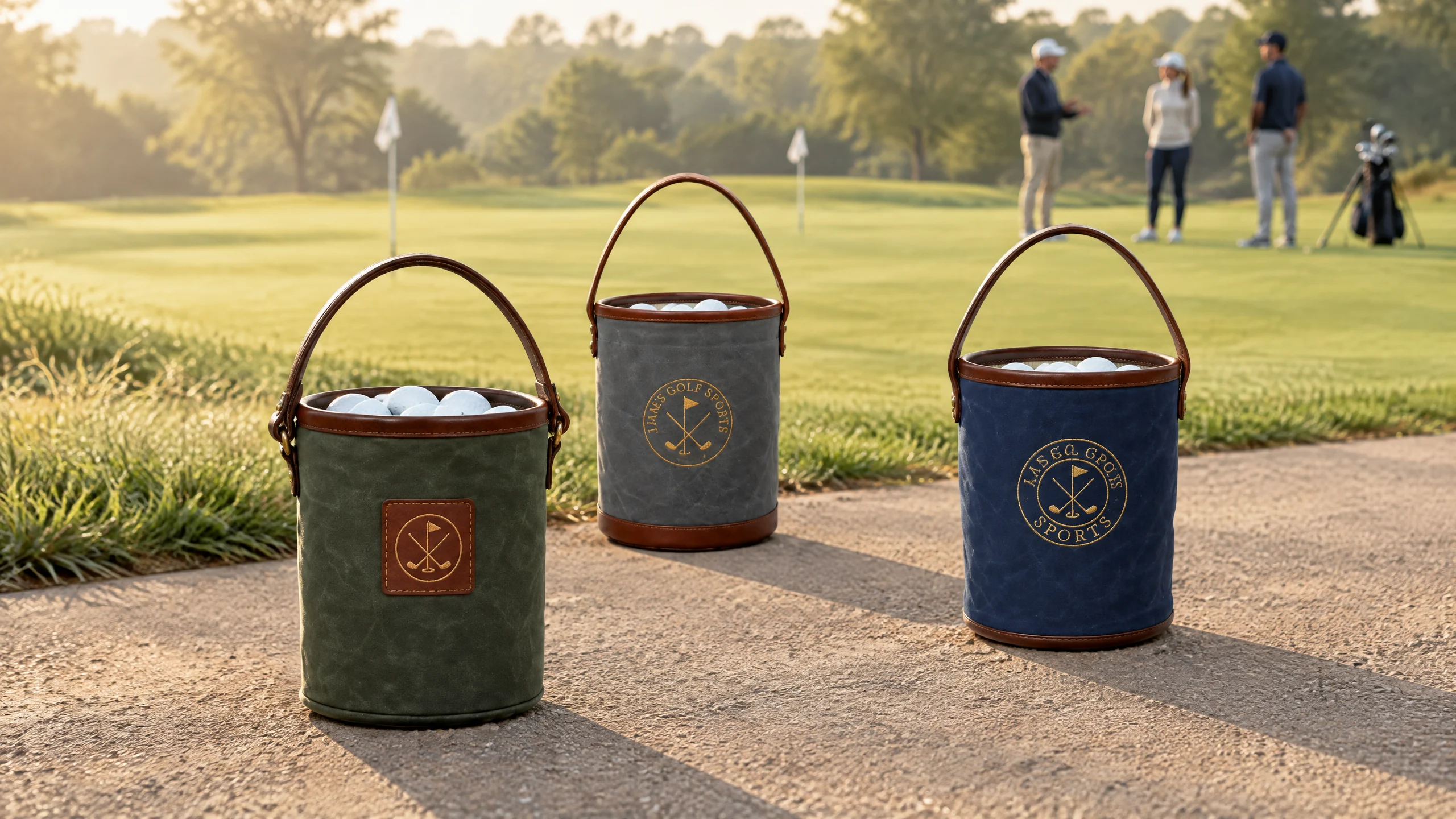
Each group receives a soft, round, open-top bag with an arched leather handle. One is forest green, one gray and one navy. These colours are visual references for the scenario, not a guarantee of current stock. The shape needs only a brief introduction: the open top gives the group a straightforward place to put its balls, while the handle identifies how the container is carried.
The coach also labels the groups A, B and C, so colour is not the only identifier. Each pair names a lead, checks its opening issue with the coordinator and takes its bag to an assigned station.
The coach might use a fixed starting spot and a target for a chipping activity. The PGA's short-game drill guidance offers an example of that practice format. The coach selects and adapts the activity, spacing and supervision; the group allocation routine here is a planning suggestion.
Coordinate extra balls instead of passing handfuls
Once short game practice begins, the temptation is to solve every shortage locally. One pair sees an unused supply nearby and borrows it. Another asks an assistant for more. Neither action is necessarily recorded, leaving the final count difficult to explain.
Use one issue point instead. The group lead requests additional balls from the coordinator, who confirms that the request fits the activity, counts the addition and records it against that group's bag. If balls are moved between groups, record both sides of the transfer at the same time. Better still, avoid transfers unless the coach needs them.
Keep the record at the coordinator's station rather than making every player carry paperwork. A clipboard or the club's existing session sheet can be enough. The important detail is that an extra issue changes the expected return; it must not disappear into a general note saying “more balls supplied”.
This makes golf ball allocation for small group coaching explicit without turning the lesson into an inventory exercise. The lead communicates the request, the coordinator updates the count and the coach keeps control of the activity. Nobody should walk into another group's hitting area to fetch extra balls.
Stop all hitting before manual collection
Collection is a separate phase of the lesson, not something players fit between shots. Before anyone moves out to retrieve balls, the coach stops all hitting across the shared practice area and receives an explicit all-clear from whoever controls that area. A pause by one pair is not enough if another group can still hit into the collection space.
Brief the signal before practice starts. Players need to know what “stop” means, where to wait and who gives permission to move. The coordinator should confirm that every group has stopped and that adjacent use is controlled under club rules. If that confirmation is incomplete, collection does not begin.
Only then may the designated people collect manually, following the coach's directions. The bags simply hold the retrieved balls. They do not pick balls up mechanically, remove the need to bend or make it safe to enter a hitting zone.
Never collect balls from an active range. If the planned collection area overlaps live practice elsewhere, the coach must use the club's authorised arrangements or leave those balls until collection is permitted. A count discrepancy is never a reason to enter an unsafe area.
After collection, everyone returns to the agreed waiting position. Hitting resumes only when the responsible person confirms that collectors are clear and authorises the next phase. This separation applies even when the next drill seems brief or informal.
Return each group's balls before pooling them
At the end of the lesson, bring each bag back to the issue point separately. Keep the group identity attached until its return has been checked. Tipping all three bags into one container first may leave a total count, but it removes the chance to understand a group-level discrepancy.
Compare the returned count with the expected return: opening issue plus extra issues, adjusted for any recorded transfers. Include balls collected but set aside as damaged in the return record, while keeping them physically separate under club policy. Do not quietly reduce the expected count to make the sheet balance.
If the figures differ, write a factual note. Useful notes identify a documented transfer, a ball left in an area awaiting authorised collection, or an unexplained difference requiring follow-up. Avoid assigning blame from an incomplete count. A surplus also needs a note; it may indicate mixed supplies or an unrecorded addition.
The coordinator signs off the return or marks it unresolved. Any later recovery or correction should be added to the original record, with the person making the update identified.
A reusable issue-and-return sheet
Use the table below as a blank working template. The group labels reflect the hypothetical lesson; replace them for your own clinic. All count fields are intentionally empty, with no sample results implied.
| Group / bag reference | Group lead | Opening issue | Extra issued / transfers | Expected return | Actual return | Discrepancy or damaged-ball note | Checked by |
|---|---|---|---|---|---|---|---|
| A / forest green | |||||||
| B / gray | |||||||
| C / navy |
Add the session date, coach, practice area and storage custodian above the table. Where there are several additions or transfers, keep a short dated issue log alongside it rather than compressing everything into an ambiguous entry.
Close the session with a storage handoff
A checked return is not quite the end. The coordinator tells the storage custodian which bags are ready, which balls have been separated and whether any discrepancy remains open. That handoff should identify both people, so “left by the cupboard” is not mistaken for an accepted return.
Empty and inspect the bags as required by the club's routine. Follow the supplier's care instructions for the relevant materials, and avoid putting damp or dirty equipment straight into closed storage without attention. Keep damaged-ball notes with the inventory record, not loose inside a bag.
Store bags in their assigned locations with group identifiers available for the next session. Colour can support recognition, but a written identifier remains useful when bags are similar or the next clinic uses different groupings.
Give buyers a programme brief, not just a product request
When comparing golf shag bags for short game clinics, describe the working pattern first: the number of groups, who issues balls, where bags sit during drills, how collection is controlled and who accepts the return. That brief helps a buyer discuss containers in the context of the programme rather than treating them as general coaching gear bags.
For a product conversation with Links Sports Co, the heritage canvas-and-leather open-top shag bag and waxed-canvas golf shag bag are relevant starting points. Confirm current product details and colour availability directly; the forest green, gray and navy references above are not stock assurances.
Keep the brief focused on practice-ball storage and handling, not club or tablet compartments. Buyers considering shag bags for golf coaches should also explain labelling, shared use, care and storage responsibilities. Links Sports Co can then respond to an identifiable use case, while the club retains responsibility for safe operation and lesson planning.
Frequently Asked Questions
Q: Does one golf shag bag per group mean each player needs a bag?
No. In this workflow, players share a group container and a named lead coordinates its issue and return. The coach decides group size and supervision according to the lesson and local rules.
Q: Can players collect balls while another group continues hitting?
Not in the shared practice area. All hitting must stop and the responsible person must confirm that collection is authorised before anyone enters. No balls should be collected from an active range.
Q: What should we do when the returned ball count does not match?
Record the difference, check documented extra issues and transfers, and note any balls awaiting authorised recovery. Keep the discrepancy open if necessary. Never restart collection in an unsafe area just to reconcile the count.
Q: Are the bags ball collectors, and are the example colours available?
The bags are containers for manually collected practice balls, not mechanical or no-bend collectors. Forest green, gray and navy identify the hypothetical groups only. Confirm current colours and product details before placing an order.
Share this article