How to Choose an OEM Golf Bag Manufacturer: The Complete B2B Buyer's Guide
Sourcing custom golf bags at scale? This guide covers the 7 critical factors every pro shop owner, golf brand, and distributor must evaluate before signing an OEM manufacturing contract.
Links Sports Co
Product Specialist & OEM Consultant · Links Sports Co
10+ years in golf & tennis bag manufacturing. Specialises in OEM/ODM custom branding, material sourcing, and B2B wholesale for brands across 30+ countries.
How to Choose an OEM Golf Bag Manufacturer: The Complete B2B Buyer's Guide
Sourcing custom golf bags at scale is one of the most consequential decisions a golf brand, pro shop, or sporting goods distributor will make. The right OEM manufacturing partner determines not only your product quality and margin, but also your brand reputation and supply chain reliability for years to come.
This guide distills the seven factors that experienced B2B buyers consistently cite as make-or-break when evaluating golf bag manufacturers.
1. Verify Real Manufacturing Capability (Not Just a Trading Company)
The most common sourcing mistake is engaging a trading company that presents itself as a factory. Trading companies add a 15–30% markup and have no direct control over production quality or lead times.
How to verify:
- Request a video factory tour or arrange an in-person visit. A genuine manufacturer will welcome this.
- Ask for the factory's business license and export license — these are public documents.
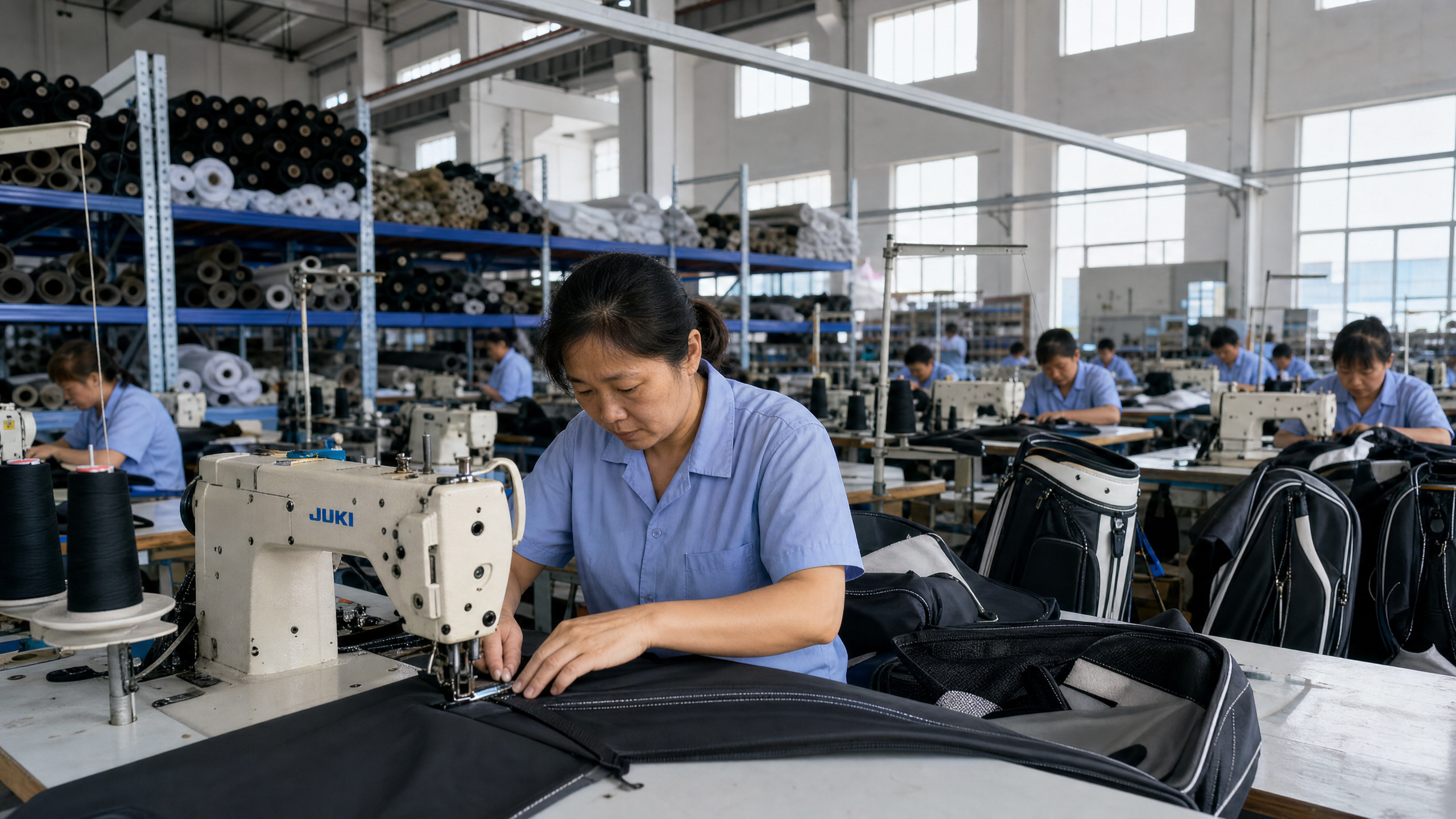
- Check whether the factory has its own pattern-making, cutting, sewing, and finishing departments under one roof.
- Look for in-house quality control labs (tensile strength testers, colorfastness equipment).
At Links Sports Co, our 5,000 sqm facility in Guangdong houses every production stage from material sourcing to final QC inspection, with 50+ full-time craftsmen specializing in leather and waxed canvas goods.
2. Assess Material Sourcing and Quality Standards
Golf bags are tactile, high-use products. The materials determine durability, aesthetics, and ultimately customer satisfaction. Ask every prospective manufacturer these questions:
- Where do you source your full-grain leather? (Italian tanneries vs. split leather from unknown origins)
- What weight is your waxed canvas? (16oz+ is industry standard for weather resistance)
- Do you use YKK zippers or generic alternatives?
- Can you provide material certifications (REACH, OEKO-TEX)?
Red flags: Vague answers about material origins, inability to provide swatches before sampling, or insisting on a single material option.
| Material | Quality Indicator | What to Ask |
|---|---|---|
| Full-Grain Leather | Tight grain, natural markings | Tannery name, hide origin |
| Waxed Canvas | 16oz minimum weight | Wax treatment method, water-repellency test |
| Zippers | YKK or equivalent | Cycle test results (10,000+ open/close) |
| Hardware | Brass or zinc alloy | Salt spray corrosion test |
3. Understand MOQ and Flexibility
Minimum Order Quantity (MOQ) is often the first filter in OEM sourcing. However, MOQ is negotiable — and a manufacturer's willingness to discuss MOQ tells you a lot about their business model.
Industry benchmarks for golf bags:
- Sunday/pencil bags: MOQ 30–50 units per style/color
- Stand bags: MOQ 50–100 units
- Cart bags/staff bags: MOQ 100–200 units
- Accessories (headcovers, shoe bags): MOQ 30 units
Pro tip: Ask whether MOQ applies per SKU or per order. Some manufacturers allow mixed-style orders that share an MOQ threshold, which is ideal for pro shops testing multiple styles.
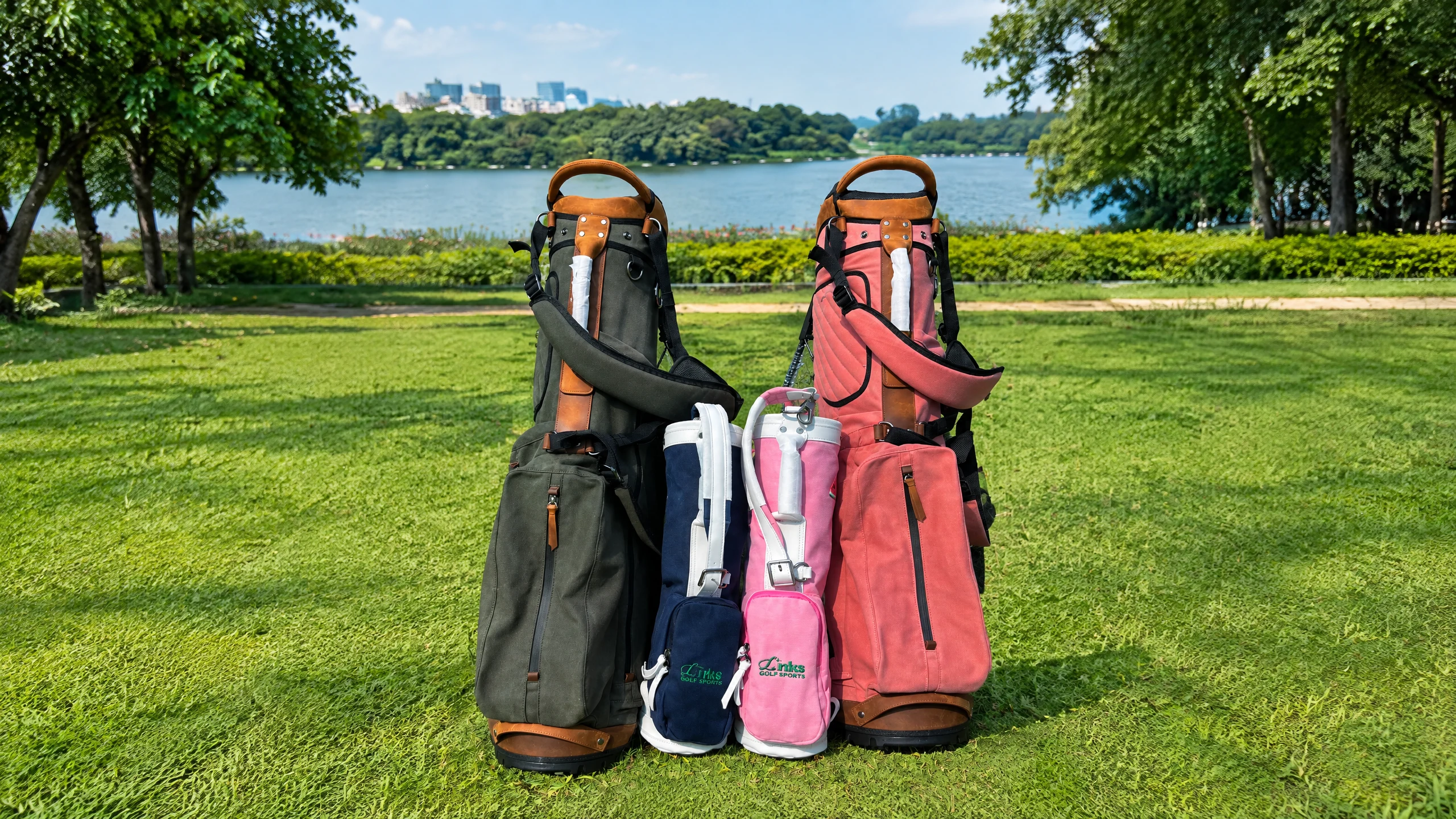
Links Sports Co offers MOQ from 30 units per style, with mixed-color orders accepted at no additional tooling cost for standard colorways.
4. Evaluate Sampling Process and Lead Times
The sample stage is where most OEM relationships succeed or fail. A professional manufacturer will have a structured sampling workflow:
- Pre-production sample (PP sample): First physical prototype based on your spec sheet. Expect 2–3 weeks.
- Counter sample: Revision incorporating your feedback. Expect 1–2 weeks.
- Production sample (TOP sample): Final approval sample pulled from the production run. Must match PP sample exactly.
Total sampling timeline: 3–6 weeks is standard. Be wary of manufacturers promising samples in under 2 weeks — rushed samples rarely reflect production quality.
Production lead times for confirmed orders:
- Standard styles (existing molds/patterns): 45–60 days
- Custom styles (new patterns required): 60–90 days
- Rush orders (with premium): 30–45 days
5. Review Customization Depth
"OEM" means different things to different manufacturers. Clarify exactly what level of customization is available:
| Customization Level | Description | Typical Minimum |
|---|---|---|
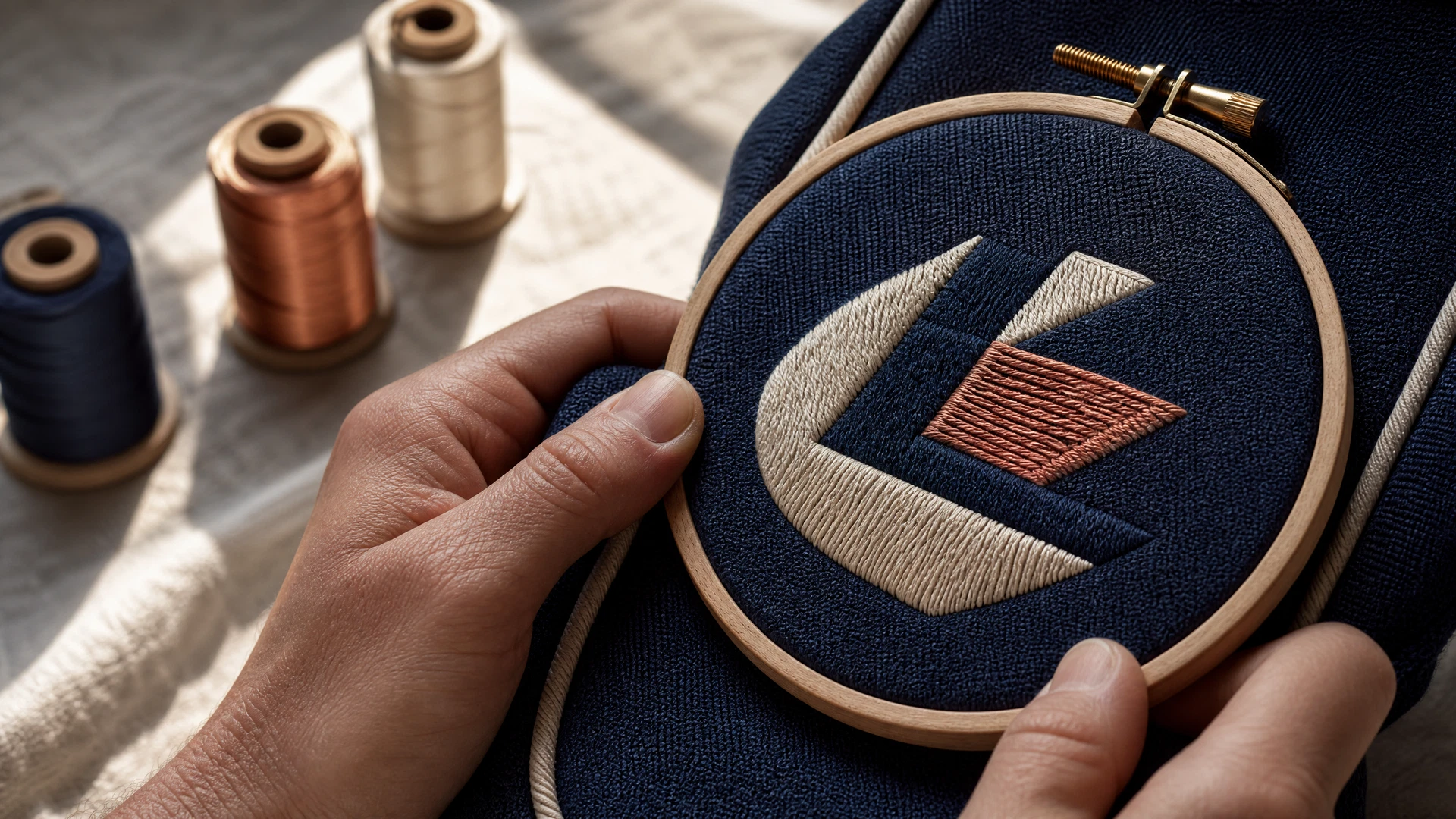
| Logo embossing/embroidery | Brand mark on existing design | 30 units |
| Color customization | Custom colorway on existing pattern | 50 units |
| Hardware customization | Custom zipper pulls, buckles | 100 units |
| Full custom design | New pattern from your spec sheet | 200–500 units |
| Private label packaging | Custom hang tags, dust bags, boxes | 100 units |
At Links Sports Co, we support all five levels. Our design team can work from a sketch, a reference product, or a detailed tech pack.
6. Check Export Experience and Compliance
A manufacturer with genuine export experience will have:
- Export license issued by Chinese customs authorities
- Experience with your target market's import regulations (e.g., EU REACH compliance, US CPSC requirements for children's products)
- Established relationships with freight forwarders for FOB, CIF, and DDP terms
- Track record with major retailers — ask for references or case studies
Links Sports Co has exported to 30+ countries including the US, UK, Australia, Germany, Japan, and UAE. We handle all export documentation and can coordinate with your nominated freight forwarder.
7. Assess Communication Quality and Responsiveness
This is the factor most buyers underweight — and most regret ignoring. Your OEM partner will be your primary contact for the next 2–5 years. Evaluate:
- Response time: Do they reply within 24 hours during business days?
- Language capability: Is your primary contact fluent in English (or your language)?
- Proactive communication: Do they flag potential issues before they become problems?
- Dedicated account manager: Will you have one consistent contact, or be passed between departments?
Practical test: Send a detailed RFQ (Request for Quotation) with 5–7 specific questions. The quality and completeness of the response tells you everything about how they'll handle production issues.
Summary: OEM Golf Bag Manufacturer Evaluation Checklist
| Factor | Key Questions | Green Flag |
|---|---|---|
| Manufacturing capability | Factory or trading company? | Own factory, video tour available |
| Material quality | Leather origin, canvas weight, zipper brand | Named tannery, 16oz+ canvas, YKK |
| MOQ flexibility | Per SKU or per order? Mixed styles? | MOQ 30–50, mixed orders accepted |
| Sampling process | PP sample timeline, revision rounds | 2–3 weeks PP, structured revisions |
| Customization depth | Logo only, or full custom design? | All levels from logo to new pattern |
| Export experience | Markets served, compliance knowledge | 30+ countries, export license |
| Communication | Response time, dedicated contact | <24h response, dedicated manager |
Why Links Sports Co
Links Sports Co has manufactured premium golf and tennis bags for brands, pro shops, resorts, and distributors across 30+ countries for over 15 years. We specialize in full-grain leather and waxed canvas goods, with MOQ starting at 30 units and full OEM/ODM customization available.
Ready to discuss your project? Request a Quote or download our product catalog to see our full range.
Share this article