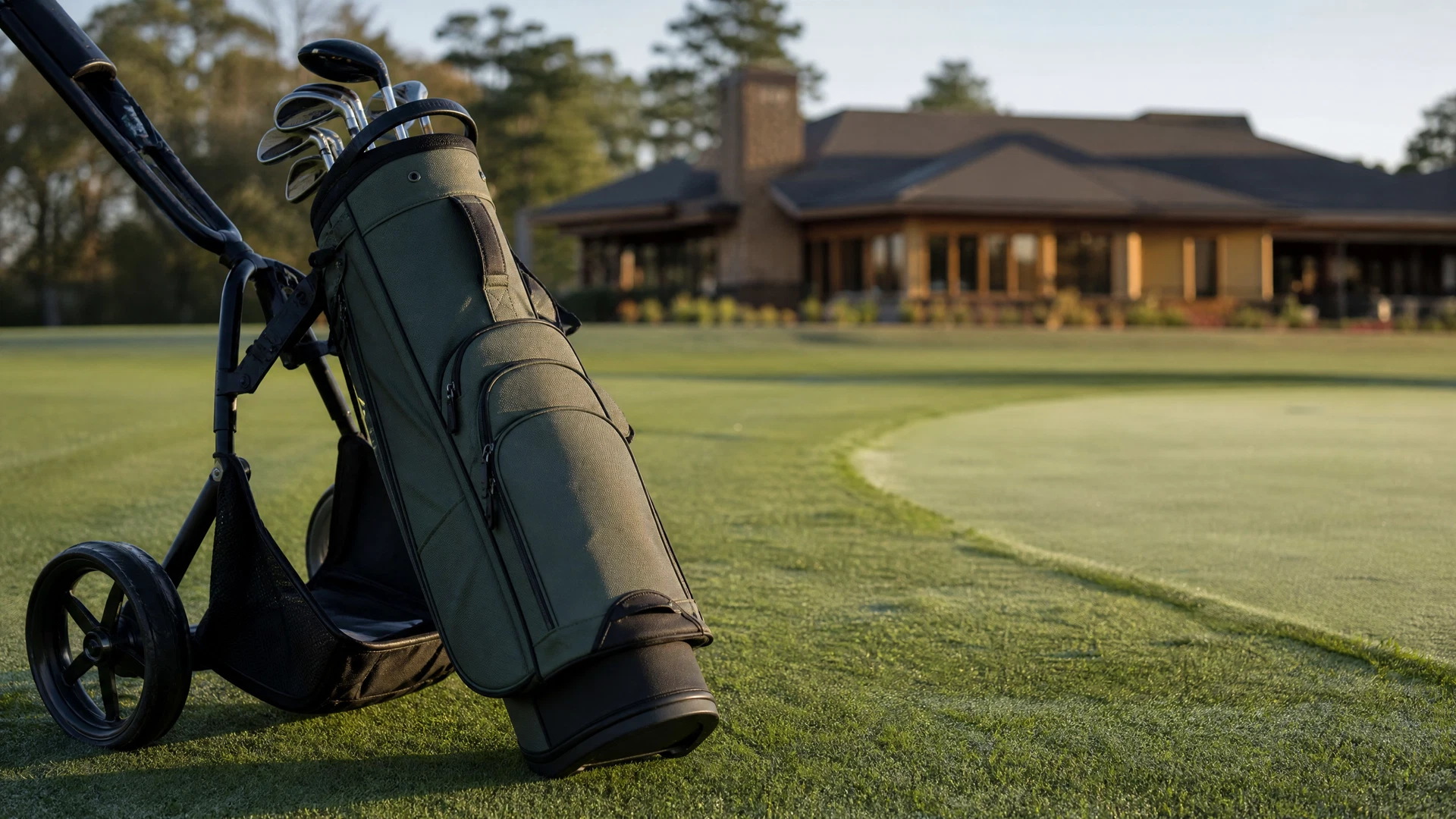
Quiet Branding, Clear Identity: A Design Rulebook for Private-Club Golf Bags
A private-club design rulebook for custom golf bags: use restrained branding, a coherent material story and sample-led decisions to create enduring club identity.
Links Sports Co
Product Specialist & OEM Consultant · Links Sports Co
10+ years in golf & tennis bag manufacturing. Specialises in OEM/ODM custom branding, material sourcing, and B2B wholesale for brands across 30+ countries.
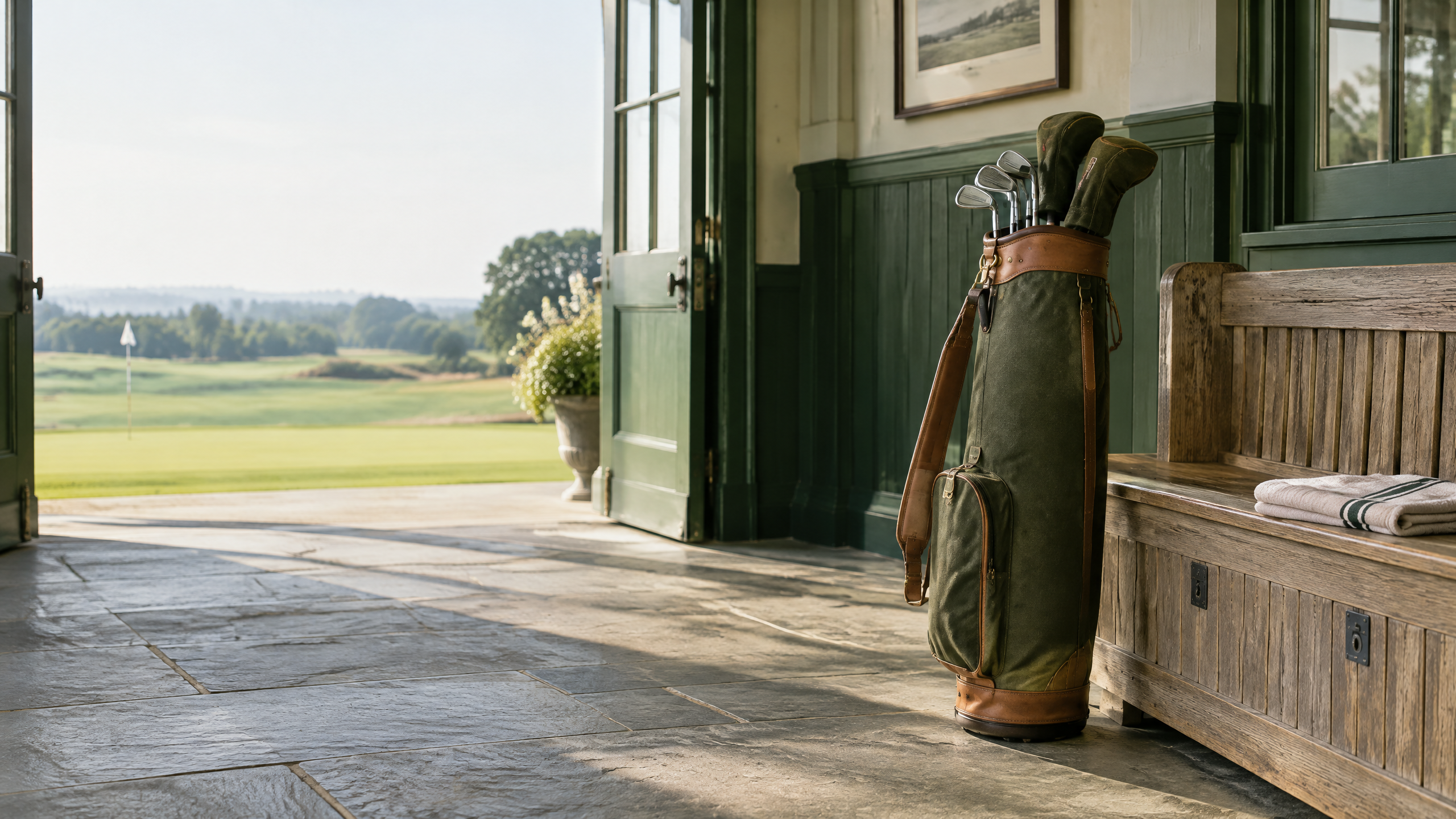
The strongest private-club golf bag is often the one that does not look as though it is trying to sell anything. Its identity appears in the proportions of the crest, the relationship between materials, the quality of the small touchpoints and the confidence to leave some surfaces quiet.
That is not an argument for making a bag anonymous. It is a way to make club identity more durable. A member should recognise the place behind the product without being asked to read a large message on every panel. For a pro-shop buyer or private-label team, the design question becomes: which details should speak, and which should remain calm?
This design rulebook explains how to brief a private club custom golf bag with a restrained, high-end point of view. It is intentionally different from a logo-placement checklist. The goal is a coherent design language that can last beyond one event or seasonal colourway.
Rule 1: Begin with the club’s character, not a colour swatch
A green body does not automatically communicate heritage. A navy bag does not automatically feel classic. The same colour can read very differently depending on texture, trim width, zipper tape, lining, hardware and the setting in which members see it.
Before choosing materials, ask three plain questions:
- What should the bag feel like in the club environment? Quiet, coastal, traditional, modern, sporting, warm or architectural are different directions.
- What should a member notice first? The crest, a material contrast, an elegant silhouette or a particular functional detail?
- What should never compete with the identity? Over-sized branding, too many accent colours, bright contrast stitching or decorative hardware can all become distractions when they are not part of the club’s visual language.
This first step gives the design team a vocabulary for choosing details. It also prevents a brief from becoming a collection of disconnected requests: one favourite colour, one large crest, one metal finish and one pocket from a different reference.
A club that values understated hospitality may choose a deep body colour, a small embroidered crest, warm leather-look trim and antique-tone hardware. A modern coastal club may prefer pale stone canvas, muted navy webbing and a tonal woven mark. Neither approach is more premium by default. What matters is that each choice supports the same character.
Rule 2: Put the logo where the bag can carry it gracefully
A crest can be present without dominating the full product. The key is to review its position with the panel, seams, pocket lines and the way the bag sits on a cart or beside a locker.
A good custom logo location should pass four tests:
| Test | Buyer question |
|---|---|
| Proportion | Does the crest feel right for the visible panel instead of filling it? |
| Distance | Does it have enough clear space from zippers, seams and binding edges? |
| Viewing | Is it recognisable at a natural member or guest viewing distance? |
| Context | Does the placement still work when the bag is carried, mounted or stored? |
On a Sunday bag, the upper front panel may be the natural place for a club identity. On a cart bag, a side panel might be more visible in use. On a stand bag, a carefully sized crest can work with the pocket architecture rather than competing against it.
The physical sample is essential. A digital layout can establish direction, but it cannot fully reveal how embroidery changes the hand feel of a panel, how a thread tone reads against the final fabric or how the crest appears when the bag is loaded. Review the real logo treatment before approving production.
Rule 3: Limit the material conversation to one clear sentence
A premium bag may use several materials, but the design should still be explainable in one sentence. For example:
Olive canvas, warm tan trim and dark brass hardware create an outdoor, heritage-led carry piece.
Or:
Stone body fabric, tonal navy webbing and brushed nickel details create a clean coastal club bag.
If the description requires a long list of competing colours and textures, the design may be doing too much. This is particularly useful for a luxury custom golf bag manufacturer brief because a factory can develop and sample materials more effectively when the intended relationship is clear.
Consider the visible and tactile parts together:
- Body material: gives the bag its largest colour and texture field.
- Trim: frames high-contact areas such as the rim, base, handles or pocket borders.
- Webbing: can either blend into the body or add disciplined contrast.
- Hardware: should support the overall temperature—warm, dark, polished or matte—without becoming jewellery for its own sake.
- Lining: is a place for a secondary club cue that feels personal rather than promotional.
The best combinations look complete even before the crest is added. The crest should clarify the ownership of the bag, not rescue an unclear material plan.
Rule 4: Let function create the visual rhythm
A private-club bag should not sacrifice pocket function for a cleaner photograph. Instead, use the pocket plan to create an orderly visual rhythm.
Start with the items a member will actually carry. A light carry bag may need simple access for a glove, balls, valuables and water. A cart bag may need a more defined organisational layout. A travel or guest format will have different priorities. Map those first, then align the exterior lines so the bag remains composed.
This approach is more resilient than adding pockets after the visual design is finished. It means a vertical front pocket can support the silhouette, a side pocket can balance the carry strap and a trim line can follow a construction edge rather than being placed as decoration.
For a buyer, the sample-review question is not “does this look minimal?” It is “does this look resolved while the necessary functions remain natural to use?”
Rule 5: Use restraint as a repeatable system, not a vague mood
“Quiet luxury” is often used as a style label without a specification. A club can make it practical by setting clear limits in the brief.
| Design area | Example restraint rule |
|---|---|
| Exterior colours | One main body colour plus no more than two supporting material tones. |
| Crest treatment | One primary club mark in a defined location; no duplicate large marks unless a use case requires it. |
| Hardware | One finish family across buckles, zipper pulls and rings. |
| Contrast stitching | Use only where it follows a construction or visual frame, not on every panel. |
| Packaging | Match the bag’s material story with a simple protective solution rather than a louder brand layer. |
These are not universal design rules. A club can change them. Their value is that they make the intended restraint concrete before the first sample is built.
They also help different stakeholders agree. The golf professional may care about the carry experience, the pro-shop manager may care about retail appeal and the marketing team may care about the crest. A shared set of limits gives each person a role without allowing the bag to collect every request.
Rule 6: Think about the bag as pro-shop merchandise and personal equipment
A club bag may be displayed under retail lighting, carried through the car park, placed on a cart and stored at home. It therefore has to work in more than one visual environment.
Golf retail is stronger when a club has an authentic identity and a product presentation that respects different member needs. A custom golf bag can support that idea when the product has a clear connection to the course, members and club setting.
Use a pro-shop review to assess how the bag appears when several units are displayed together. Does the collection look coherent at a distance? Does the crest become more powerful because the rest of the palette is calm? Could a staff member explain the design in a few honest words?
Then take the sample outside. View it in daylight. Place it beside the carts or on the practice area. Material colour, thread contrast and hardware finish can look different in that setting. A bag that works in both places is more likely to feel native to the club rather than engineered only for a sales photograph.
Rule 7: Build the custom brief around decisions, not inspiration alone
A mood board is valuable, but the factory also needs decisions. A useful private-label golf bag design brief includes the following.
| Brief component | What to provide |
|---|---|
| Club identity | Approved crest files, colour standards and any rules for logo use. |
| Product role | Member retail, event item, guest gift, staff issue, travel companion or a limited club edition. |
| Desired character | Three to five words describing the intended feeling, plus the details to avoid. |
| Material direction | Body, trim, webbing and hardware preferences or reference swatches. |
| Functional priorities | Carry format, pocket needs, cart use, storage expectations and key access points. |
| Sample review team | One person to consolidate feedback and approve the production-ready version. |
A named reference image can start the conversation, but a brief should not ask a manufacturer to copy another brand or club. It should explain which abstract qualities the buyer values: the softness of a material, the proportion of a pocket, the calmness of a palette or the way a crest is framed. That gives the design team space to develop an original bag with its own construction and identity.
At Links Sports Co, a custom programme can start with that kind of original product-development conversation. Explore our custom golf bag options or contact the Links Sports Co team with the club’s artwork, purpose and design direction.
A five-minute sample review for restrained club design
When the first sample arrives, do not try to assess everything at once. Use a short, focused review.
First minute: stand back. Look at the bag from several steps away. Does the overall silhouette feel calm and intentional? Is the crest visible without demanding all the attention?
Second minute: inspect the material relationship. Compare the body, trim, webbing, zipper tape and hardware in daylight. Do they tell the same story?
Third minute: trace the functional lines. Open the intended pockets. Pick up the bag. Put it on the cart or trolley relevant to the programme. Does the design still feel coherent in use?
Fourth minute: check the club cues. Confirm artwork version, crest position, thread choice and any subtle internal or trim details that make the programme recognisable.
Fifth minute: release or revise. Separate the feedback into details that must change before production and ideas worth holding for a future edition. Send one consolidated list.
This short ritual protects the design from late-stage additions. It also creates a more reliable handover from concept to production.
Identity that a member can recognise without being told
A private club has no reason to make every object loud. The bag can be a quieter form of recognition: familiar colours, a good crest, useful pockets and materials that look right in the club setting.
That is the real value of restrained customisation. It helps a product feel owned by the place without requiring a large slogan or a crowded surface. When the club gives the bag a clear role, a simple material sentence and a disciplined logo strategy, the result can remain relevant long after a particular event or retail season.
For a custom golf bag for private clubs, start with the identity that needs to endure, then use the sample to make the details real.
Frequently Asked Questions
Q: Does restrained branding mean the club crest should be very small?
Not necessarily. The right scale depends on the panel and bag type. Restrained branding means the crest, materials, pocket lines and trim work together instead of competing for attention. Review the actual sample at normal viewing distance before confirming the final size.
Q: Which materials suit a private-club custom golf bag?
The material direction should follow the club’s intended character and use context. Canvas, leather-look trim, webbing, hardware and lining can all be combined in different ways. The key is to review the proposed group of materials together on the physical sample.
Q: Can a club create an original bag inspired by a general design mood?
Yes. A buyer can describe the qualities they want—such as a calm palette, heritage feel or clean modern lines—without asking for another brand’s product to be copied. A development brief should turn those qualities into an original material, construction and logo plan.
Q: How does Links Sports Co support a private-label club bag brief?
Links Sports Co can review approved artwork, use case, material direction, pocket requirements and preferred custom details to prepare a sample direction. The buyer then assesses the physical sample before deciding the final production specification.
Share this article