The 8 Million Women Who Changed Golf — And What Their Bags Should Look Like
Female golfers now represent 28% of on-course players in the US — the highest share ever recorded. Here's what the data means for golf bag design, OEM sourcing, and the brands positioned to win.
Links Golf Sports
Product Specialist & OEM Consultant · Links Sports Co
10+ years in golf & tennis bag manufacturing. Specialises in OEM/ODM custom branding, material sourcing, and B2B wholesale for brands across 30+ countries.

The numbers from the National Golf Foundation's 2025 participation report are not just encouraging — they are structurally significant. More than 8 million women played golf on a course in 2025, representing 28% of all on-course golfers in the United States. That matches the highest proportion ever recorded. Women and girls accounted for 52% of net on-course participation growth from 2020 to 2025, and female participation rose 45% over that same period.
This is not a trend. It is a structural shift — and it has direct implications for every brand, retailer, and manufacturer operating in the golf bag category.
Why This Moment Is Different
Golf has had false dawns before. The early 2000s saw a wave of "women's golf" marketing that largely amounted to shrinking men's products and colouring them pink. The market rejected it, and participation plateaued. What is happening now is fundamentally different, driven by three converging forces.
First, the entry points have multiplied. Off-course golf — simulators, driving ranges, Topgolf-style venues — now accounts for 43% of female-only participants. Women are entering the game through lower-friction channels and converting to on-course play at meaningful rates. The NGF reports 35% of all on-course beginners in 2025 were female, the highest share on record.
Second, the cultural context has changed. Golf's visibility among younger women has been transformed by social media, by the LPGA's growing prize funds (the 2026 Wistron Ladies Open purse was elevated to $1.2 million USD), and by a generation of players who do not see the game as a male preserve. The average age of on-course golfers has actually declined from 44.6 in 2019 to 44.1 in 2025, even as the overall participation base has grown.
Third, the product gap is finally being recognised. The equipment industry has been slow to respond, and that gap represents a significant commercial opportunity for brands willing to design from first principles rather than from adaptation.
What Women Golfers Actually Need From a Bag
The design requirements for a bag built around the female golfer's experience are not cosmetic. They are ergonomic, functional, and material-driven.
| Design Element | Standard Market Approach | Female-Optimised Approach |
|---|---|---|
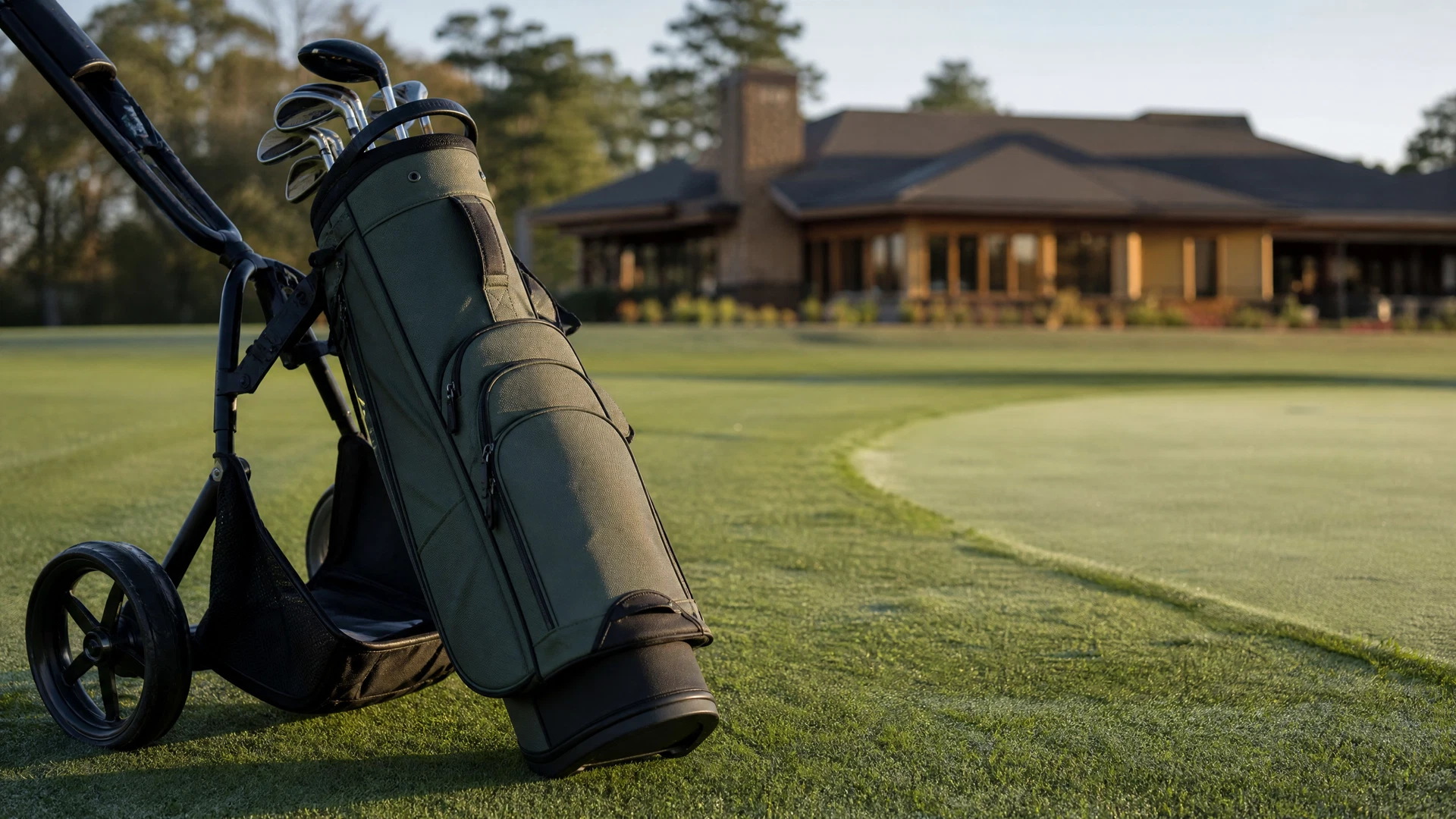
| Carry weight | 1.8–2.4 kg (stand bag) | 1.2–1.6 kg target — lighter carbon-fibre leg systems |
| Strap system | Single or basic dual strap | Contoured dual strap with narrower shoulder spacing |
| Hip pad | Often omitted on lighter bags | Structured hip pad essential for weight distribution |
| Pocket placement | Optimised for right-hand reach | Ambidextrous pocket layout with lower ball pocket |
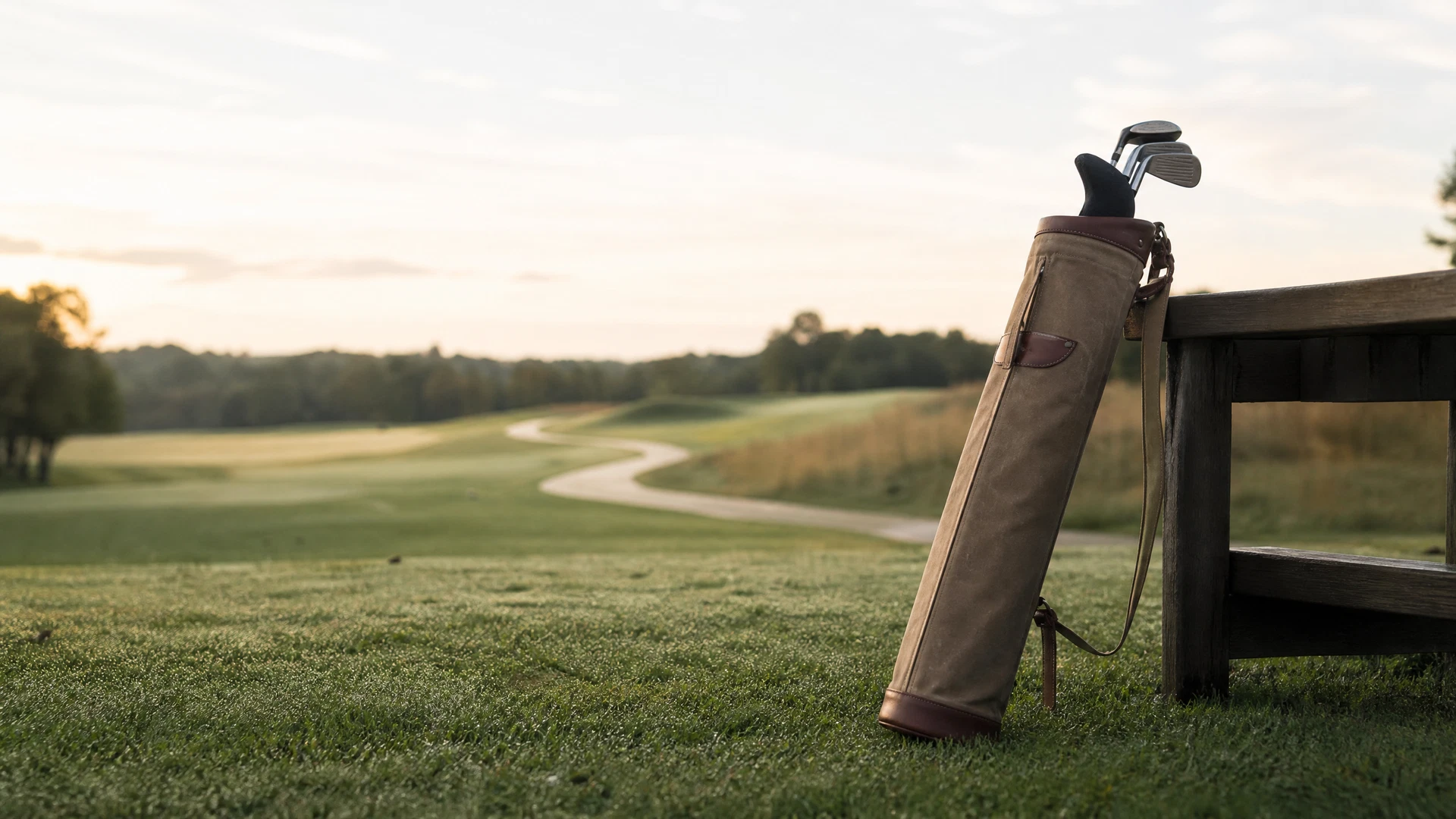
| Colour and material | Adapted from men's colourways | Purpose-designed palettes; waxed canvas and premium nylon |
| Club dividers | 14-way standard | 10-way or 14-way with wider individual slots |
The weight issue is particularly acute. A standard stand bag loaded with 14 clubs and accessories can weigh 10–12 kg. For a golfer carrying for 18 holes, the bag's base weight is the single most important variable in the experience. Brands that have invested in lighter leg mechanisms and thinner-wall fabric constructions are seeing strong repeat purchase rates among female buyers.
The OEM Opportunity
For brands considering a women's-specific bag line, the OEM sourcing conversation looks different from a standard product brief. The key considerations are:
Material specification. Moving from 600D polyester to 420D nylon or a waxed canvas shell reduces weight meaningfully while maintaining durability. The cost differential at MOQ 100–200 units is typically 8–12% over standard materials — a premium that the market will absorb given the scarcity of genuinely well-designed women's bags.
Hardware selection. Lighter zinc-alloy hardware versus standard steel can save 80–120g across a full bag. This requires a factory with tooling flexibility — not all OEM manufacturers can accommodate custom hardware specifications at low MOQ.
Colour development. Custom colourway development typically requires a minimum of 200 units per colourway when working with custom-dyed materials. Brands that plan a two-colourway launch (for example, a neutral and a seasonal accent) should structure their initial order to meet this threshold across both options.
Branding placement. Women's bag buyers respond strongly to subtle, considered branding — tonal embroidery, debossed leather patches, and woven labels outperform large screen-printed logos in this segment. This is a sampling conversation worth having before production begins.
What the Data Tells Brands to Do Now
The 8 million figure is a lagging indicator. It reflects participation that has already happened. The forward-looking signal is in the beginner and junior pipeline: 35% female beginners, 35% female juniors. The golfers entering the game today will be buying their second and third bags within three to five years, and they will be buying from brands that understood them from the start.
The brands that move now — with purpose-designed product, not adapted product — will have the category positioning and the customer relationships that are very difficult to replicate once the market matures.
If you are developing a women's golf bag line and want to discuss construction options, material specifications, or sampling timelines, we would be glad to walk through the details. Contact our team or browse our current range at linkssportsco.com/products.
Share this article