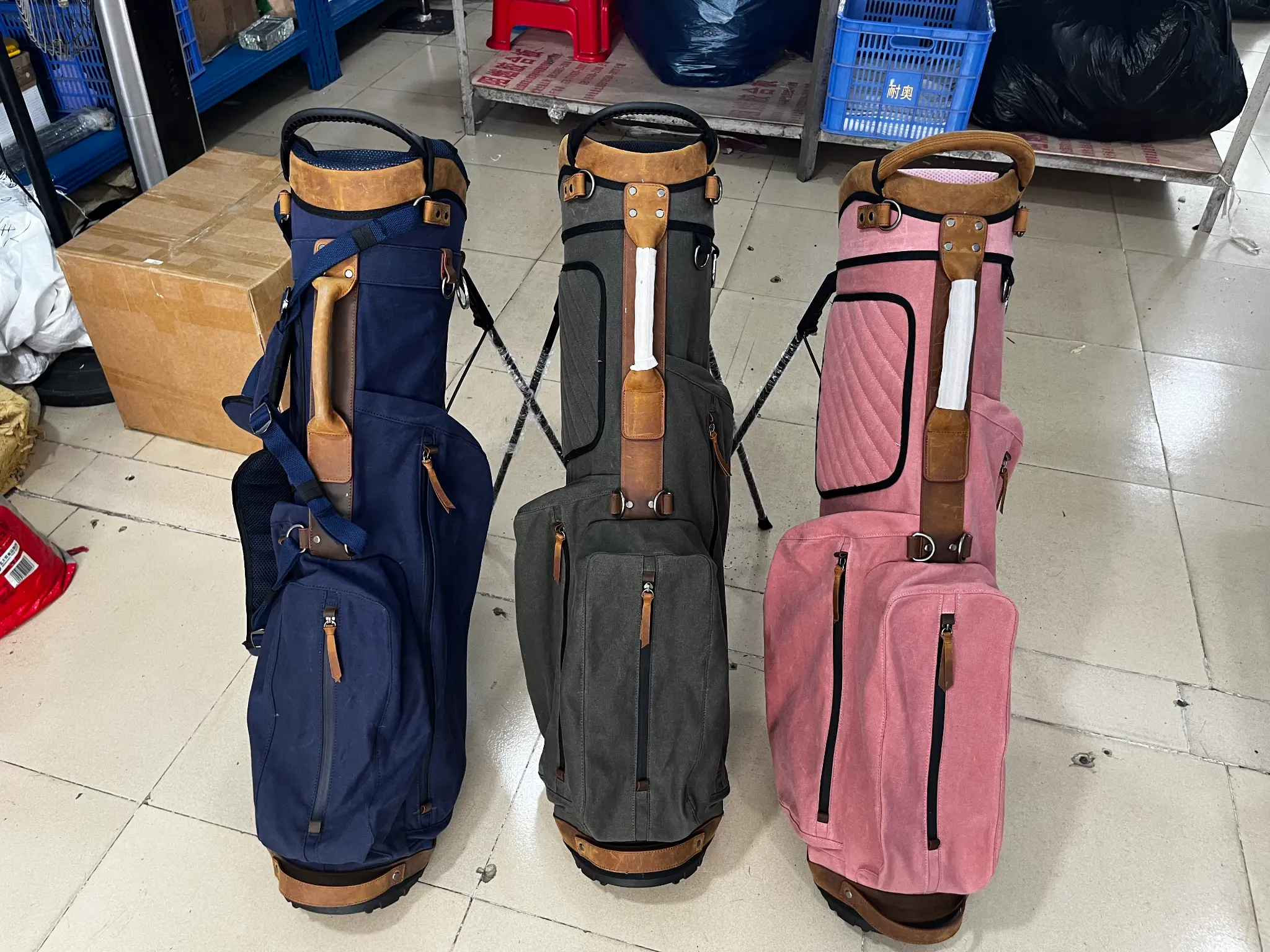
5 Craftsmanship Details Your Wholesale Golf Bag Supplier Should Never Cut
A practical buyer's guide to the five quality details most commonly compromised under cost pressure — stitch density, zipper spec, hardware material, lining, and seam finishing. With specific questions to ask your supplier.
Links Sports Co
Product Specialist & OEM Consultant · Links Sports Co
10+ years in golf & tennis bag manufacturing. Specialises in OEM/ODM custom branding, material sourcing, and B2B wholesale for brands across 30+ countries.
When you are sourcing golf bags at wholesale volumes, price pressure is real. Every dollar saved per unit multiplies across a thousand-unit order. Suppliers know this, and the most common response to price negotiation is not to find genuine efficiencies — it is to quietly reduce quality in ways that are invisible at the time of purchase and only become apparent after six months of use.
This guide identifies the five craftsmanship details that are most commonly compromised under cost pressure, explains why each one matters, and gives you the specific questions to ask your supplier before you commit to an order. Consider it a checklist for protecting your brand.
1. Stitch Density: The Number That Separates Durable from Disposable
Stitching is the most fundamental structural element of any bag, and stitch density — measured in stitches per centimetre (SPC) — is the single most telling indicator of seam durability.
The industry minimum for a bag intended for regular use is 6 SPC. Quality manufacturers work at 7–8 SPC. Budget suppliers frequently work at 4–5 SPC, which reduces thread consumption and increases machine speed, cutting production time by 15–20% per unit.
The practical difference is significant. At 4 SPC, a seam failure at any single point can propagate along the seam rapidly — particularly at stress points like strap attachment anchors, base corners, and divider tops. At 8 SPC, a broken thread is contained by the surrounding stitches and the seam remains structurally intact.
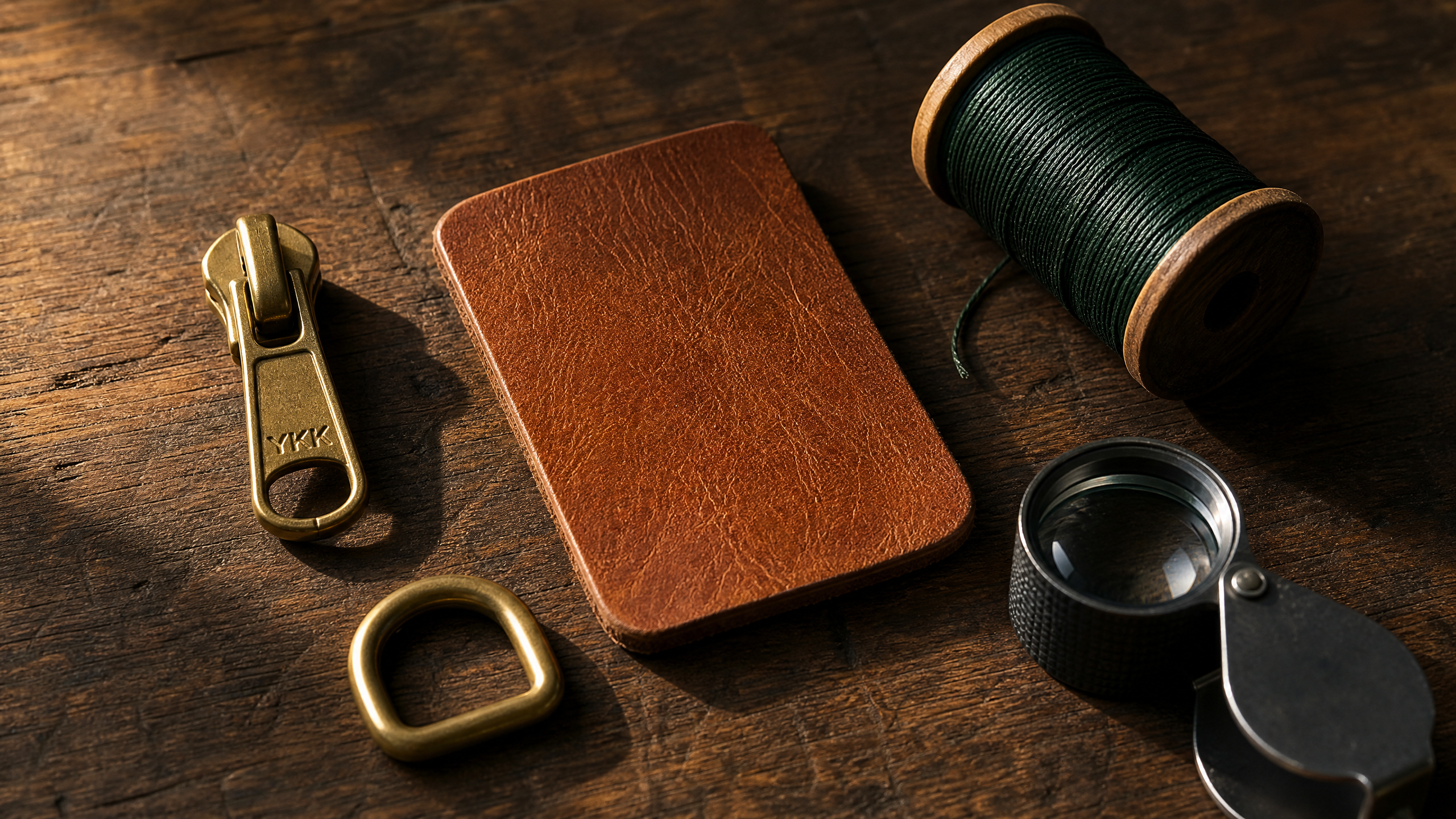
What to ask your supplier: Request a cross-section sample of a sewn seam and count the stitches per centimetre under a loupe. Ask specifically about the stitch density at strap anchor points, which carry the highest load. If your supplier cannot give you a specific number, treat that as a warning sign.
| Stitch Density | Typical Use | Seam Durability |
|---|---|---|
| 4–5 SPC | Budget/promotional bags | 1–2 seasons under regular use |
| 6 SPC | Mid-range retail | 3–4 seasons |
| 7–8 SPC | Premium / OEM quality | 5+ seasons |
2. Zipper Specification: Why YKK Is Not Just a Brand Preference
Zippers are the most frequently used component on any golf bag and the most common point of failure. Yet zipper specification is rarely discussed in wholesale negotiations, because most buyers do not know what to ask for.
The critical distinction is between standard coil zippers and water-resistant coil zippers. Standard coil zippers — the type used in most budget bags — have no barrier against moisture wicking through the teeth. In wet conditions, the contents of a standard-zipped pocket will be damp within minutes. Water-resistant zippers, such as the YKK AquaGuard series, have a thermoplastic urethane coating on the teeth that prevents moisture ingress even under sustained rain.
Beyond water resistance, the slider quality matters. A cheap slider will begin to skip teeth after 300–500 cycles, creating a zipper that appears to close but leaves a gap. A quality slider maintains consistent tension across 2,000+ cycles.
The cost difference between a standard zipper and a YKK AquaGuard zipper on a single bag is approximately $0.80–$1.20. On a 1,000-unit order, that is $800–$1,200. It is also the difference between a bag that generates warranty returns and one that does not.
What to ask your supplier: Specify YKK AquaGuard or equivalent water-resistant zippers by name in your purchase order. Ask for the zipper specification sheet, which will confirm the slider cycle rating. If your supplier substitutes a generic zipper without disclosure, that is a quality control failure worth addressing contractually.
3. Hardware Material: The Difference Between Brass and Pot Metal
D-rings, buckles, strap adjusters, and feet are the hardware components that take the most physical abuse on a golf bag. They are dragged across cart paths, dropped on concrete, and exposed to rain, sweat, and sunscreen. The material they are made from determines whether they last a season or a decade.
The three materials in common use are solid brass, marine-grade stainless steel, and zinc alloy (commonly called pot metal or zamak). Brass and stainless steel are the correct choices for any bag intended for regular use. Zinc alloy is the cost-cutting substitute.
Zinc alloy hardware is visually indistinguishable from brass or stainless steel when new. It is also approximately 60% cheaper. The difference becomes apparent within 12–18 months of use: zinc alloy corrodes, develops white oxidation deposits, and eventually becomes structurally brittle. Brass develops a warm patina. Stainless steel remains unchanged.
What to ask your supplier: Request a material certification for all metal hardware components. Legitimate manufacturers can provide this. Ask specifically whether any hardware components are zinc alloy. If the answer is vague, request a sample and test it with a magnet — zinc alloy is non-magnetic, as are brass and stainless steel, but the surface hardness test (a fingernail scratch on an inconspicuous area) will reveal zinc alloy's relative softness.
4. Lining and Base Reinforcement: The Interior Details That Buyers Rarely Check
The interior of a golf bag is the detail most buyers inspect least carefully during a factory visit or sample review — which is precisely why it is the area most commonly compromised.
Two specific details matter: the lining material and the base reinforcement.
Lining material in budget bags is typically a thin non-woven polypropylene — the same material used in disposable shopping bags. It tears easily, does not clean well, and provides no structural support to the bag's shape. Quality bags use a woven nylon or polyester lining, typically 210D or 420D, which resists tearing, wipes clean, and contributes to the bag's structural integrity.
Base reinforcement is the panel or insert at the bottom of the bag that protects against abrasion when the bag is set down on concrete, gravel, or wet ground. A proper base reinforcement uses a rubberised or EVA-foam panel bonded to the outer shell, with reinforced stitching around the perimeter. A compromised base uses a thin fabric panel with no reinforcement — which will abrade through within a season of regular use.
What to ask your supplier: Request a cross-section diagram of the base construction, showing the layers from outer shell to interior. Ask for the denier rating of the lining fabric. A supplier who cannot provide these details has not engineered their product — they have assembled it from whatever components were available.
5. Seam Finishing: The Step That Separates Professional Production from Assembly
The final craftsmanship detail — and the one most commonly eliminated under cost pressure — is seam finishing. This is the process of binding, taping, or overlocking the raw edges of sewn seams to prevent fraying, moisture ingress, and structural degradation over time.
An unfinished seam is structurally weaker than a finished one, because the raw fabric edge will fray with repeated flexing, gradually reducing the effective width of the seam allowance. In a bag that is loaded, unloaded, and carried daily, this degradation is measurable within a year.
There are three acceptable finishing methods: bound seams (where the raw edge is enclosed in a folded tape, as used in high-end luggage), overlocked seams (where the raw edge is enclosed in a looped stitch), and flat-felled seams (where the seam allowance is folded and stitched flat). All three add production time and cost. All three significantly extend the functional life of the bag.
An unfinished seam adds approximately zero cost to production. It also adds zero durability. When you see it on a sample, you are seeing a manufacturer's priorities in action.
What to ask your supplier: Turn the bag inside out and examine the seam allowances. They should be enclosed, not raw. Ask specifically what seam finishing method is used on the main body seams and the base seams. If the answer is "we don't finish the seams," ask why — and factor the answer into your sourcing decision.
A Final Note on Supplier Transparency
The five details above are not obscure technical specifications. They are standard quality benchmarks that any experienced manufacturer should be able to discuss fluently. A supplier who cannot answer these questions confidently — or who becomes evasive when you ask them — is telling you something important about their quality culture.
The best wholesale relationships are built on transparency: suppliers who can explain their material choices, share their production specifications, and stand behind their quality with clear warranty terms. That transparency is itself a craftsmanship detail — one that is just as important as the stitching and the zippers.
At Links Sports Co, we welcome these conversations. Every specification we use has a reason, and we are happy to explain it.
Links Sports Co manufactures premium golf and tennis bags for wholesale buyers, pro shops, and private-label brands. OEM and ODM services available from 50 units per colourway. Request samples and production specifications at linkssportsco.com/contact.
Share this article