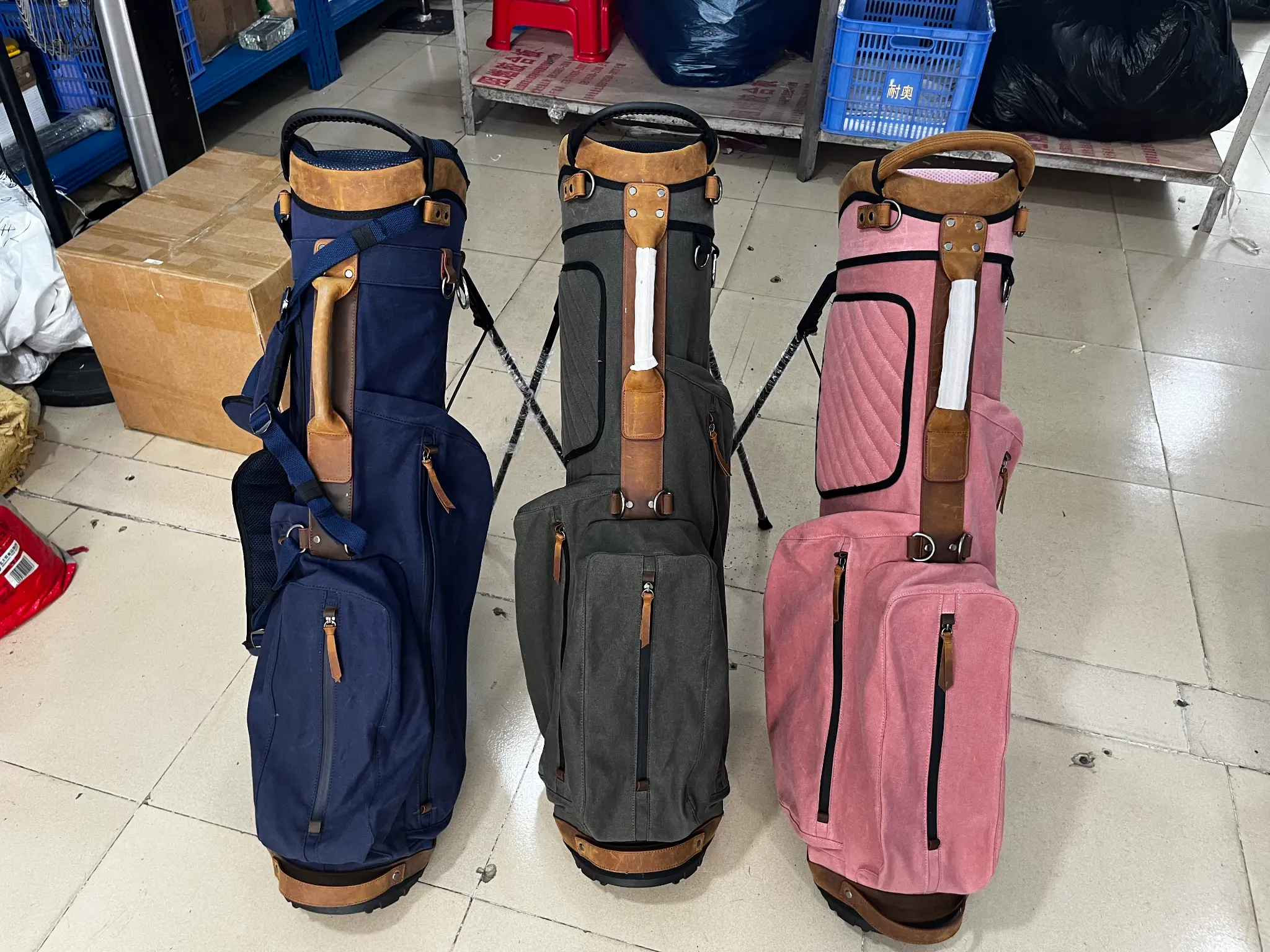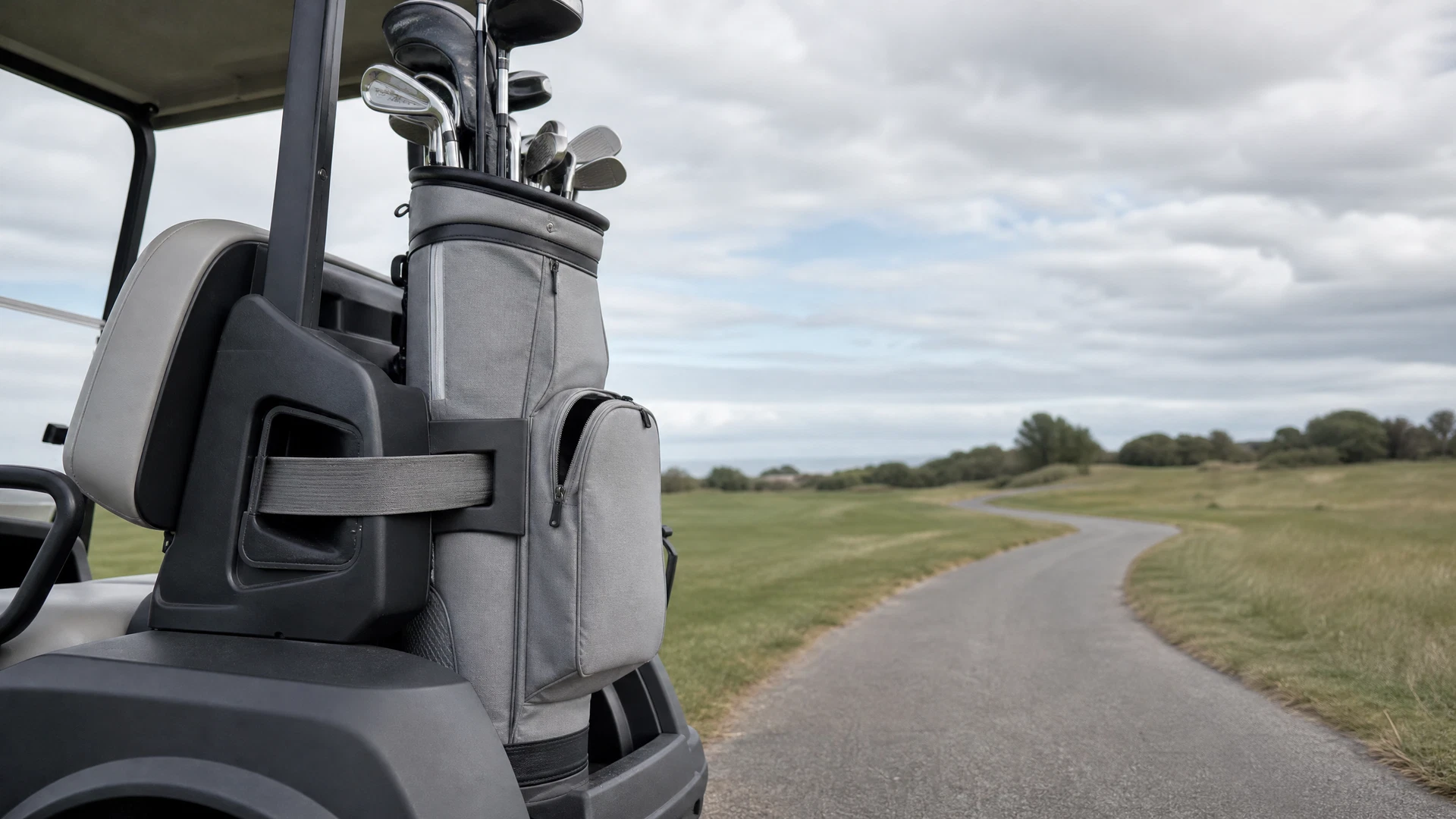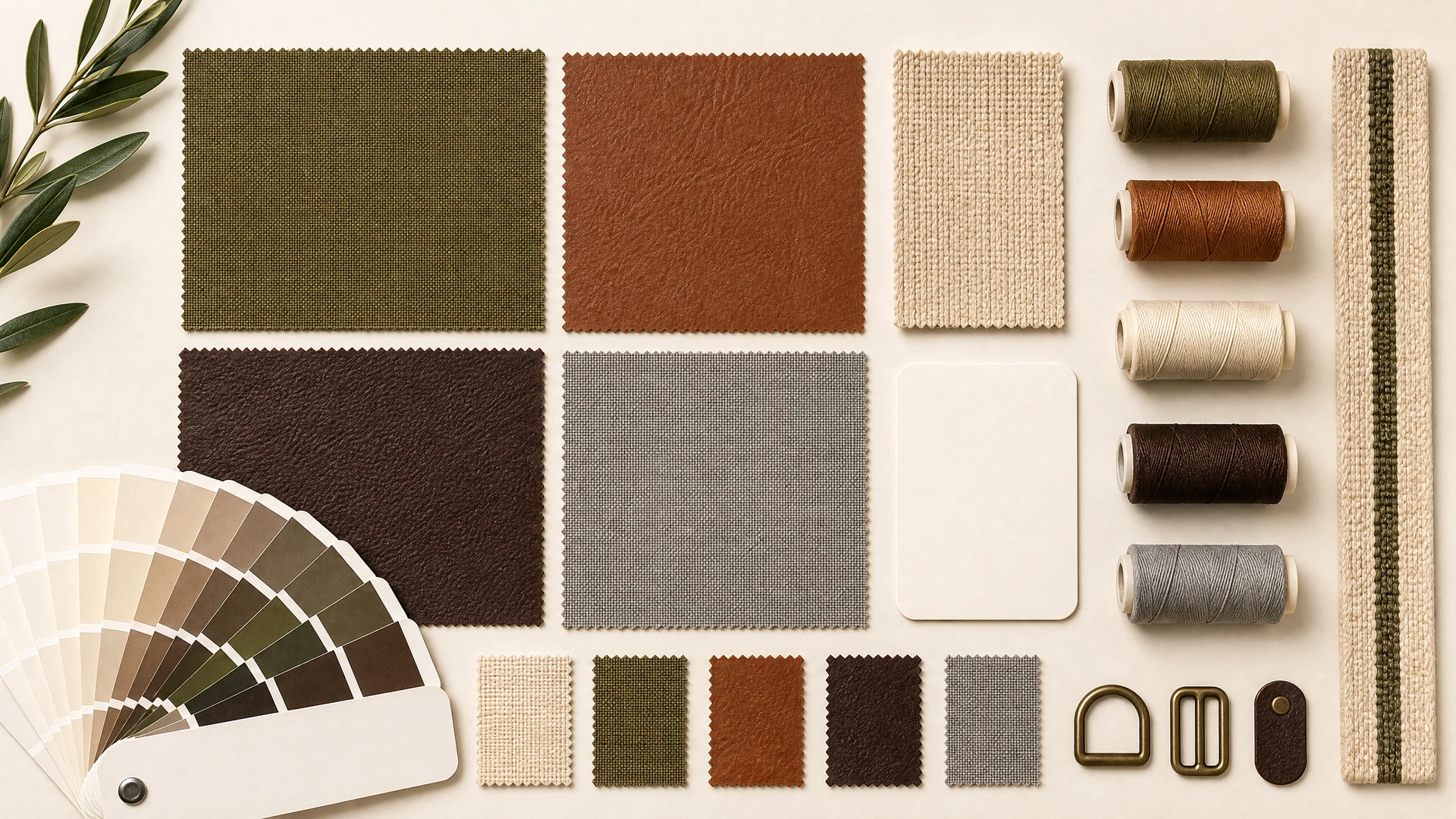
The Anatomy of a Perfect Golf Bag: How Every Stitch Tells a Story
Discover the hidden craftsmanship decisions behind every premium golf bag — from waxed canvas selection and frame engineering to YKK zippers and vegetable-tanned leather handles. A manufacturer's inside story.
Links Sports Co
Product Specialist & OEM Consultant · Links Sports Co
10+ years in golf & tennis bag manufacturing. Specialises in OEM/ODM custom branding, material sourcing, and B2B wholesale for brands across 30+ countries.
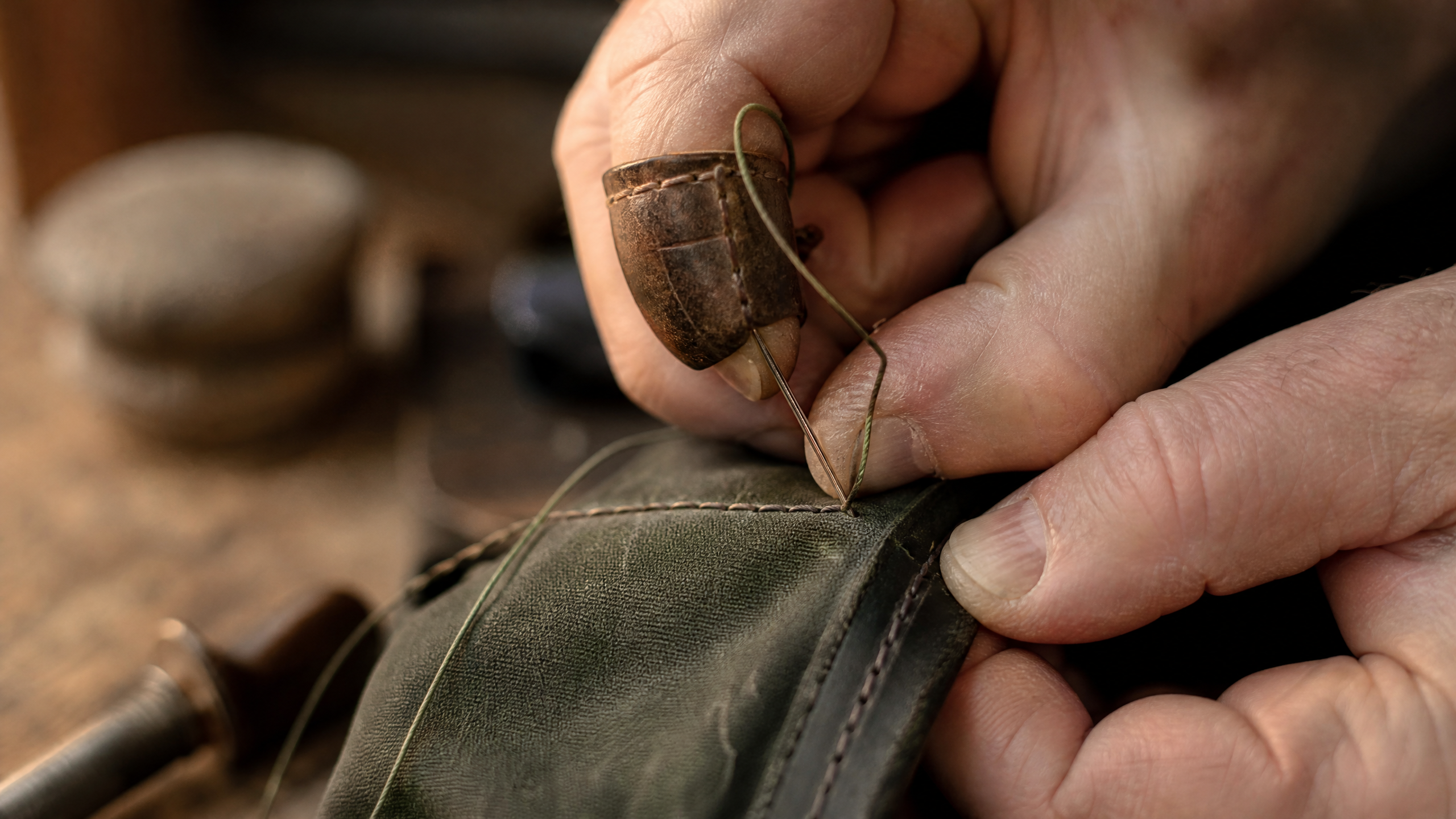
There is a moment every golfer knows — the quiet satisfaction of lifting a well-made bag onto your shoulder and feeling, immediately, that something is right. The weight is balanced. The strap sits perfectly. The canvas has a texture that speaks of durability without being stiff. That feeling is not accidental. It is the result of hundreds of deliberate decisions made long before the bag ever reaches the course.
At Links Sports Co, we have spent years refining what we call the anatomy of a perfect golf bag. This is the story of those decisions — the materials, the construction methods, and the craftsmanship details that separate a bag that lasts a season from one that outlasts a decade.
The Foundation: Choosing the Right Canvas
Every great bag begins with fabric selection. Not all canvas is created equal, and the difference between a waxed canvas that develops a beautiful patina over years of use and one that cracks and fades within months comes down to thread count, wax saturation, and the base weave structure.
We source our waxed canvas from mills that use a traditional British paraffin-wax impregnation process. The canvas is woven at 18 oz per square yard — heavy enough to resist abrasion on cart paths and wet grass, yet supple enough to fold cleanly at the gussets without cracking. After weaving, the fabric is passed through a wax bath at a controlled temperature, ensuring the wax penetrates the weave rather than sitting on the surface. A surface-waxed canvas will repel water for a season. A properly impregnated canvas will do so for years.
The colour palette matters too. We work with natural dyes where possible, because synthetic dyes tend to bleed when the canvas is wet — a small but telling sign of quality that experienced buyers notice immediately.
The Skeleton: Frame Construction and Shape Retention
A golf bag that loses its shape after a season is a bag that was never properly engineered. The internal frame — the skeleton that gives a bag its silhouette — is the component most buyers never see and most manufacturers cut corners on.
Our stand bags use a dual-leg aluminium frame with a spring-tension mechanism engineered to open smoothly on any terrain, including soft fairway turf and bunker sand. The pivot points are reinforced with nylon bushings rather than bare metal-on-metal contact, which eliminates the squeaking and loosening that plagues cheaper frames after repeated use.
For Sunday bags and carry bags, we use a semi-rigid internal chassis made from a composite of recycled polypropylene and fibreglass. This gives the bag structural memory — it returns to its original shape after being compressed in a car boot or airline overhead locker. The chassis is bonded to the outer shell using a heat-activated adhesive rather than stitching alone, creating a seamless connection that distributes stress across the entire panel rather than concentrating it at stitch points.
The Skin: Panel Construction and Seam Engineering
If the frame is the skeleton, the outer panels are the skin — and like skin, they need to flex, breathe, and hold together under stress. The way panels are cut, joined, and finished reveals more about a manufacturer's standards than almost any other detail.
We cut all major panels using computer-controlled die-cutting machines to ensure consistency across every unit in a production run. A hand-cut panel, even from a skilled cutter, will vary by up to 3mm across a batch — enough to create visible misalignment at seams and stress concentration at corners. Die-cutting eliminates this variance entirely.
Seams are sewn using a lock-stitch pattern at 8 stitches per centimetre. This is the same stitch density used in high-end luggage and military-grade equipment. At this density, even if a thread breaks at one point, the surrounding stitches hold the seam together. Cheaper bags are typically sewn at 4–5 stitches per centimetre, which is faster but creates a seam that can unravel from a single point of failure.
All external seams are then bound with a folded grosgrain tape and topstitched — a finishing step that adds a second layer of protection against moisture ingress and fraying. This step adds approximately 12 minutes to the production time of each bag. It is also the step most commonly eliminated when a manufacturer is under price pressure.
The Details: Hardware, Zippers, and Handles
The components that get touched most often are the ones that fail first. Zippers, D-rings, buckles, and handles are the daily interface between a golfer and their bag, and their quality is felt on every round.
We specify YKK AquaGuard zippers for all main compartments. These are water-resistant coil zippers with a thermoplastic urethane coating that prevents moisture from wicking through the teeth. The slider pull is overseen with a rubber gasket that maintains its seal even when the zipper is opened and closed hundreds of times. A standard coil zipper will begin to leak at the teeth after 200–300 cycles. An AquaGuard zipper maintains its water resistance for 2,000+ cycles — the difference between a zipper that lasts a season and one that lasts a career.
D-rings and buckles are cast from solid brass or marine-grade stainless steel. We do not use zinc alloy (pot metal) hardware, which is common in budget bags and corrodes visibly within a year of regular use. Brass develops a warm patina that complements waxed canvas beautifully. Stainless steel remains bright and corrosion-free indefinitely. Both are significantly heavier than zinc alloy — a weight penalty of approximately 40 grams per bag — but it is a weight we consider non-negotiable.
The carry handle deserves particular attention. It is the first thing a golfer grabs when they pick up their bag, and a poorly constructed handle communicates poor quality instantly. Our handles are wrapped in full-grain vegetable-tanned leather, stitched with waxed linen thread, and padded with a closed-cell foam insert that maintains its shape under repeated compression. The leather is conditioned before assembly and will develop a rich patina with use — the same quality of ageing you see in a well-loved leather briefcase or saddle.
The Finish: Quality Control and the Human Eye
Automated production can achieve consistency in cutting, stitching, and assembly. But the final quality check — the step that catches the misaligned logo, the skipped stitch, the zipper that doesn't run smoothly — requires a human eye and a trained hand.
Every bag that leaves our factory passes through a three-stage inspection process. The first stage checks structural integrity: frame function, seam strength, and hardware attachment. The second stage checks aesthetic consistency: panel alignment, colour matching, and logo placement. The third stage is a functional test: every zipper is opened and closed, every pocket is loaded and unloaded, every strap is adjusted through its full range.
Bags that fail any stage are returned to the production line for correction, not passed on with a discount. This is not a policy that makes production cheaper. It is a policy that makes the bags better.
Why Craftsmanship Is a Business Decision
For wholesale buyers and private-label brands, craftsmanship is not just an aesthetic preference — it is a commercial calculation. A bag that fails in the field generates returns, warranty claims, and brand damage that far outweigh the cost savings of cheaper components. A bag that lasts and performs generates repeat orders, referrals, and the kind of brand loyalty that no marketing budget can buy.
When you source from a manufacturer who understands the anatomy of a perfect golf bag — who can explain why they chose a particular canvas weight, a specific stitch density, a given zipper specification — you are not just buying a product. You are buying a supply chain that understands quality as a system, not a slogan.
That is the story every stitch tells. And it is the story we are committed to telling with every bag we make.
Links Sports Co manufactures premium golf and tennis bags for wholesale buyers, pro shops, and private-label brands. OEM and ODM services available from 50 units per colourway. Request a quote →
Share this article