Mastering Multi-Material Color Harmony in Sports Gear Production
Learn how to navigate the complexities of color matching across canvas, leather, webbing, and thread to ensure aesthetic consistency in your sports equipment projects.
Links Golf Sports
Product Specialist & OEM Consultant · Links Sports Co
10+ years in golf & tennis bag manufacturing. Specialises in OEM/ODM custom branding, material sourcing, and B2B wholesale for brands across 30+ countries.
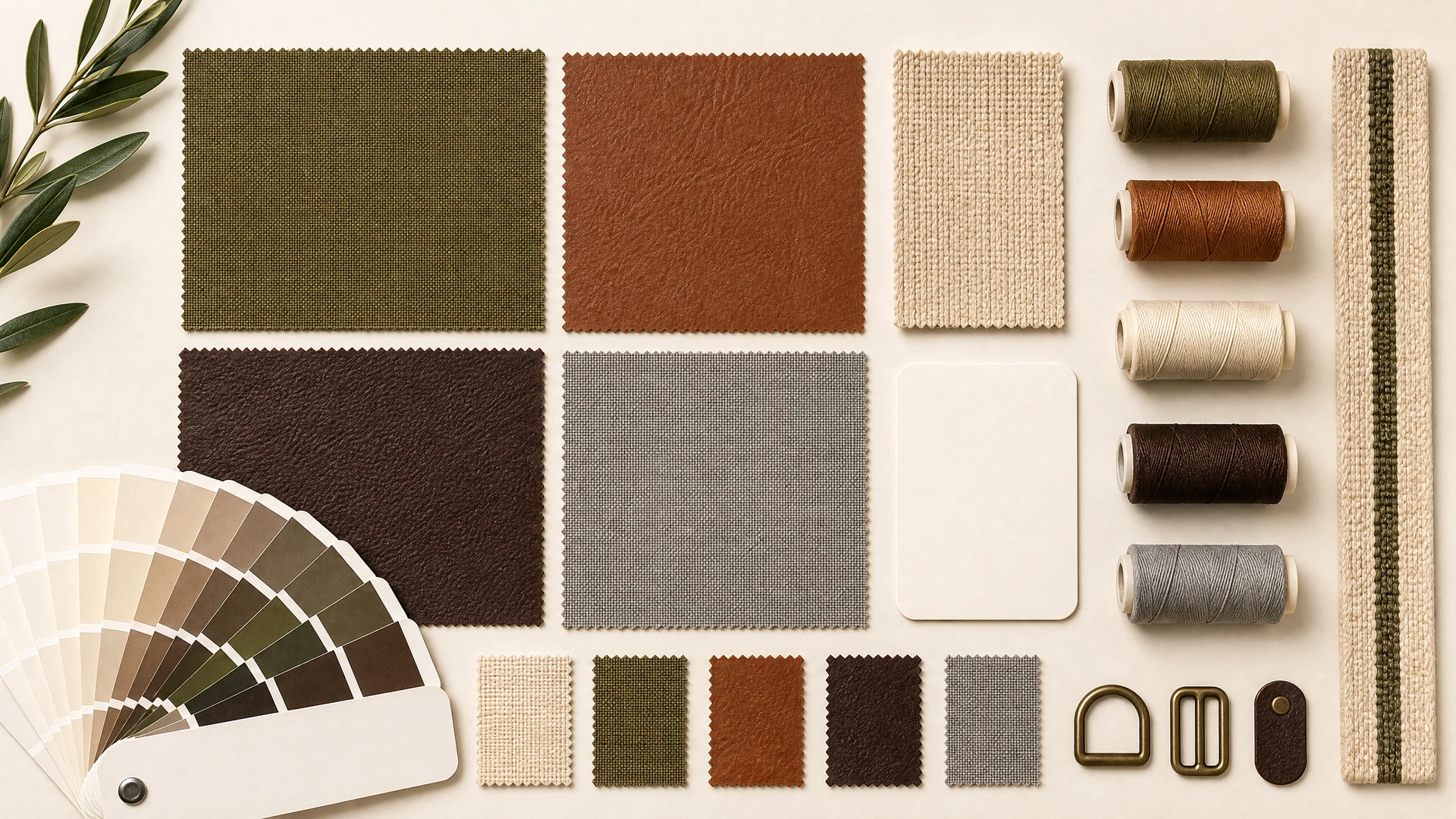
In the production of premium sports equipment, visual unity serves as a key indicator of quality. When a buyer examines a high-end golf bag, their impression is often shaped by how well the various components—canvas, leather accents, nylon webbing, and stitching—align in color. Achieving this harmony requires a nuanced understanding of material properties, strategic procurement sequencing, and a disciplined physical review process.
Understanding Multi-Material Color Coordination
The challenge in color matching stems from how different materials absorb dyes and reflect light. A specific shade of navy may appear vibrant on synthetic webbing but look muted on natural leather. These variations are often the result of the inherent characteristics of the substrates rather than production errors.
Texture plays a significant role in visual perception. Heavily grained leather creates micro-shadows that can make a color appear darker than it would on a flat-woven canvas. Similarly, the sheen of high-gloss synthetic threads can shift the perceived hue depending on the lighting. Buyers should consider these factors when establishing aesthetic expectations.
| Material Component | Surface Interaction | Dye Absorption | Typical Visual Outcome |
|---|---|---|---|
| Natural Leather | High Texture/Porosity | Variable and Deep | Tends to look richer but less uniform |
| Synthetic Canvas | Uniform Weave | Consistent | Provides a stable baseline for body colors |
| Nylon Webbing | High Sheen/Luster | Low and Reflective | Often appears more saturated or darker |
| Polyester Thread | Fine Diameter/Gloss | Rapid | Can appear as a highlight or a subtle blend |
Strategic Procurement Sequencing
To minimize the risk of mismatched components, project teams could adopt a specific order for color approvals. A common mistake is to approve the easiest material first, only to find that more challenging materials cannot be dyed to match.
A more effective approach involves identifying the "anchor" material—usually the one with the longest lead time or the most complex dyeing process. In many sports gear projects, this is either the primary fabric or the natural leather. Because leather is a natural product, its ability to take on pigment is limited. It may be prudent to secure a leather sample first, then request that suppliers of canvas, webbing, and thread adjust their formulations to align with that master sample.
The thread should often be the final element approved. While minor, stitching bridges different materials. If the thread is matched to a digital screen rather than physical samples, the contrast might be unintended. Buyers could request "mock-up" panels where the thread is stitched into the approved materials to verify the final effect.
Managing Environmental Variables
Metamerism is a frequent source of frustration, occurring when materials match under one light source but look different under another. A bag that looks coordinated in a sunlit showroom might appear mismatched under warehouse fluorescent lighting.
To mitigate this, buyers could consider establishing a "preferred lighting environment" for all stakeholders. Rather than relying on subjective descriptions, the team could request that all samples be reviewed under a consistent light source. Simply ensuring that the supplier and buyer view samples under similar conditions—such as indirect natural daylight—can significantly reduce communication errors.
Communication and Documentation Logic
Effective color matching relies heavily on communication. Digital proofs are generally considered insufficient for final production approval due to variations in monitor calibration.
Project managers should prioritize the exchange of physical "master samples." Once a color is approved, that swatch should be cut into pieces: one for the buyer, one for the primary manufacturer, and one for each sub-supplier. This ensures every party in the supply chain works toward the same physical reference point.
Pre-Production Color Audit Checklist
Before moving a project into full-scale production, procurement teams could use the following checklist:
- Primary Material Alignment: Has the body fabric been compared to leather accents under two different light sources?
- Webbing Saturation: Does the webbing color remain consistent when the material is under tension?
- Thread Blending: Has the thread been tested on both the lightest and darkest materials to verify the visual effect?
- Hardware Coordination: If using coated hardware, does the finish complement the surrounding textiles?
- Batch Variance Strategy: Has the supplier provided information on the expected range of color variation between production lots?
- Physical Master Distribution: Have identical swatches of the "anchor" color been distributed to all component suppliers?
Frequently Asked Questions
Why does webbing often look darker than canvas even with the same color code? Webbing is typically woven more densely and uses synthetic fibers with a higher luster. This density and sheen can trap or reflect light more intensely, often resulting in the material appearing more saturated or darker to the eye.
Should we always aim for a 100% identical match across all materials? In many designs, a "tonal" match—where materials are in the same color family but vary slightly in shade—is often preferred. Because leather and nylon will never look exactly the same, a deliberate tonal approach can result in a more sophisticated aesthetic.
How many rounds of "lab dips" should we expect? The number of iterations depends on the complexity of the color. It is not uncommon for challenging shades to require two or three rounds of adjustments. Buyers should discuss these potential timelines with their suppliers early to ensure the schedule accounts for this process.
Conclusion
Navigating color matching across diverse materials is a fundamental aspect of craftsmanship in the sports gear industry. By understanding the physical limitations of substrates, sequencing approvals strategically, and maintaining a rigorous physical sampling process, buyers can reduce the likelihood of surprises. For those seeking to refine the visual consistency of their next project, a collaborative discussion with a production partner can provide the necessary framework. For further discussion on how these principles might apply to your specific project requirements, feel free to contact our team.
Share this article