Half-Full, Still Refined: A Buyer’s Guide to Custom Golf Duffel Bag Structure
A refined golf duffel does not need a rigid shell. Learn how partial packing, base support and handle placement shape a useful custom development brief.
Links Sports Co
Product Specialist & OEM Consultant · Links Sports Co
10+ years in golf & tennis bag manufacturing. Specialises in OEM/ODM custom branding, material sourcing, and B2B wholesale for brands across 30+ countries.
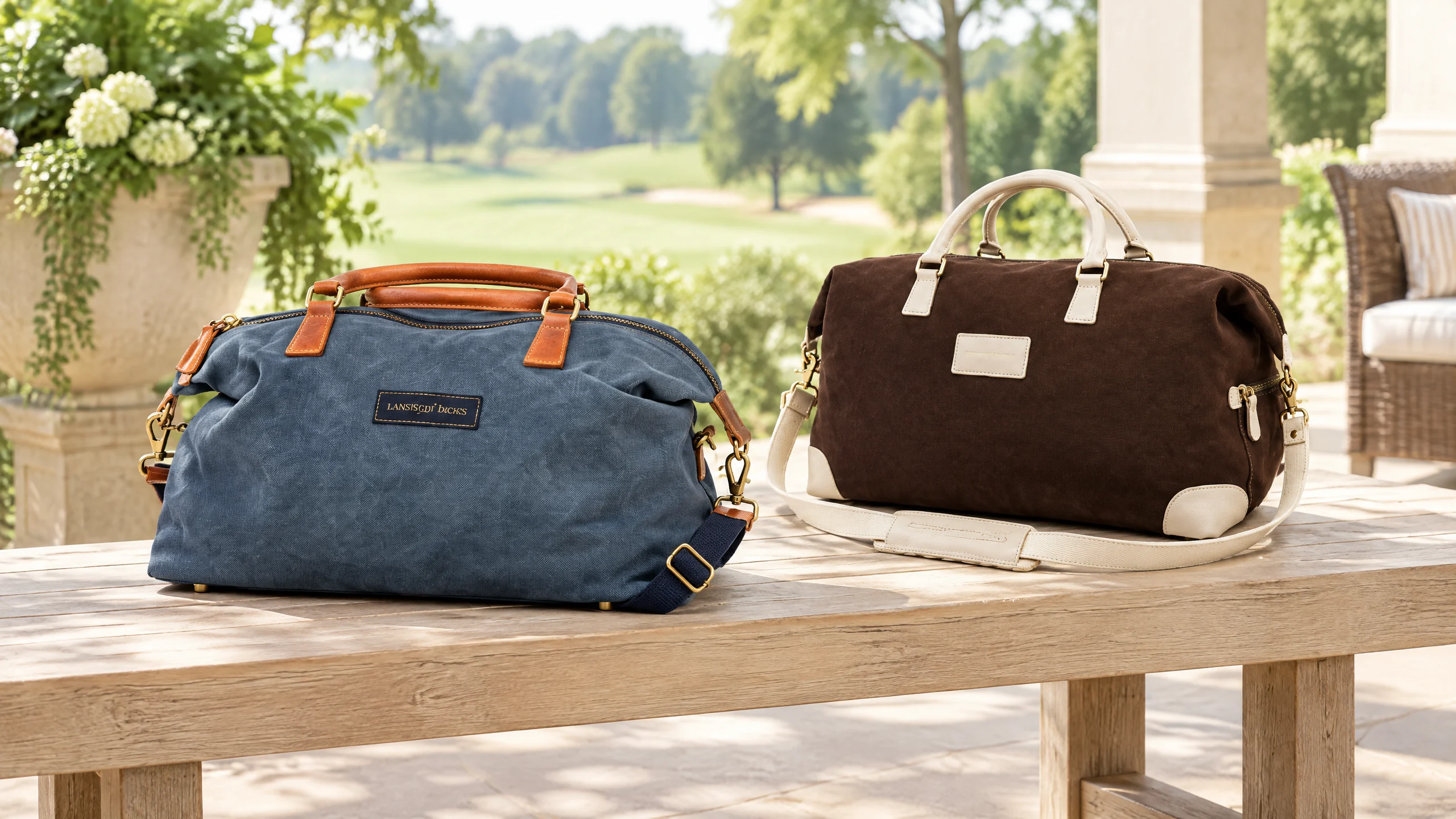
A golf duffel bag can look beautifully composed when packed for a photograph, then lose its character when a member takes it to the club with only a sweater and a few essentials inside. That quieter, half-full moment deserves a place in the buying brief. For pro shops, club merchandise teams and private-label buyers, the question is not simply whether a bag holds enough. It is whether its shape still feels intentional across the ways customers will actually carry it.
Structure is not synonymous with stiffness. A soft bag can settle gracefully; a more supported bag can look awkward if its handles pull the upper panels out of proportion. The useful work begins with observing where the silhouette changes, deciding which changes belong to the design, and translating the rest into an agreed physical sample brief.
The direct answer: design for three load states
A refined custom golf duffel bag should have an agreed appearance when empty, partially packed and filled with the intended contents. Review base shape, handle pull, seam position and zipper access in each state. Any added support or revised construction should remain a proposal until the physical sample is approved; appearance review alone does not validate load capacity or durability.
The objective is not to make all three states identical. It is to establish a coherent visual range: relaxed when lightly used, composed when carried, and comfortably shaped around the planned full pack.
Start with the silhouette, not the reinforcement
Lay an empty sample on a clear surface and let it settle without arranging the sides for the camera. Note what stays upright, what folds inward and what the base does at the corners. Then lift it by the paired handles and set it down again. These observations reveal the bag's natural posture rather than a styled version of it.
A low, softly folded profile may suit a clubhouse weekender. Another range may need a more upright presentation on a retail shelf. Neither is automatically better. The buyer's task is to distinguish a deliberate relaxed shape from an unwanted crease, collapsed end panel or uneven stance.
The Links Weekender Bag Suede Boston Bag, catalogue model LA-071, offers a useful design reference: a soft, unstructured slate-blue suede Boston silhouette with cognac leather trim. Its visual vocabulary suggests how material softness and contrasting trim can define a bag without a rigid shell. Use its relaxed profile to communicate the desired character, then confirm the construction in a separately approved physical sample.
When discussing a private label golf weekender bag with Links Sports Co, bring references for both the filled outline and the acceptable empty posture. “Keep the soft Boston character” is more useful when paired with “allow the upper side panels to settle, but keep the base corners visually distinct.”
Give the partial pack its own review
A lightly packed bag is not just a full bag with fewer objects. Its contents may sit on one side, leave an end unsupported or gather beneath the handle line. That makes partial packing particularly revealing for soft-sided golf duffel bag design.
Use recognizable objects from the intended routine: a folded knit layer, a towel, a zipped accessories pouch and an empty reusable bottle, for example. Agree the objects before comparing samples. They are a visual review set, not a prescribed test load. Review both a centered arrangement and a plausible off-center arrangement, rather than endlessly redistributing the contents until the bag looks perfect.
Look at the side profile while the bag rests, then while it is held. Does the base remain readable? Does one handle attachment draw the side panel inward more than the other? Does the opening disappear into a fold? Record these observations separately from personal preferences about softness.
Photographs help when their setup is consistent. Use the same surface, viewpoint and contents for each revision, and include an unstaged view after setting the bag down.
Balance base definition with a relaxed body
Base support addresses the lower outline; it does not necessarily resolve the shape of the entire bag. A firmer base proposal may make the bottom appear more defined while leaving the upper panels free to settle. Too abrupt a transition between the base and body can instead create an unwanted visual ledge.
Discuss the footprint as well as the firmness. A proposed support that stops short of the corners may leave them soft; one extending closer to the perimeter may change how the lower seams read. Neither should be selected from a material description alone. Ask to see the proposed assembly inside the sample and judge the exterior with the agreed contents.
| Proposed design direction | Appearance objective | Trade-off to review in the sample |
|---|---|---|
| Soft base with no additional support | Preserve a relaxed, folding profile | Empty and off-center packing may produce a less defined lower outline |
| Removable base support | Offer a supported or softer setup | Insert fit, movement and the change in silhouette need review |
| Fixed base support | Keep the support position consistent | The empty bag may look more structured than the intended design |
| Localized support near handle attachments | Limit visible gathering around the attachment area | The reinforced area may look or feel different from adjacent panels |
These are proposed custom directions, not standard equipment. Brief Links Sports Co on the desired result; support selection, placement and integration require sample development and approval.
Read the handles as part of the outline
Handles do more than sit above the opening. Their attachment positions determine where the bag is drawn upward when carried. On a lightly packed body, that pull can be visually prominent because fewer contents hold the panels apart.
Observe the distance between the attachment points, their relationship to the upper seam, and whether the paired handles meet naturally. A proposal to reposition an attachment might change the carried silhouette, but it could also alter the opening or the proportion of the trim. A longer attachment area might distribute the visible pull differently, yet introduce a stiffer patch into an otherwise soft panel.
Ask for attachment placement to be shown on the sample brief, not described only as “stronger handles.” If the concern is a diagonal fold beneath the front attachment, name that fold and the load state in which it appears. Strength and appearance are separate questions, and a visual improvement does not establish a validated carrying limit.
Check seams and zipper access without staging the bag
A zipper can be neatly presented on a full sample while becoming awkward to reach when the body folds inward. With the partial pack in place, set the bag down and open it as a customer normally would. Note whether the top seam rolls over the opening, whether the pull is obscured, and whether the opposite panel needs to be held aside.
The goal is not a perfectly straight zipper line in every position. It is an opening that remains understandable within the chosen relaxed silhouette. Proposed changes might involve panel shaping, seam placement or localized support near the opening. Each can affect the surrounding drape, so compare the whole top profile rather than approving a detail in isolation.
For the planned full pack, use the actual categories of contents rather than stuffing the sample until it looks sculptural. If the opening is crowded, review the packing brief before asking for a construction change. For a separate discussion of compartment planning, see custom golf duffel bag shoe storage and club weekends; the focus here is the outline and access across load states.
Turn observations into an agreed sample change brief
“Make it more premium” is difficult to act on. A good revision request names the observed condition, the desired appearance, the proposed change to explore and the features that should remain unchanged. It also identifies how the next physical sample will be compared.
Here is a hypothetical revision example, not a report of an actual client project:
In the agreed partial-pack setup, the front lower panel folds inward when the paired handles are lifted. Please propose a removable base support with its footprint marked on the sample drawing, plus an alternative with localized support at the front handle attachments. Retain the relaxed upper side panels and current exterior trim proportions. Do not implement both changes together without agreement. For each proposed version, show the empty, resting partial-pack and carried partial-pack views, then review zipper access with the same contents. Approval will follow inspection of the physical sample.
Separating alternatives helps the buyer understand which change caused which result. Once a direction is chosen, record the approved assembly and any remaining acceptable folds. Photographs can support that record, but should not replace examination of the physical sample.
Visual shape review is distinct from validated durability or load assessment. If formal assessment is required, define the relevant methods and acceptance criteria separately with the supplier and testing provider. Keep those requirements in a separate assessment plan rather than treating a visual sample sign-off as evidence of carrying performance.
A compact RFQ brief for a more useful first sample
For a custom golf duffel bag for clubs, send a short brief that makes the intended use visible. Include:
- Target contents: list the actual objects for the partial and planned full packs, including their typical shapes and whether pouches are filled or empty.
- Desired silhouette: describe the resting and carried profile, acceptable empty collapse, and the areas that should remain visually defined.
- Assembly requests: identify proposed removable or fixed base support, handle attachment revisions or opening changes; ask the supplier to show the proposed construction before approval.
- Comparison and approval: agree the photographs, packing arrangement and physical sample review used to accept or revise the design.
Include a separate request for any formal testing requirements rather than treating these visual review objects as a performance specification. Bring the brief to Links Sports Co with your design references and branding placement. A well-defined question usually produces a more useful sample discussion than a broad request for a “structured” golf duffle bag.
Frequently Asked Questions
Q: Should a golf duffel bag hold its shape when empty?
Only to the extent intended by the design. A relaxed bag may fold inward and still look considered. Agree which elements should remain defined, such as the base outline or end profile, instead of requiring the empty bag to resemble a fully packed one.
Q: Is removable base support better than fixed support?
Neither is universally better. Removable support offers a choice of setups but requires review of fit and movement. Fixed support keeps its position but changes the empty posture. Treat both as proposed options and compare physical samples against the intended silhouette.
Q: Why do handles affect the appearance of a half-full bag?
Handle attachments pull on the body when the bag is lifted. With fewer contents supporting the panels, folds around those attachments may become more visible. Review their geometry alongside the seams and opening, rather than considering the handles only as decorative details.
Q: Does an approved shape sample prove durability or carrying capacity?
No. Shape approval records an agreed appearance and construction direction. Durability and load-related requirements need their own assessment plan and evidence. Keep that work separate so a pleasing silhouette is not mistaken for a validated performance result.
Share this article