Golf Is a Family Game Again — And the Industry's Bags Haven't Caught Up
48 million Americans played golf in 2025. Juniors are the fastest-growing segment. Yet almost no golf bag on the market is designed for how families actually play. Here's what needs to change.
Links Golf Sports
Product Specialist & OEM Consultant · Links Sports Co
10+ years in golf & tennis bag manufacturing. Specialises in OEM/ODM custom branding, material sourcing, and B2B wholesale for brands across 30+ countries.

There is a number buried in the National Golf Foundation's 2025 participation data that deserves more attention than it has received: 3.3 million on-course beginners, with annual newcomers at 3 million or more every year since 2020. Before the pandemic, that figure had hovered around 2.5 million for years. Something has changed, and it is not just the pandemic effect wearing off.
Golf is becoming a family game again. Juniors are the fastest-growing participation segment in the post-pandemic era. Women and girls account for 35% of all beginners and 35% of junior golfers. The average age of an on-course golfer has actually declined — from 44.6 in 2019 to 44.1 in 2025 — even as the overall base has grown by millions of players.
This is a genuine structural shift. And the golf bag industry has almost entirely missed it.
The Product Gap Nobody Is Talking About
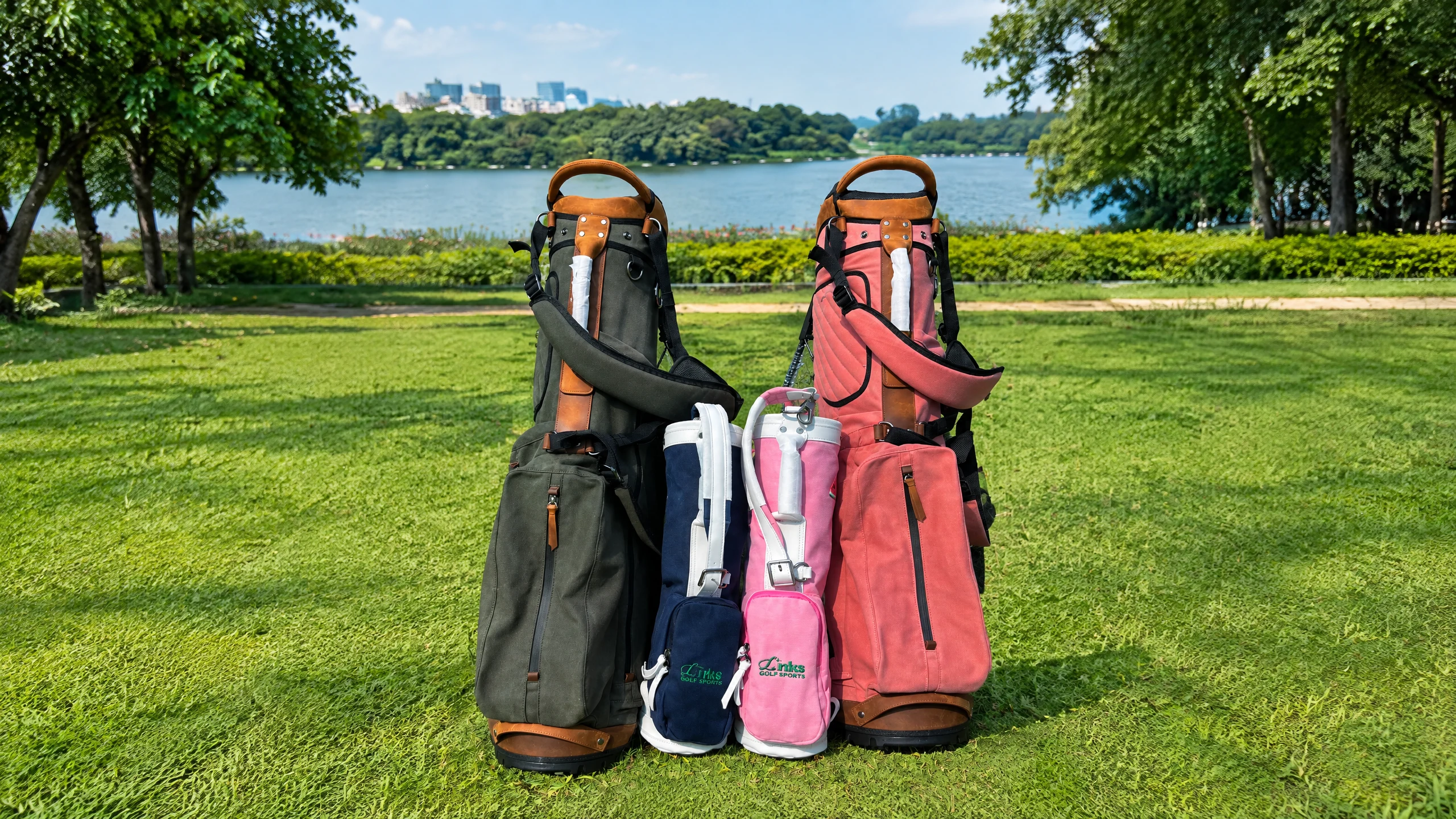
Walk into any golf retailer — physical or online — and look at the junior bag category. What you will find is a narrow selection of scaled-down adult bags, typically in bright primary colours, with little consideration for the ergonomics of a 10-year-old carrying a bag for the first time. The strap systems are adapted from adult designs. The weight is often higher than it needs to be. The pocket layouts assume a level of gear that a junior golfer does not have.
The family golf experience is not just about junior bags, either. It is about the entire ecosystem of how a family plays together. A parent carrying their own bag while monitoring a child's bag. A shared cart bag that works for two players. A travel bag that fits two sets of junior clubs alongside one adult set. These are real use cases that the industry treats as edge cases.
The NGF data tells us that 65+ golfers are also growing at a remarkable rate — the cohort has nearly doubled since 2016, driven by Baby Boomers reaching retirement age at 10,000 per day. Many of these golfers are playing with grandchildren. The multi-generational golf round — grandparent, parent, child — is one of the most common formats at municipal and public courses. The equipment industry has designed almost nothing specifically for it.
What a Family-First Bag Design Philosophy Looks Like
Designing for the family golf market requires rethinking the product brief from the ground up, not adapting existing products.
For junior bags, the key parameters are weight, strap geometry, and durability. A junior stand bag should weigh no more than 1.0–1.2 kg empty. The strap attachment points need to be positioned for a narrower shoulder span. The base needs to be genuinely stable on uneven ground — junior golfers are less practiced at the small adjustments that keep a bag upright, and a bag that falls over repeatedly is a bag that discourages participation.
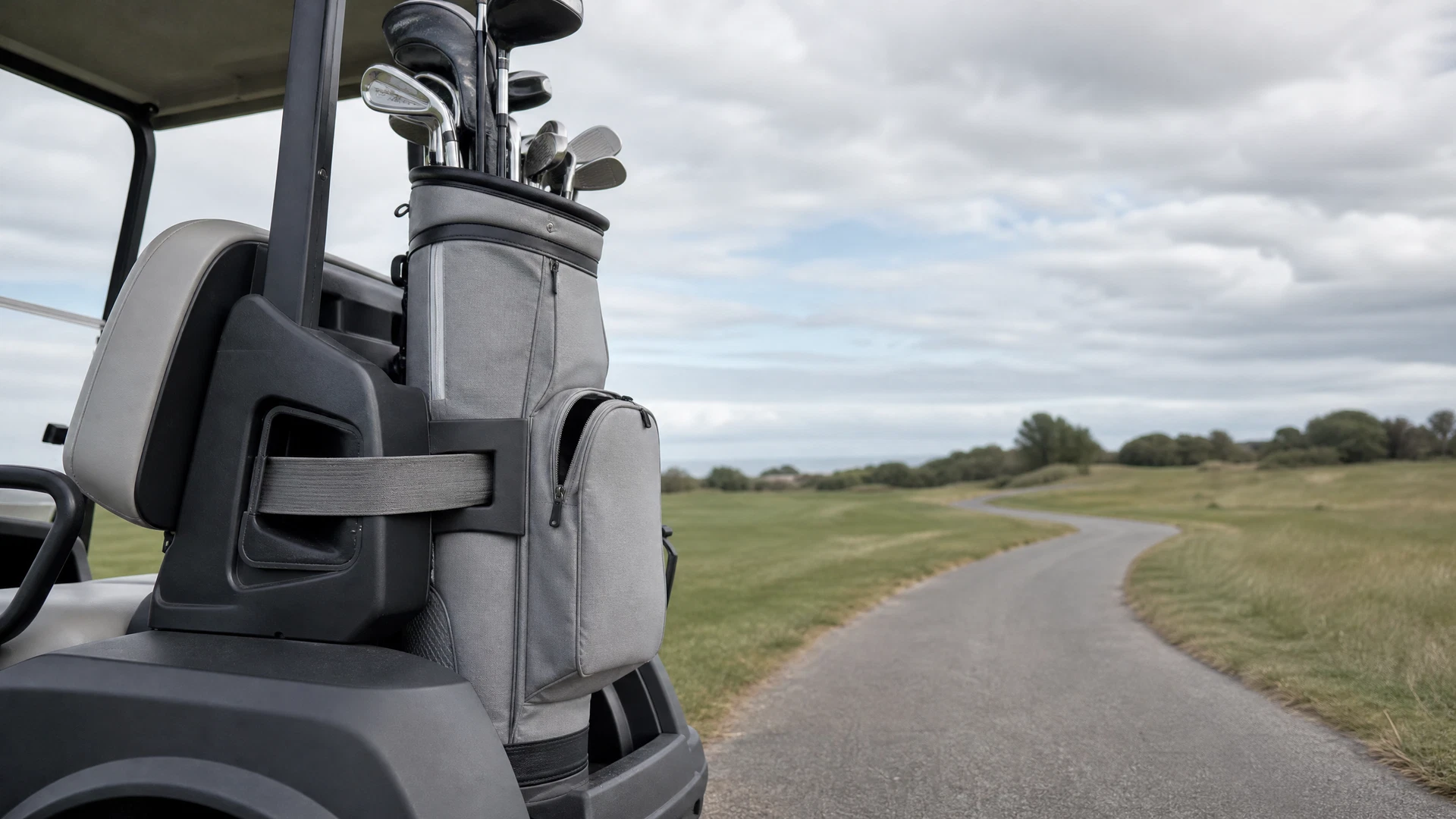
For family cart bags, the opportunity is in the configuration. A well-designed family cart bag might include a dedicated junior club section — a separate, padded compartment sized for shorter shafts — alongside the standard adult club storage. This is a simple construction addition that no mainstream manufacturer currently offers.
For travel, the family use case is even more underserved. A family of four travelling to a golf destination needs to transport two adult sets and two junior sets. The current market offers no purpose-designed solution for this. The family either pays for four separate travel bags or improvises with cases that were not designed for the purpose.
The Brand Opportunity
The brands that recognise this gap early will have a significant first-mover advantage. The family golf market is not a niche — it is the growth engine of the sport. The 3.3 million new on-course beginners in 2025 did not all arrive alone. Many of them arrived with a parent, a partner, or a child. The equipment they buy in their first two years of play will shape their brand relationships for the rest of their golfing lives.
From a manufacturing standpoint, the family golf category is well-suited to OEM development. The construction requirements are clear, the materials are available, and the MOQ thresholds for a focused initial range — one junior stand bag, one family cart bag — are achievable for brands at an early stage of development.
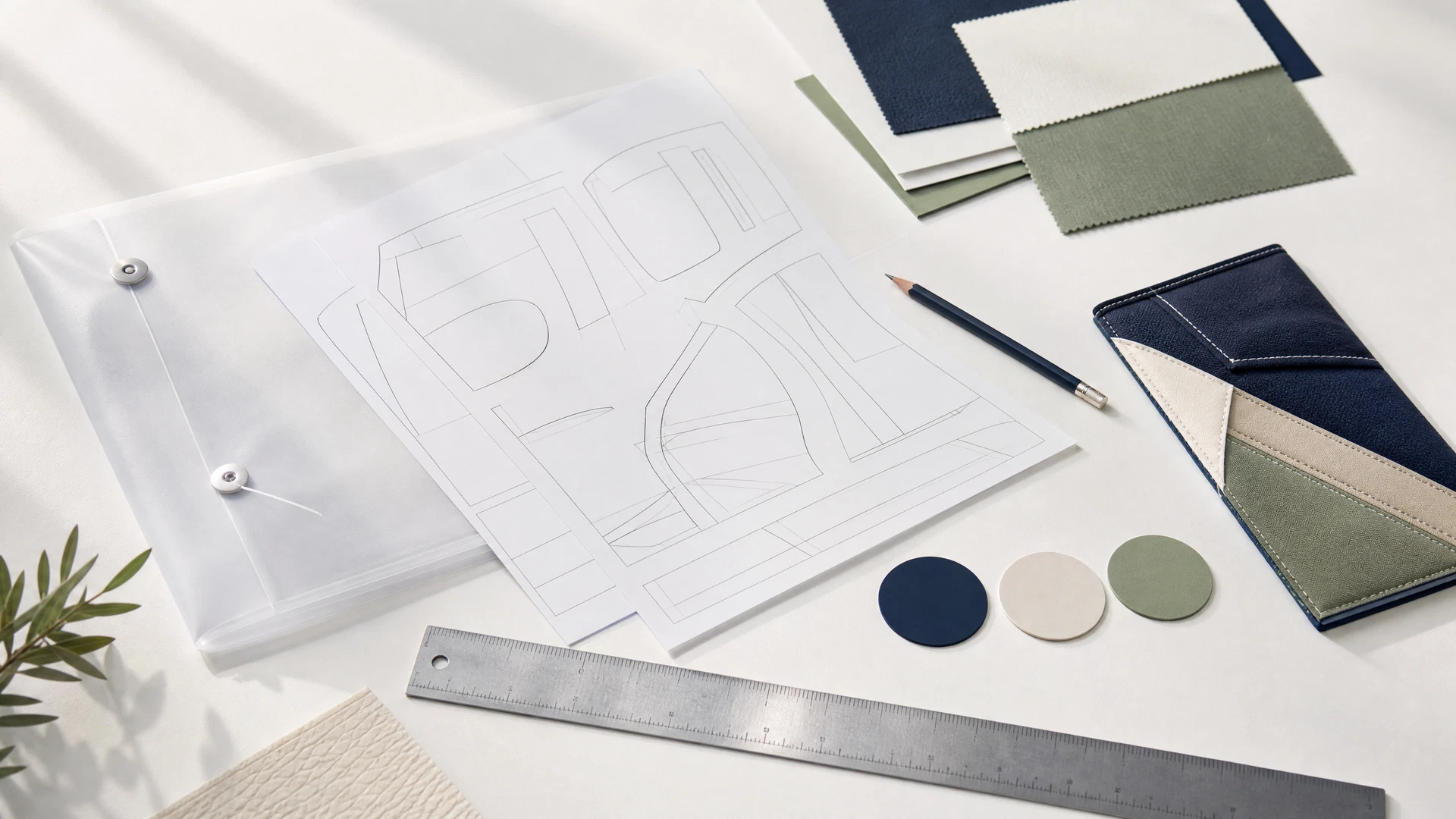
The conversation we have most often with brands entering this space is about sampling. Getting the strap geometry right on a junior bag requires at least one round of physical testing with actual junior golfers. Getting the cart bag configuration right requires a prototype that can be evaluated on a real course. These are not shortcuts that can be taken at the desk — they require a factory partner willing to iterate on samples rather than simply execute a spec sheet.
That is the kind of partnership we are built for. If you are developing a family golf product line and want to discuss the construction specifics, we would be glad to start the conversation. Reach out here, or take a look at our existing range at linkssportsco.com/products.
Share this article