How Golf Bag Colors Are Made to Last: Dyeing, Coating & UV Resistance Explained
Why does a budget golf bag fade after two seasons while a premium bag holds its color for a decade? The answer is in the dyeing chemistry, coating thickness, and UV stabilizer concentration — details that never appear on a spec sheet but determine everything about long-term appearance.
Links Sports Co
Product Specialist & OEM Consultant · Links Sports Co
10+ years in golf & tennis bag manufacturing. Specialises in OEM/ODM custom branding, material sourcing, and B2B wholesale for brands across 30+ countries.
The Color Problem Nobody Warns You About
A buyer places an order for 200 custom golf bags. The sample looks perfect — a deep forest green that matches the club branding exactly. Twelve months later, the first complaints arrive: bags used regularly on sun-exposed courses have shifted from forest green to a washed-out sage. Bags stored in pro shop windows are worse. The buyer is confused. The color was approved on the sample. What changed?
Nothing changed. The problem was present from the beginning, invisible in the sample approval process because nobody asked the right questions about how the color was made.
Two Dyeing Methods, Two Very Different Outcomes
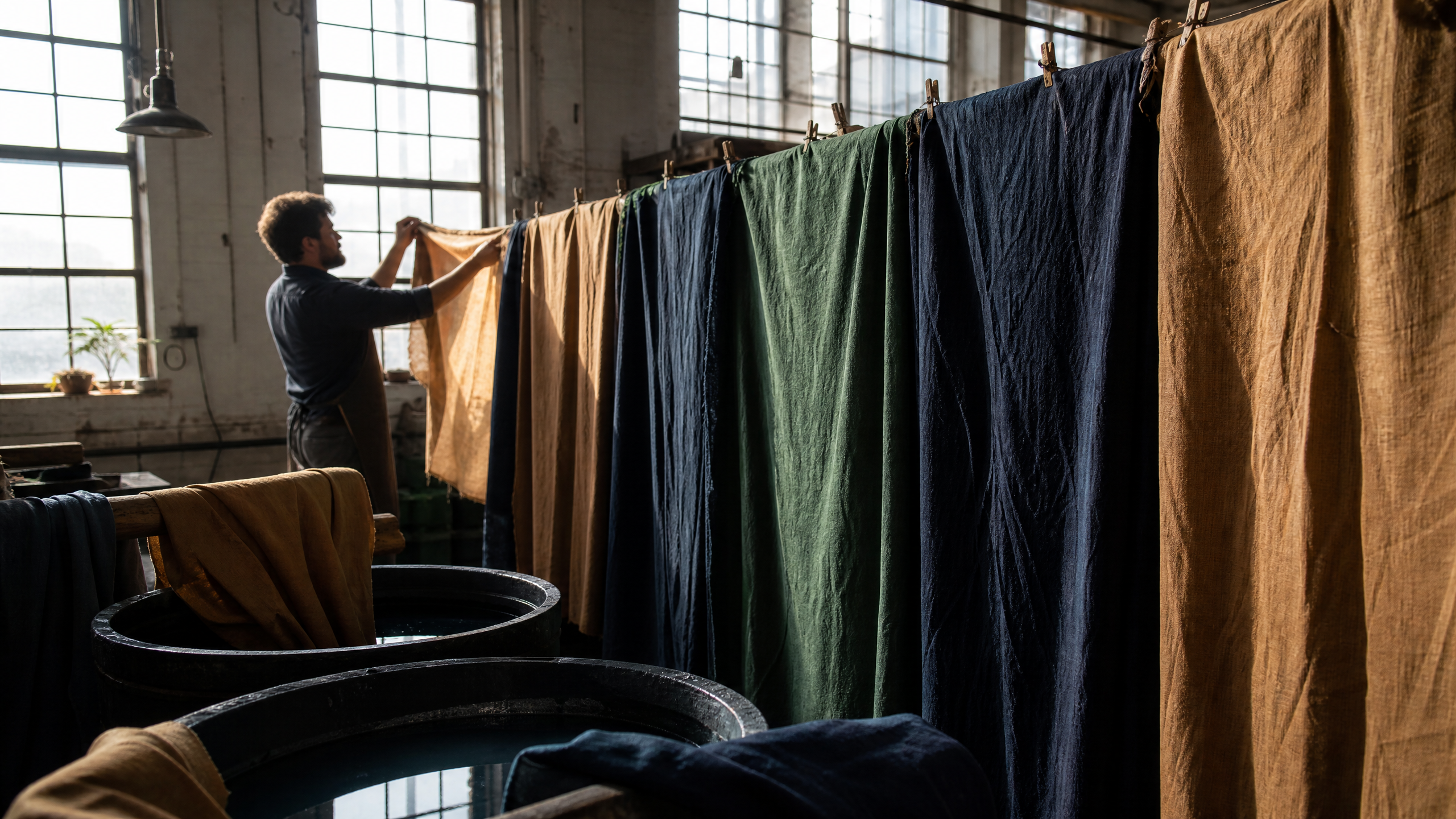
Canvas fabrics — including the wax canvas we use for our premium lines — can be dyed using two fundamentally different chemical processes. Reactive dyeing forms a covalent bond between the dye molecule and the cotton fibre. The colour becomes part of the fibre structure itself. Disperse dyeing deposits dye molecules on the surface of the fibre without forming a chemical bond.
Reactive dyeing requires more precise temperature and pH control during the dyeing process, longer fixation times, and more thorough washing to remove unfixed dye. It costs approximately 20–30% more than surface dyeing methods. The result is a fabric where the colour penetrates the full cross-section of each fibre. When the surface abrades — as it will on any bag used regularly — the colour underneath is identical to the colour on top. The bag does not show wear as colour change.
Surface-dyed fabrics show their age differently. Abrasion reveals the undyed fibre core. High-contact areas — the base, the strap attachment points, the pocket edges — lighten first. The bag develops a patchy, uneven appearance that reads as cheap rather than worn-in.
All Links Sports Co canvas fabrics are reactively dyed. We require a dyeing certificate from our fabric suppliers confirming the process and the dye class used.
PU Coating: Thickness Is Not the Only Variable
Polyurethane coating serves two functions on a golf bag fabric: it provides water resistance, and it acts as a barrier layer that slows UV penetration to the dye layer beneath. Both functions depend on coating thickness, but thickness alone is not the complete picture.
A standard PU coating in the budget segment runs 0.08–0.12mm. Our mid-range fabrics use 0.18–0.22mm. Our premium wax canvas uses a dual-layer system: a base PU coat of 0.15mm followed by a wax impregnation layer that adds approximately 0.08mm of additional protection. The wax layer is hydrophobic, self-healing to minor surface scratches, and contains UV absorbers as part of its formulation.
The UV absorber concentration in the coating is the variable that most directly determines colour longevity, and it is almost never specified in standard purchase orders. UV absorbers are typically benzotriazole or triazine compounds added to the PU formulation at concentrations between 0.5% and 3.0% by weight. At 0.5%, a fabric in direct sunlight for 500 hours will show measurable colour shift. At 2.5–3.0%, the same fabric shows negligible shift at 1,500 hours.
We specify UV absorber concentration at 2.5% minimum for all fabrics used in our standard production lines, and 3.0% for bags destined for markets with high UV index — Australia, New Zealand, the US Sun Belt, and the Middle East.
What Fading Actually Looks Like — and How to Test for It
The industry standard test for colour fastness to light is ISO 105-B02, which uses a xenon arc lamp to simulate accelerated UV exposure. A rating of 4 on the 1–8 scale indicates acceptable colour fastness for most outdoor applications. Our fabrics are tested to a minimum rating of 5, with premium lines achieving 6–7.
Buyers can request a colour fastness certificate from any reputable manufacturer. If a supplier cannot provide one, that is informative. If they provide one but cannot specify the test standard used, that is also informative.
A simpler field test: take a fabric swatch and fold it in half, exposing one half to direct sunlight for 30 days while keeping the other half covered. The difference in colour between the two halves at the end of the test period is a reasonable proxy for what the bag will look like after one season of regular use.
Colour Specification for Custom Orders
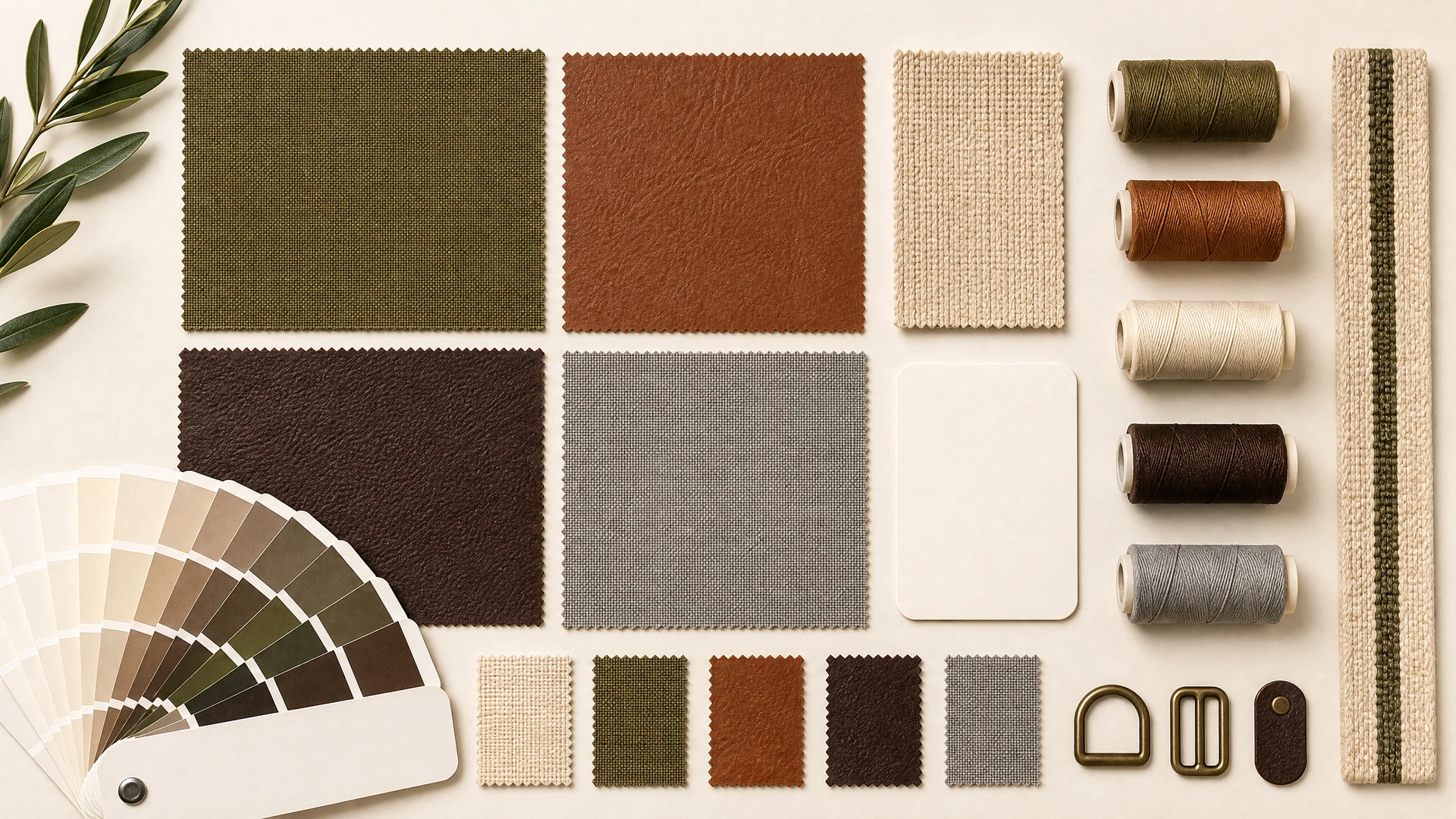
When specifying a custom colour for an OEM order, the following information should be confirmed before fabric is sourced. The Pantone reference should be provided, along with an acceptable Delta E tolerance — we work to Delta E 2.0 as standard, with 1.5 available for brand-critical colours at additional cost. The destination market UV index should be specified, as this determines the UV absorber concentration required. Finally, the buyer should confirm whether a colour fastness certificate to ISO 105-B02 is required for the order — we provide this as standard on orders above 100 units.
Colour is one of the first things a customer notices about a bag and one of the last things a buyer thinks to specify carefully. The two facts are directly related.
Share this article