What Happens to a Golf Bag Before It Leaves Our Factory: A 12-Point Quality Inspection
"Will the production run match the sample?" It's the question every buyer asks. Here's the exact 12-point inspection process we use to make sure the answer is yes.
Links Sports Co Editorial Team
Product Specialist & OEM Consultant · Links Sports Co
10+ years in golf & tennis bag manufacturing. Specialises in OEM/ODM custom branding, material sourcing, and B2B wholesale for brands across 30+ countries.

The Question Every Buyer Asks
"Will the production run match the sample?"
This is the most common concern in OEM manufacturing, and for good reason. Samples are made with care and attention. Production runs are made at speed. The gap between the two is where quality problems live.
At Links Sports Co, we address this gap with a structured 12-point inspection process applied to every bag before it is packed for shipment. This article walks through each checkpoint — not as a marketing exercise, but as a practical reference for buyers who want to know what to look for when evaluating any OEM supplier.
The 12-Point Inspection Process
1. Material Verification
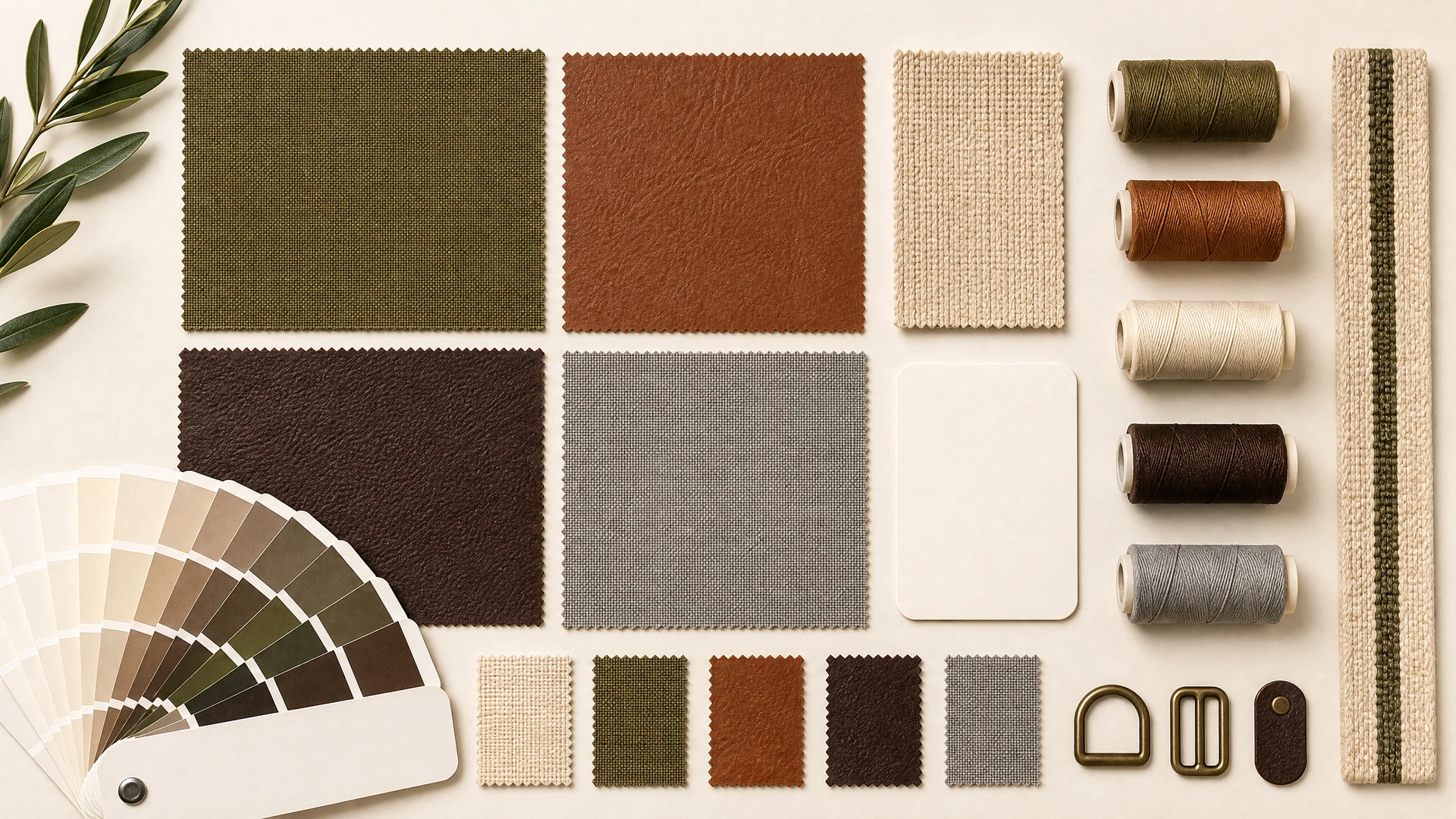
Before production begins, incoming fabric and hardware are checked against the approved Bill of Materials. Fabric weight (measured in oz/yd² or g/m²), color code, and weave pattern are verified against the approved sample swatch. Hardware finishes are compared to the approved color standard under D65 lighting.
2. Stitching Tension and Stitch Count
Stitch tension affects both appearance and structural integrity. Too loose and the seam will pucker under load; too tight and the thread will cut through the fabric over time. Our standard is 8–10 stitches per inch (SPI) for structural seams, verified with a stitch counter on a sample from each production batch.
3. Seam Allowance Consistency
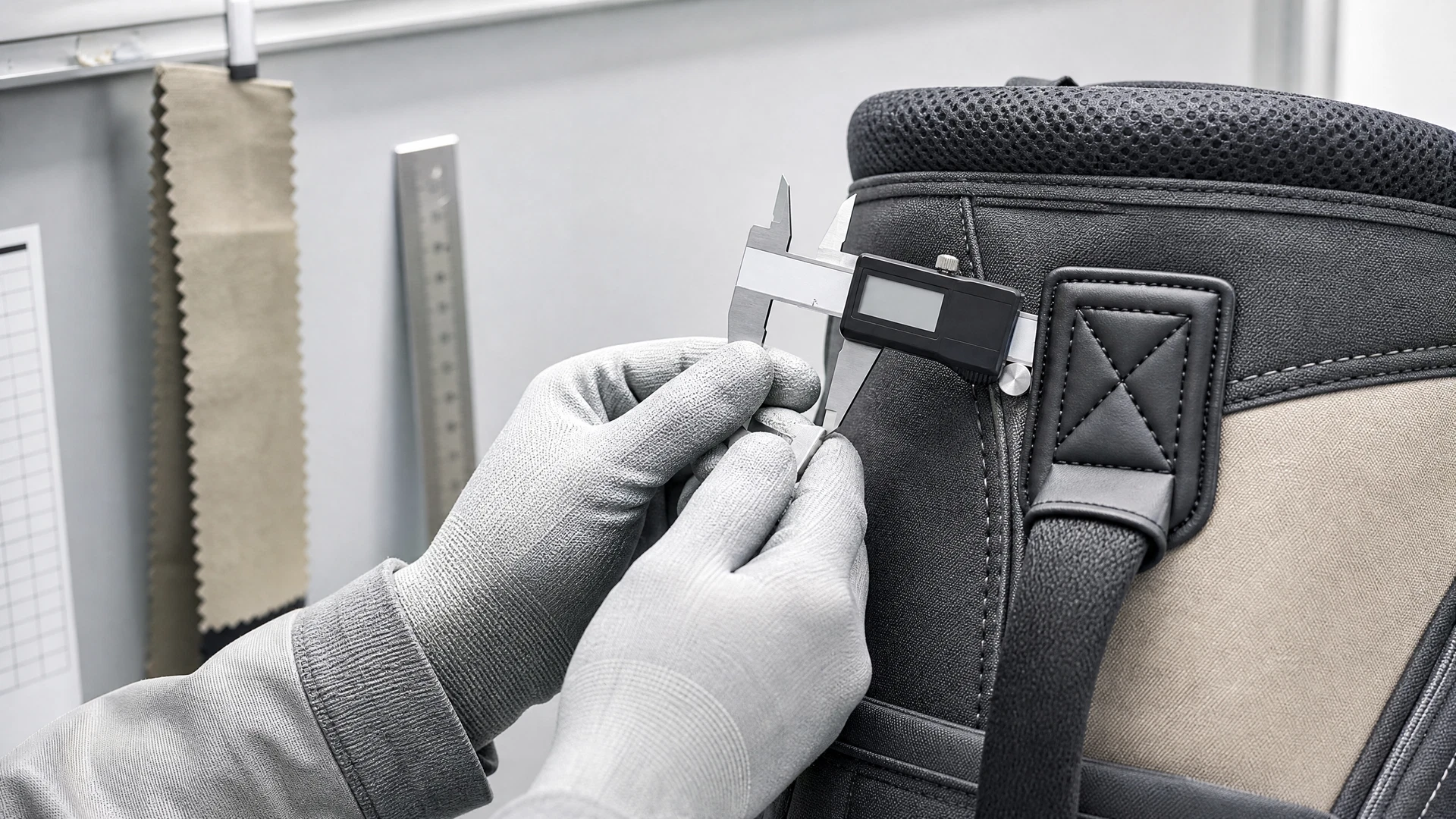
Seam allowance — the distance between the stitch line and the fabric edge — determines how much material is available to resist tearing. We specify a minimum 10mm seam allowance on all load-bearing seams. Inspectors measure this with a seam gauge on five randomly selected bags per production lot.
4. Bar Tack Placement
Bar tacks are dense, reinforced stitches placed at stress points: handle attachment points, strap anchor points, zipper ends, and pocket corners. Missing or misplaced bar tacks are one of the most common causes of field failures. Each bag is inspected for bar tack presence at all 12–16 specified stress points.
5. Zipper Function Test
Every zipper on every bag is opened and closed three times during inspection. Inspectors check for smooth slider movement, proper chain engagement, and secure end stops. Any zipper that catches, skips, or requires excessive force is flagged for replacement.
6. Hardware Torque Check
Metal hardware — D-rings, swivel clips, buckles, and rivets — is checked for secure attachment. Rivets are tested with a torque tool to verify they meet the minimum pull-out resistance specification (typically 15–20 kg for strap attachment points).
7. Logo Alignment and Registration
Logo placement is measured against the approved artwork specification, which defines the logo center point relative to a fixed reference point on the bag (typically the bottom seam or a panel edge). Acceptable tolerance is ±3mm for embroidered logos and ±2mm for heat-transfer or printed logos.
8. Color Consistency Check
Color variation between bags in the same production run is evaluated under standardized D65 lighting. Inspectors compare each bag to the approved color standard and to two other bags from the same lot. Visible color variation that would be noticeable to a consumer is cause for rejection.
9. Pocket and Compartment Function
All pockets are opened, loaded with a standard test weight (500g for small pockets, 2kg for main compartments), and closed. Pocket openings are checked for proper alignment and ease of access. Velcro closures are tested for adhesion strength.
10. Strap and Handle Load Test
Carry handles and shoulder straps are subjected to a 15kg static load test for 30 seconds. Attachment points are inspected for deformation, thread breakage, or hardware movement after the test. This simulates the stress of a fully loaded bag being lifted repeatedly.
11. Waterproofing Spot Check
For bags with waterproof or water-resistant specifications, a random sample of 10% of the production lot undergoes a spray test per AATCC 22 (spray rating method). Bags must achieve a minimum rating of 80 (light wetting on face) to pass.
12. Final Appearance Review
The last checkpoint is a holistic visual inspection: the inspector examines the complete bag from all angles under bright lighting, checking for loose threads, surface contamination, fabric pulls, uneven padding, and any cosmetic defect that would be visible to the end consumer.
What Happens When a Bag Fails
Any bag that fails one or more checkpoints is tagged, removed from the shipment lot, and logged in our quality management system. Depending on the defect type, the bag is either reworked (for correctable issues like loose threads or misaligned logos) or rejected (for structural failures). Reworked bags are re-inspected from checkpoint 1.
Our target is a defect rate below 0.5% on finished goods. We report actual defect rates to buyers on request as part of our quality documentation package.
Using This Checklist as a Buyer
If you're evaluating a new OEM supplier, this checklist gives you a concrete framework for your factory audit. Ask the supplier to walk you through their inspection process point by point. A factory with a documented, structured QC process will be able to answer every question. A factory that relies on informal "experience-based" inspection is a risk.
Quality is not a feeling. It's a process. And the process should be visible, documented, and consistent — every bag, every order.
Share this article