
Before the First Stitch: How Pattern Tolerances Keep Custom Golf Bags Consistent at Scale
Learn how to manage pattern tolerances and ensure production consistency for custom golf bags. This guide provides a technical framework for brand buyers to maintain quality at scale.
Links Golf Sports
Product Specialist & OEM Consultant · Links Sports Co
10+ years in golf & tennis bag manufacturing. Specialises in OEM/ODM custom branding, material sourcing, and B2B wholesale for brands across 30+ countries.
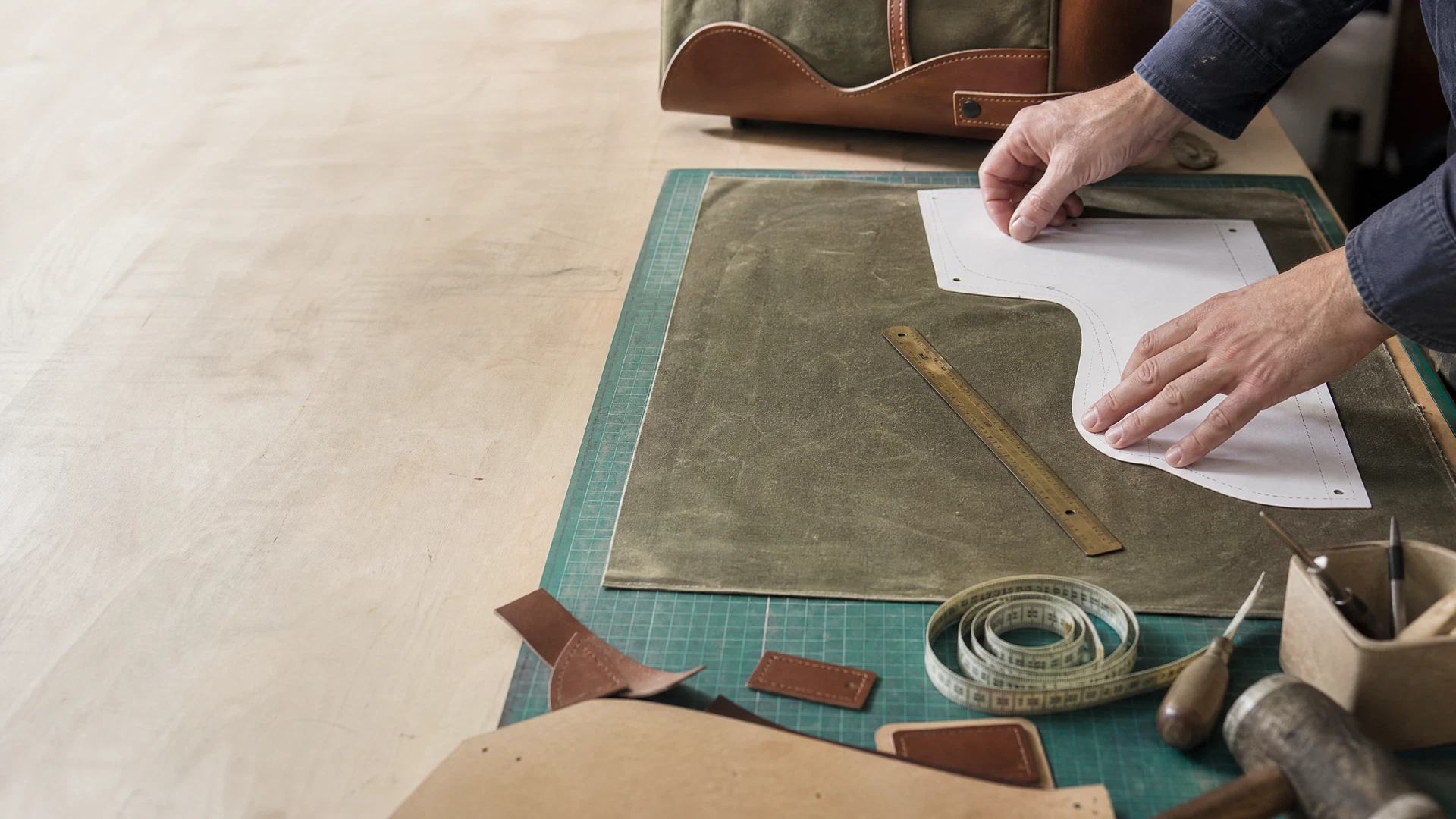
In the specialized field of custom golf bag manufacturing, the transition from a prototype to a full production run is where brand integrity is either solidified or compromised. For procurement managers and brand owners, the primary challenge is ensuring that every bag in a run is identical to the first. This consistency relies heavily on the technical discipline of pattern tolerance—the defined range of allowable variation in the dimensions and alignment of a bag’s components.
Maintaining consistency in a product as complex as a golf bag requires a deep understanding of how soft goods are constructed. Unlike rigid components, textiles and leathers are subject to shifting and stretching during the sewing process. Without a clear agreement on tolerances before production begins, a brand risks receiving a shipment where pockets are misaligned or the overall profile deviates from the intended aesthetic. This guide provides a decision framework for buyers to navigate the technical development phase and establish a clear quality control roadmap.
Defining Pattern Tolerance in Golf Bag Manufacturing
Pattern tolerance is the foundation of manufacturing quality control. It serves as the technical bridge between a brand’s vision and the factory’s execution. In professional manufacturing environments, every panel, seam, and attachment point is assigned a specific tolerance level. These levels are not universal industry standards; rather, they are jointly agreed-upon specifications that reflect the complexity of the design and the characteristics of the materials used.
When dealing with premium materials such as wax canvas and full-grain leather trim, understanding material behavior is essential. Waxed canvas provides a classic aesthetic but can vary in pliability depending on the treatment. Similarly, full-grain leather is a natural material with inherent variations. Manufacturers must account for these factors when setting tolerances to ensure the final product maintains its slim profile and structural integrity. The goal is to manage these variables systematically, ensuring that any deviation remains within a range that does not affect the bag’s functionality or visual appeal.
The Technical Development Phase: Establishing the Standard
Consistency begins long before the assembly line starts moving. The technical development phase is the most critical period for establishing pattern tolerances. During this stage, the manufacturer translates a brand’s design into a production-ready tech pack. This document should specify the exact placement of every component, from the large side panels to the smallest hardware attachments.
Buyers should view the prototyping process as a collaborative exercise in defining limits. It is recommended that brands ask for a "tolerance map" during the development of the initial sample. This map outlines the critical measurement points where consistency is paramount. By identifying these points early, buyers can avoid the "drift" that often occurs in bulk production, where small errors in individual bags accumulate into significant variations across a batch.
The Buyer’s Tolerance Map: Critical Areas for Consistency
To maintain production consistency, buyers should focus on several key areas where pattern tolerance is most visible. The following table outlines the critical components and the types of variances that should be discussed with the manufacturer.
| Component Area | Consistency Focus | Recommended Discussion Points |
|---|---|---|
| Main Panels | Symmetry and Alignment | Ask about the allowable variance in panel dimensions to ensure the bag maintains its slim profile. |
| Pocket Placement | Vertical and Horizontal Centering | Confirm the tolerance for pocket positioning relative to the main seams and logo locations. |
| Trim and Binding | Stitch Line Parallelism | Discuss the precision required for leather trim alignment and the consistency of binding widths. |
| Top Cuff & Dividers | Centering and Stability | Ensure the top cuff is centered relative to the bag body and that dividers are secured at uniform heights. |
| Strap Attachments | Load Distribution and Symmetry | Verify that attachment points for straps are symmetrical to ensure balanced carrying. |
| Hardware & Zippers | Functionality and Spacing | Establish tolerances for the placement of D-rings and zipper ends to prevent functional interference. |
Material Considerations and Their Impact on Consistency
The choice of materials significantly influences the achievable tolerance levels in production. For instance, a Sunday bag constructed from wax canvas and full-grain leather trim requires different handling than one made from synthetic fabrics. The thickness of the leather and the weight of the canvas can affect seam allowances and the way panels interact under tension.
Seam strength and durability are often evaluated using standardized methods such as ASTM D1683, which focuses on identifying failure points in sewn seams [1]. While these tests provide a baseline for structural integrity, the aesthetic consistency of the seams is equally important. Buyers should suggest that the manufacturer confirms the needle sizes and thread types used for different material combinations to ensure that the stitching remains uniform across all production units. ISO 4915 provides a standardized classification and terminology for stitch types [2]. Buyers should use it as a shared vocabulary when documenting stitch choices, rather than treating it as a product-performance certification.
A Checklist for Brand Buyers: Evaluating Manufacturer Capability
Before committing to a bulk production run, procurement managers should conduct a thorough review of the manufacturer’s quality control processes. The following questions are designed to help buyers assess a factory’s ability to maintain consistency at scale.
- How are pattern tolerances defined for this specific design? Brands should ask for a written specification detailing the allowable variance for key dimensions.
- What is the process for verifying consistency during bulk production? Inquire about the frequency of inspections and the specific metrics used to evaluate each bag.
- How does the factory handle material variations in wax canvas and leather? Ask about the sorting and cutting processes used to minimize the impact of natural material differences.
- Is there a dedicated quality control team for OEM/ODM projects? Understanding the personnel involved in oversight can provide confidence in the final output.
- What happens if a production unit falls outside the agreed-upon tolerance? Establish a clear protocol for identifying and rectifying non-conforming products.
The Path to Consistent Production
Achieving consistency is a step-by-step process that requires discipline at every stage of the project flow. For a brand launching with a minimum order quantity (MOQ) of 30 pieces, the focus should be on creating a repeatable system. This starts with a detailed tech pack and a physical prototype to identify any design elements that may be difficult to replicate consistently.
Once a Pre-Production Sample (PPS) is approved, it serves as the "gold standard" for the bulk run. During production, the factory should conduct regular quality checks based on the agreed-upon tolerance map. Finally, a percentage of the finished bags should be measured against the PPS to ensure they meet the brand’s standards. This disciplined approach ensures that the final output aligns with the brand's expectations for quality and craftsmanship.
By focusing on pattern tolerances before the first stitch is taken, brands can protect their reputation and ensure that every customer receives a product that meets their standards. Whether you are developing a slim-profile Sunday bag or a fully customized solution, the principles of technical development and quality control remain the same. Through clear communication and a disciplined project flow, the path from a prototype to a successful bulk production run becomes a predictable and rewarding journey.
Ready to Develop Your Next Collection?
If you are planning a new line of custom golf bags, our team specializes in OEM/ODM production with a focus on craftsmanship and consistency. Whether you need a slim-profile Sunday bag in wax canvas or a fully branded solution, we offer customizable options for logos, materials, and dimensions with a minimum order quantity of 30 pieces.
Explore our products | Contact us for a quote | Read more on our blog
References
[1] ASTM D1683 / D1683M - 17(2023) Standard Test Method for Failure in Sewn Seams of Woven Fabrics
[2] ISO 4915:1991 Textiles — Stitch types — Classification and terminology
Share this article