Off-Course Golf Is Changing the Bag Lineup: A Procurement Playbook for Simulator Venues
A strategic guide for simulator venues and golf brands to navigate the procurement of specialized bags, focusing on assortment strategy, customization, and minimalist design for off-course play.
Links Golf Sports
Product Specialist & OEM Consultant · Links Sports Co
10+ years in golf & tennis bag manufacturing. Specialises in OEM/ODM custom branding, material sourcing, and B2B wholesale for brands across 30+ countries.
The golf industry is undergoing a significant transformation, driven by the expanding reach of off-course participation. As traditional play evolves, a new generation of golfers is engaging with the sport through indoor simulators, tech-enabled driving ranges, and golf entertainment venues. This shift has created a unique set of requirements for equipment, particularly in how golf bags are designed, procured, and utilized within specialized environments. For operators and brands, navigating this transition requires a disciplined procurement strategy prioritizing versatility, brand alignment, and minimalist design.
Research indicates that the overall reach of golf is broadening, with off-course activities serving as a vital entry point for newcomers [1]. This diversification of the golfer base necessitates a rethink of the traditional golf bag assortment. In a simulator or lounge setting, bulky bags are often replaced by slim-profile alternatives that better suit the physical constraints and social nature of off-course play.
The Assortment Matrix: Defining Off-Course Use Cases
A successful procurement strategy for an off-course venue begins with a clear understanding of how equipment will be used. Unlike a traditional shop, a simulator lounge must balance retail inventory with functional assets used for daily operations. Categorizing these needs into a matrix allows buyers to specify the correct materials and features for each application.
| Use Case | Primary Objective | Key Considerations | Recommended Bag Type |
|---|---|---|---|
| Retail | Revenue | Aesthetics, brand storytelling | Premium Wax Canvas Sunday Bags |
| Loaner | Guest play | Durability, storage, club protection | Slim Profile Carry Bags |
| Demo | Equipment trials | Accessibility, portability | Stand Bags with Custom Branding |
| Staff | Professionalism | Utility, mobility | Specialized Staff Bags |
| Gifting | Souvenirs | Logo placement, premium finish | Custom Leather-Trim Sunday Bags |
When building this matrix, operators should evaluate the specific club capacity required. While a full set of clubs is standard for traditional play, many simulator sessions or clinics only require a subset, making the Sunday bag an increasingly popular choice for retail and operational use.
Procurement Decision Framework
Procuring custom golf bags involves more than selecting a color. To avoid common pitfalls, buyers should utilize a decision framework addressing technical specifications, brand requirements, and logistical constraints. The following questions serve as a starting point:
What is the primary environment? Indoor environments may prioritize aesthetic materials like wax canvas and leather trim, while outdoor ranges might require higher resistance to environmental factors. Buyers should ask suppliers for specific material performance details relevant to their venue's conditions.
How does the profile impact storage? In urban lounges where space is at a premium, a slim profile is often preferred. Reducing the footprint of loaner bags can significantly improve the organization of the venue.
What level of customization is required? OEM and ODM projects offer varying flexibility. Buyers should confirm whether the manufacturer can customize the logo, material, color, pocket configuration, and hardware finishes to match the brand's visual identity.
What is the entry-level commitment? Understanding the Minimum Order Quantity (MOQ) is crucial. While large-scale production often requires significant volume, specialized manufacturers offer entry points as low as 30 pcs, allowing for smaller, targeted launches.
Minimalist Design: The Sunday Bag Strategy
The "Sunday bag" has seen a resurgence in the off-course sector due to its minimalist philosophy and practical utility. Traditionally designed for carrying a handful of clubs for a quick loop, the modern Sunday bag has been elevated through premium materials and refined silhouettes.
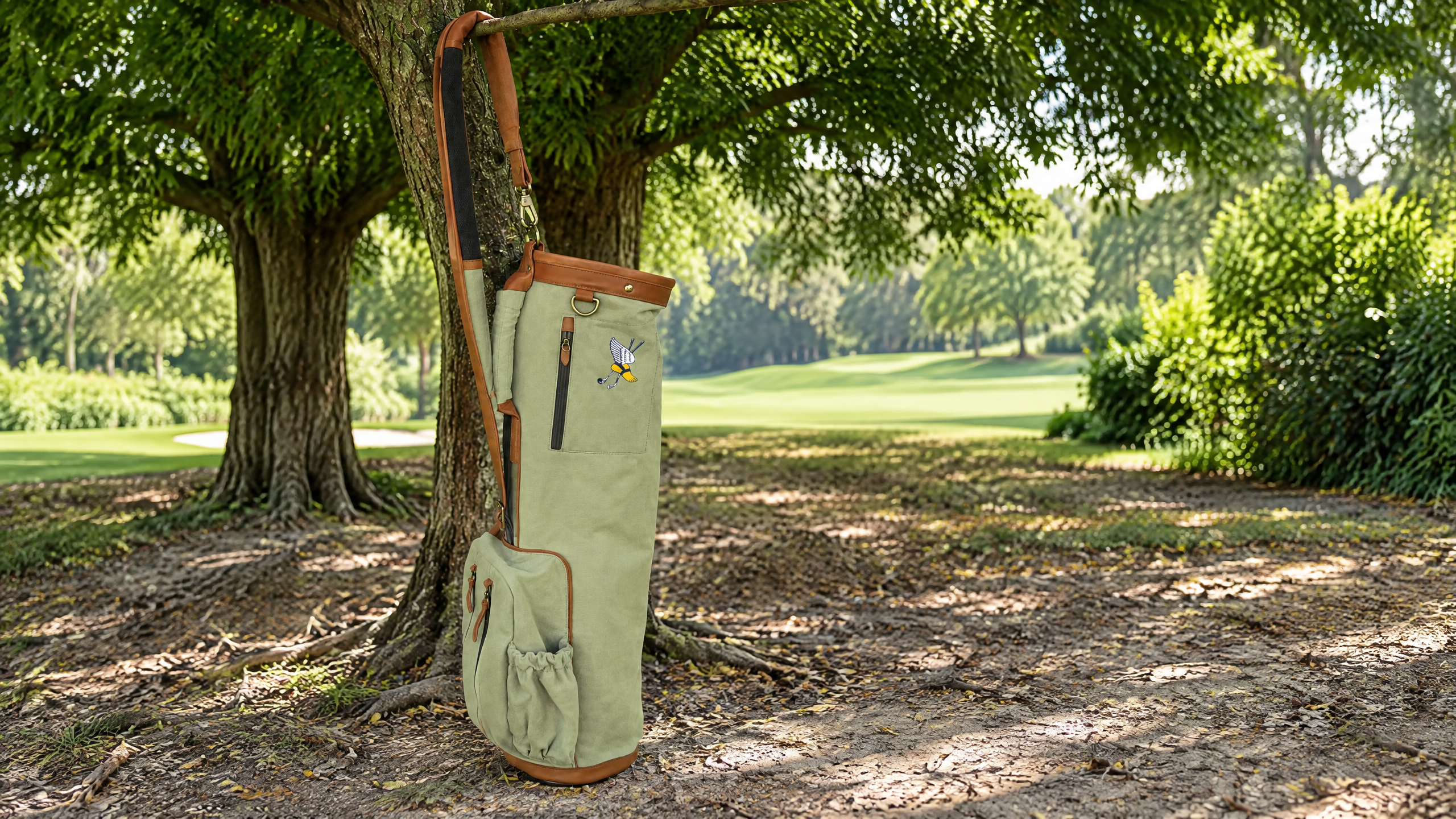
A notable example of this trend is the shift toward bags featuring a combination of wax canvas and full-grain leather trim. This material choice offers a sophisticated, heritage-inspired aesthetic that aligns with the upscale interiors of modern golf lounges. When procuring these items, buyers should look for a "slim profile" design that maintains its shape while remaining lightweight for easy transport.
Key features to consider in a premium Sunday bag include:
- Adult Sizing: Ensuring bag length and strap ergonomics are appropriate for adult golfers.
- Wax Canvas Construction: Providing a distinct texture and classic look.
- Full-Grain Leather Trim: Adding durability and a high-end finish to high-wear areas.
- Customizable Pockets: Designing the layout to accommodate modern essentials like smartphones or venue-specific items.
Customization and Brand Integration
For simulator venues and brands, the golf bag is a mobile billboard. Effective brand integration goes beyond printing a logo on a side panel. A comprehensive procurement partner should offer customization options that allow the product to feel like a bespoke creation.
Buyers are encouraged to explore the following avenues:
- Logo Application: Options should include embroidery, screen printing, or embossed leather patches for a premium feel.
- Material Selection: Manufacturers may offer various synthetic or natural fabrics to meet specific aesthetic or functional goals.
- Color Matching: Ensuring the fabric and trim colors align with the brand’s requirements.
- Private Labeling: For venues looking to launch their own equipment line, private labeling provides a path to brand ownership.
It is suggested that buyers request physical swatches or prototypes before committing to a full production run to confirm that the colors and textures meet expectations in the venue’s specific lighting conditions.
Procurement Checklist
To ensure a smooth process, venue operators can follow this checklist:
- Define Use Cases: Identify quantities needed for retail, loaners, and staff.
- Set Budget Parameters: Establish a target cost per unit accounting for customization.
- Request Material Samples: Evaluate the feel of wax canvas and leather options.
- Confirm Customization: Verify that the supplier can meet logo and color requirements.
- Validate MOQ: Ensure the order size aligns with the venue's needs (e.g., a 30 pcs starting point).
- Inquire About Lead Times: Get a clear estimate for prototyping and production.
- Establish Quality Standards: Agree on the level of finish before production begins.
Conclusion
As off-course golf continues to gain momentum, the demand for specialized, high-quality equipment will grow. By adopting a disciplined procurement playbook, simulator venues and emerging brands can ensure they are providing products that are reflective of their brand's commitment to quality. Whether through a slim-profile Sunday bag or a fully customized retail line, the right procurement strategy is a cornerstone of success in the modern golf landscape.
For those looking to explore custom bag options, including our slim-profile wax canvas Sunday bags with an MOQ of 30 pcs, please visit our products page or contact our team for a consultation.
References
[1] National Golf Foundation. "Golf Industry Facts." Available at: https://www.ngf.org/the-clubhouse/golf-industry-research/
[2] National Golf Foundation. "Golf’s Growth Era – The Road to Increased Participation." Available at: https://www.ngf.org/short-game/golfs-growth-era-the-road-to-50-million-golfers/
Share this article