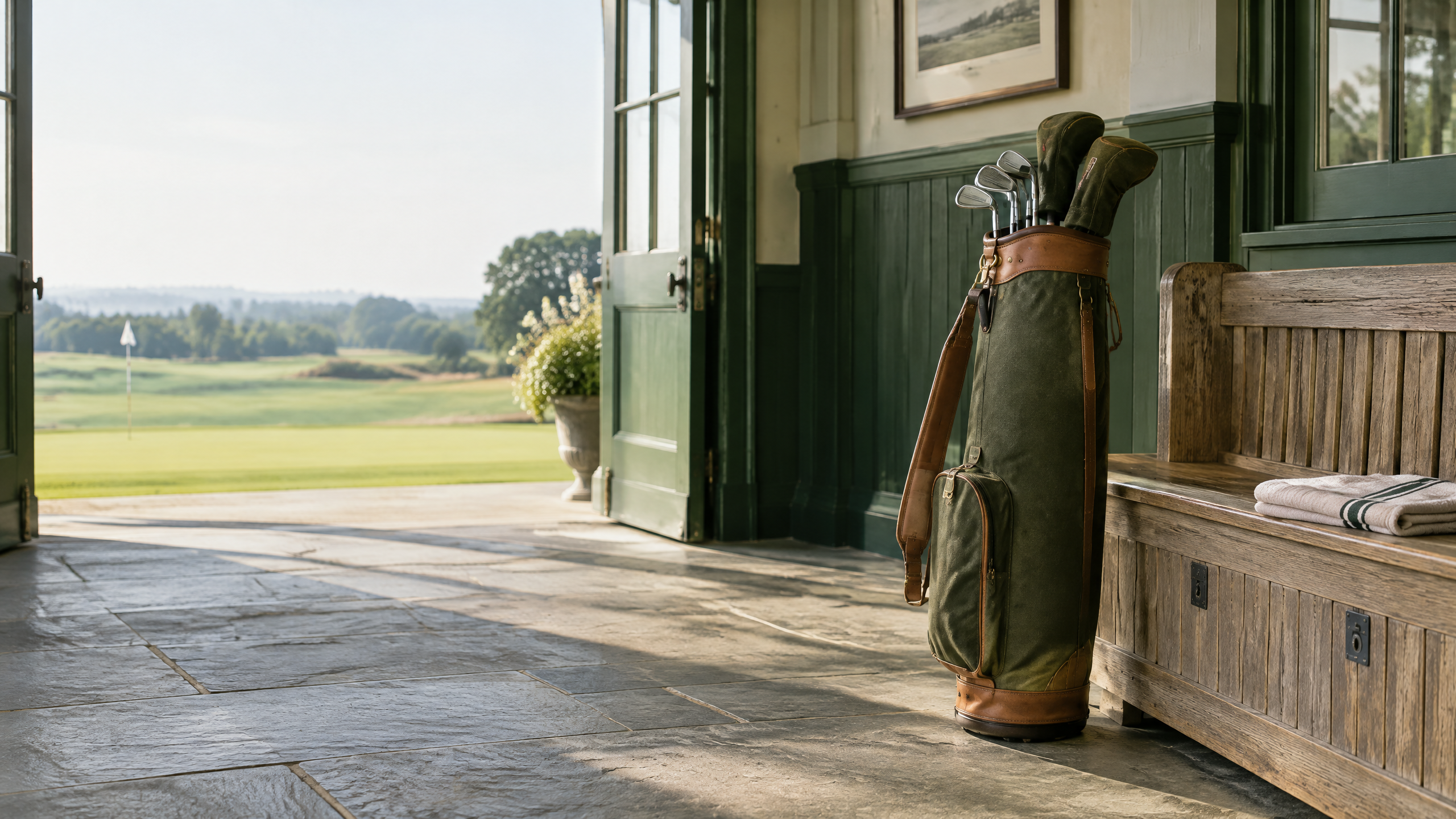
Wax Canvas vs Nylon Golf Bags: A Complete Material Comparison for Club Brands
A detailed comparison of wax canvas and nylon golf bag materials—covering weight, waterproofing, durability, brand positioning, and OEM production considerations for club brands and retailers.
Links Golf Sports
Product Specialist & OEM Consultant · Links Sports Co
10+ years in golf & tennis bag manufacturing. Specialises in OEM/ODM custom branding, material sourcing, and B2B wholesale for brands across 30+ countries.

When you're sourcing golf bags for your club brand or retail line, few decisions carry more long-term weight than the choice of shell material. Wax canvas and nylon are the two dominant options in the premium segment—and they couldn't be more different in character, performance, and the story they tell about your brand.
This guide breaks down the real-world differences between wax canvas and nylon golf bags, drawing on production data and buyer feedback from our factory floor, where we've manufactured both materials for clients across North America, Europe, and Australasia.
What Is Wax Canvas?
Wax canvas is a tightly woven cotton fabric that has been impregnated with paraffin or beeswax, creating a dense, water-resistant surface with a distinctly tactile, matte finish. The material has roots in 19th-century British sailing and outdoor workwear—Barbour famously built its brand on waxed cotton—and it carries that heritage aesthetic into modern golf.
Key characteristics:
- Natural cotton base with wax coating
- Ages gracefully, developing a patina over time
- Heavier than synthetic alternatives (typically 18–22 oz/yd²)
- Repairable and re-waxable in the field
- Breathes slightly better than sealed synthetics
Real-World Example: Mackenzie Golf
Mackenzie Golf, the California-based Sunday bag specialist, built its entire brand identity around waxed canvas. Their bags retail at $350–$600, and the material is central to their marketing—"ages like fine leather" is a phrase that appears in nearly every review. Buyers report that after two seasons of regular use, the wax canvas develops a unique character that nylon simply cannot replicate.
What Is Nylon (Golf Bag Grade)?
Modern golf bag nylon is far removed from the thin fabric you'd find in a budget tote. High-performance golf bags use 420D to 1680D ballistic nylon or ripstop nylon, often with a PU or TPU coating for waterproofing. The result is a material that is exceptionally light, abrasion-resistant, and dimensionally stable.
Key characteristics:
- Synthetic polyamide fiber
- Consistent color and texture across production runs
- Lighter than wax canvas (typically 6–12 oz/yd²)
- Excellent abrasion resistance (3× higher than standard canvas per ASTM D4966)
- Fully waterproof when coated; does not require re-treatment
Real-World Example: Sun Mountain
Sun Mountain's C-130 cart bag uses a proprietary 420D nylon shell that has become a benchmark for durability in the cart bag segment. At 5.3 lbs, it's roughly 40% lighter than a comparable wax canvas tour bag, and it has earned a reputation for surviving years of cart-path abuse without showing significant wear.
Head-to-Head Comparison
| Attribute | Wax Canvas | Nylon (420D–1680D) |
|---|---|---|
| Weight | Heavy (18–22 oz/yd²) | Light (6–12 oz/yd²) |
| Water Resistance | Good (requires re-waxing every 1–2 seasons) | Excellent (factory-sealed, maintenance-free) |
| Abrasion Resistance | Moderate | High (3× canvas per ASTM D4966) |
| Aging / Patina | Develops character over time | Consistent appearance throughout lifespan |
| Repairability | High (re-wax, patch, re-stitch) | Moderate (seam repair possible; surface scratches permanent) |
| Brand Positioning | Heritage, premium, artisanal | Performance, modern, technical |
| Price Point (OEM) | $28–$65/unit (shell material only) | $8–$22/unit (shell material only) |
| MOQ Flexibility | Lower (custom weave requires 500+ yards) | Higher (standard rolls widely available) |
| Colorway Options | Limited (dyeing waxed canvas is complex) | Extensive (pantone matching standard) |
| Sustainability | Natural fiber; biodegradable base | Petroleum-derived; recyclable grades available |
Which Material Is Right for Your Brand?
Choose Wax Canvas If:
Your brand is targeting the heritage, walking-golfer, or premium artisan segment. Wax canvas communicates craftsmanship in a way that no synthetic can match. It photographs beautifully, ages into a story, and justifies a retail price premium of 30–50% over comparable nylon bags.
This is the material of choice for brands like Stitch Golf, Vessel (for their heritage line), and boutique club brands at private courses in the UK and New Zealand. If your buyers are the type who also wear Barbour jackets and carry leather-trimmed accessories, wax canvas is your material.
Practical note: Wax canvas requires slightly more care in production—stitching tension must be calibrated differently, and the wax coating can interfere with adhesive bonding. At our factory, we run wax canvas through a separate production line with specialized presser feet to prevent wax buildup on machinery.
Choose Nylon If:
Your brand is focused on performance, value engineering, or broad market appeal. Nylon gives you consistent quality across large production runs, a wider range of colorways, and a significantly lower unit cost. It's the dominant material in the $150–$350 retail segment for good reason.
For brands building a junior golf line, a corporate gifting program, or a high-volume retail SKU, nylon is almost always the right answer. The material is also more forgiving in humid climates—wax canvas can develop mildew if stored improperly, while nylon is essentially inert.
The Hybrid Approach
An increasingly popular option among our clients is a hybrid construction: nylon body with wax canvas accent panels, leather trim, and brass hardware. This approach captures the visual appeal of heritage materials while keeping the bag lightweight and weather-resistant.
Ghost Golf, the Texas-based brand that has built a cult following among younger golfers, uses a version of this approach—their signature bags combine a technical nylon shell with waxed canvas pocket panels and vegetable-tanned leather handles. The result is a bag that photographs like a heritage piece but performs like a modern carry bag.
Production Considerations for OEM Buyers
If you're sourcing custom golf bags for your brand, here are the key production questions to ask your manufacturer:
For wax canvas:
- What weight (oz/yd²) of canvas do you use, and what is the wax saturation level?
- How do you handle seam sealing on wax canvas? (Wax canvas is not inherently seam-sealed; this requires additional treatment.)
- What is the minimum order quantity for a custom colorway?
For nylon:
- What denier rating is the shell fabric? (420D is entry-level; 1680D ballistic nylon is premium.)
- Is the waterproofing a PU coating, TPU laminate, or DWR treatment? (TPU laminate is the most durable.)
- Can you provide Pantone color matching for the shell?
At Links Golf Sports, we work with both materials across our full product range. Our wax canvas bags use 18 oz British-woven canvas with a double paraffin treatment; our nylon bags use 600D and 1680D ballistic nylon with TPU laminate waterproofing. We're happy to send material samples before you commit to a production run.
The Bottom Line
Wax canvas and nylon are not competing for the same buyer—they serve fundamentally different brand stories. Wax canvas is for brands that want to sell heritage, craftsmanship, and the romance of the game. Nylon is for brands that want to sell performance, value, and reliability.
The best golf bag brands understand which story they're telling—and choose their materials accordingly.
If you're building a custom golf bag line and want to discuss material options, production timelines, and MOQ requirements, contact our team. We've helped brands across North America, Europe, and Australasia develop their signature bags from concept to production.
Frequently Asked Questions
Q: Which material is better for a custom golf bag — wax canvas or nylon?
It depends on your brand positioning and target market. Wax canvas offers a premium, heritage aesthetic with natural water resistance and a patina that improves with age — ideal for private clubs, boutique brands, and gift-market products. Nylon (especially 1680D ballistic nylon) is lighter, more consistent in color reproduction, and easier to clean, making it the preferred choice for performance-focused brands and junior/youth lines where weight matters.
Q: What is the minimum order quantity (MOQ) for custom wax canvas golf bags?
At Links Sports Co, the MOQ for custom wax canvas golf bags starts at 50 pieces per colorway. For nylon bags, the MOQ is also 50 pieces. Mixed-material orders (e.g., wax canvas body with nylon pockets) follow the same 50-piece minimum. Sample orders of 1–3 pieces are available before bulk production.
Q: How long does wax canvas last compared to nylon?
A properly maintained wax canvas bag typically lasts 8–15 years with re-waxing every 2–3 years. Nylon bags generally last 5–8 years under regular use. However, nylon is more resistant to UV fading and does not require maintenance waxing. For clubs or brands that want a "lifetime bag" narrative, wax canvas is the stronger story.
Q: Can wax canvas golf bags be embroidered with a club logo?
Yes. Wax canvas takes hand embroidery exceptionally well — the tight weave provides a stable base for detailed logo work. We recommend chain stitch or flat embroidery for wax canvas. Heat-transfer printing is not recommended as the wax coating can interfere with adhesion. For nylon bags, both embroidery and heat-transfer printing are viable options.
Q: Is wax canvas golf bag production more expensive than nylon?
Yes, typically 20–40% more expensive depending on canvas weight (10oz vs 12oz vs 14oz) and leather trim complexity. The premium is driven by material cost (wax canvas is 3–5× the price of nylon per meter), longer cutting and sewing time, and the hand-finishing required for wax edges. For brands targeting the $150–$300 retail price point, wax canvas delivers the perceived value that justifies the margin.
Share this article