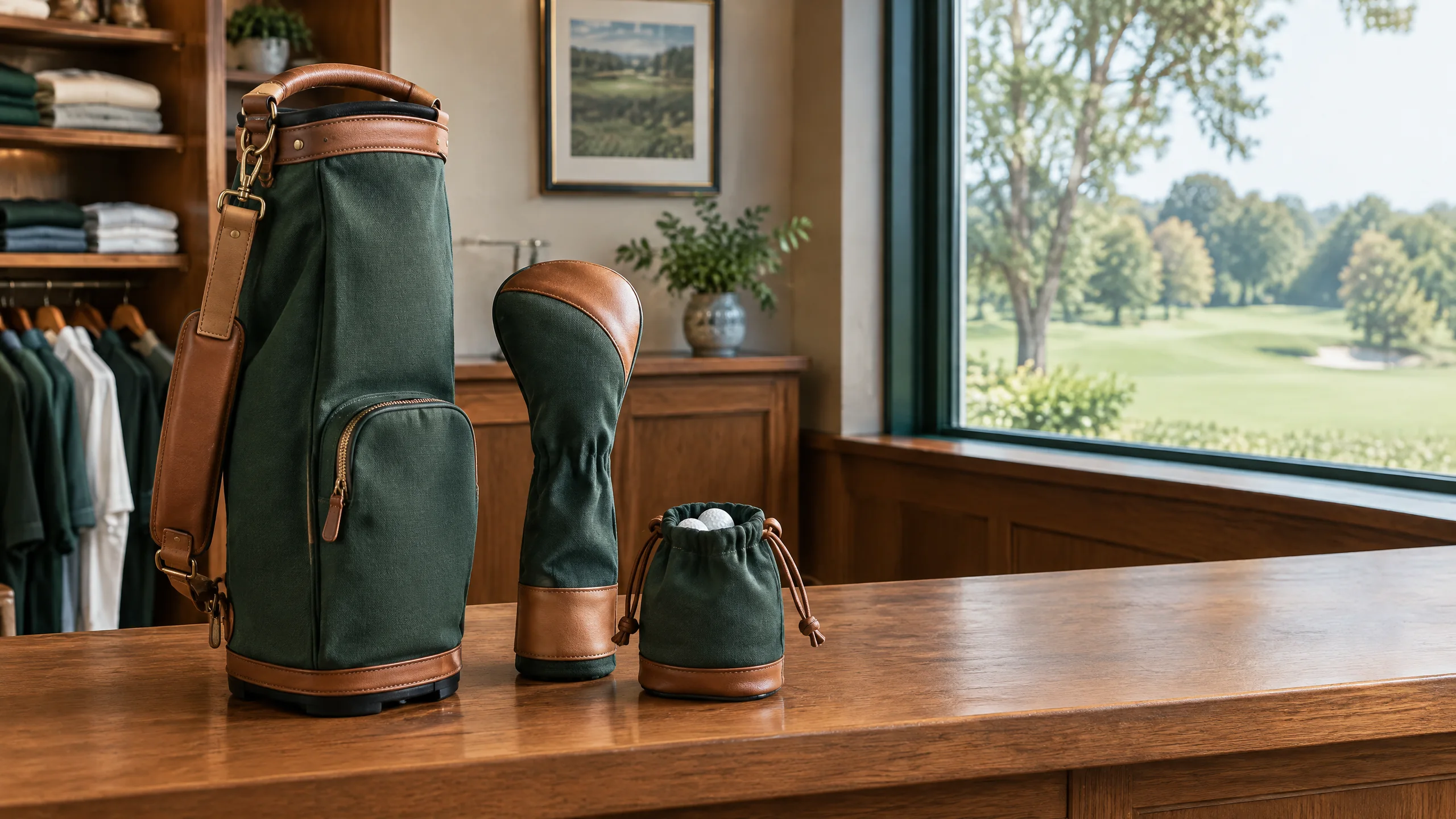
From Clubhouse to Workday: Designing a Custom Golf Tote Bag for Everyday Use
Design a golf tote around everyday use, not just a club crest. Explore open-top versus zip-top access, handle clearance, device fit and useful interior organisation.
Links Sports Co
Product Specialist & OEM Consultant · Links Sports Co
10+ years in golf & tennis bag manufacturing. Specialises in OEM/ODM custom branding, material sourcing, and B2B wholesale for brands across 30+ countries.
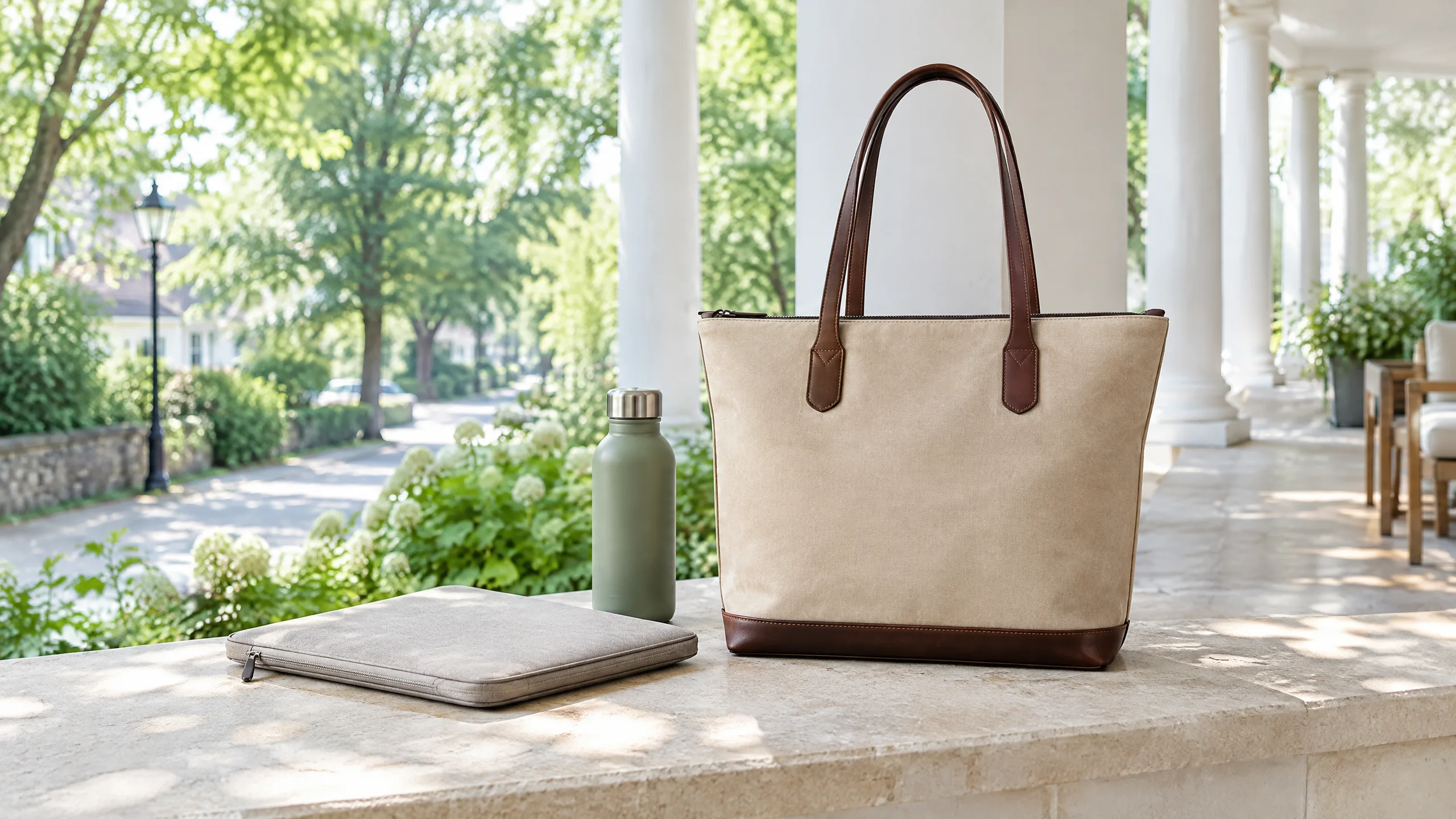
A golf tote bag that moves from the clubhouse to a workday needs more than enough room for a laptop. It needs to remain usable when the laptop, water bottle, charger, light outerwear and keys are all inside at once. The opening should suit the way the bag is carried; the handles should clear a jacket; and the base should support the load without turning every small item into something to retrieve from underneath it.
For an overseas club buyer or private-label product manager, this is a distinct product proposition: one bag for a round-adjacent visit and the working hours around it, rather than a smaller overnight bag. Its value comes from the relationship between dimensions, access and organization—not from adding as many compartments as possible.
Let the same-day load define the shape
Consider two hypothetical design needs, not reports of customer behavior. In the first, a member drives to the club, carries a computer into the clubhouse and later works at a desk. The bag is frequently set down, and easy access to a folded jacket matters. In the second, a member walks between transport, the club and an office, with the bag on a shoulder and the computer inside throughout. A closed opening and stable bottle position become stronger priorities.
These scenarios can require different totes even with identical contents. The first may favor a generous open mouth. The second may favor a zip-top profile that contains loose items when the bag changes position.
Start with a defined load: the actual computer, its protective case if used, one bottle, a charger and cable, a light outer layer, and keys. Decide what must be reachable without removing the computer. That decision establishes the arrangement before exterior styling begins. For a custom golf tote bag for clubs, a convincing everyday specification is one whose intended contents have somewhere deliberate to go.
An open top and a zip top create different routines
The men’s suede golf tote bag offers an open top, a canvas lining, a leather bottom and an inside zipped leather pocket. Its open mouth makes the main compartment directly accessible: a folded layer can be lifted out without opening a long zipper. The zipped pocket provides a separate place for keys or other small valuables, but it does not close the main compartment.
That distinction matters when choosing the product’s role. Open-top access is appealing where the bag stays upright and close at hand. It asks for more deliberate placement when the bag is tilted, carried through a busy space or put beside a chair. A soft garment sticking above the rim is also a different proposition from a computer whose upper edge remains fully inside.
The women’s suede leather golf tote listing also has an open top, with an inside zip pocket and an exterior slip pocket. Those are functional choices to evaluate against a defined load, not evidence that all women need the same arrangement. An exterior slip pocket can prioritize quick access; the inside zipped pocket can keep selected small items separate from the main load.
By contrast, the structured zip-top waxed canvas golf tote with leather trim has a zip-top closure, side slip pockets, a listed padded 13-inch laptop sleeve and nylon lining. For a buyer seeking a waxed canvas golf tote bag with zipper, the question is whether the closed bag remains easy to use when fully packed. Can the zipper travel without catching the jacket or pressing against a tall bottle? Does the opening allow the computer to come out without awkward angling?
A zipper offers containment, not an anti-theft guarantee. Likewise, the material name alone should not be treated as a waterproof claim. Choose these constructions for their documented features and the intended access pattern.
Handle drop only matters if the loaded bag clears the jacket
Handle drop describes the space between the top of the handle and the bag opening. It is useful, but it does not tell the whole shoulder-carry story. A thick jacket occupies some of that space. A filled tote may bulge outward, while the opening can rise toward the underside of the arm. Two bags with the same stated drop can therefore present different clearance.
The Links Travel Waxed Canvas Passenger Tote lists an 11-inch handle drop and a laptop sleeve. That measurement is a starting reference, not proof of comfortable clearance for every wearer or jacket. Its closure is not confirmed in the available listing, so it should not be grouped automatically with either open-top or zip-top designs.
For a proposed everyday tote, assess the handle opening with the intended load inside and a representative jacket on. Look at whether the bag can move onto the shoulder without forcing the arm through a narrow gap, whether the handles remain together, and whether the loaded rim sits where intended. Also consider hand carry: extra shoulder clearance can leave a tote hanging lower when held at the side.
Links Sports Co can be approached about custom sizes and carry configurations around that use case. Describe the clearance you need rather than asking only for “longer handles.” Handle drop, handle spacing and bag-body dimensions should be considered together; changing one may not resolve the actual interference.
Width and base support decide whether capacity is usable
A wide opening is not the same as a well-proportioned working compartment. The computer may fit across the bag while leaving too little depth for a bottle beside it. Alternatively, a deep base may accommodate everything but encourage the charger and keys to disappear beneath a folded layer. Capacity needs an arrangement, not just a larger outline.
Map the computer against the rear wall, the bottle beside it and the jacket in the remaining central space. Keep the charger where its bulk will not push into the device compartment. If the jacket must be removed first every time the computer is needed, decide whether that compromise suits the intended product. More width can ease side-by-side packing, but it also enlarges the bag’s footprint beside a desk or clubhouse chair.
Base support deserves its own decision. A leather bottom is a listed feature of the men’s suede tote, but that description alone does not establish rigidity. Ask how the base is built if your design depends on it holding a defined shape. A supported base can help organize a proposed layout, while an overly rigid or oversized base may make the tote less adaptable when lightly filled.
Avoid describing a bag as freestanding simply because it looks upright in a photograph. The relevant question is how the proposed construction behaves with the computer and bottle positioned as intended, including when one of them is removed. Balanced packing and sufficient base depth matter as much as the appearance of structure.
Fit the device, then give the bottle its own space
A “13-inch laptop sleeve” refers to a listed screen-size category, not a universal fit standard. Computers with the same diagonal screen size can have different external dimensions. A protective case adds another variable, and a sleeve may have an entrance narrower than its interior.
For the device decision, record:
- The computer’s external width, height and thickness.
- The outside dimensions with any case intended for daily use.
- The sleeve’s usable internal dimensions and entrance width.
- The clearance needed to insert and remove the device through the tote opening.
Padding is a construction feature, not an impact-protection guarantee. Decide whether the sleeve should hold the computer apart from the other contents, and whether the device remains below the top edge when seated. In an open tote, that position is especially important; in a zipped tote, leave room for the closure to operate above it.
The bottle needs similarly specific treatment. Compare its diameter and capped height with the proposed pocket, not just its stated volume. A side slip pocket should not be assumed to be a bottle holder merely because one appears to fit. Pocket depth, mouth shape and attachment determine how the bottle is held as the tote moves.
An internal bottle compartment can be considered if the exterior pocket is unsuitable, but it consumes working space. Keep a capped bottle away from the computer where the layout permits, and do not present separation as leak protection. A charger pouch and a dedicated zipped pocket for keys can keep small items accessible without turning the bag into a dense organizer. Avoid placing sharp keys loose against the computer or beneath the lining’s main working surface.
Keep the everyday promise precise
The exterior should still make sense at the club and beside a work desk. That does not require stripping away club identity. It means considering the club logo alongside the bag’s opening, handles and pocket placement so branding does not obstruct the features people need to use.
When discussing a design with a private-label golf tote bag manufacturer, use Links Sports Co’s product range as a starting point for custom sizes, closure choices, carry details and internal layers. Keep those decisions connected: a changed height may affect device coverage; a changed depth may affect shoulder clearance; and an added bottle section may reduce room for outerwear. Club logo options belong within that product conversation, rather than substituting for it.
Keep the boundary with weekend luggage equally clear. If the intended load expands to shoes, toiletries and spare clothing, the design question has changed. The article on golf duffel bag shoe storage for club weekends addresses that separate direction.
For the same-day tote, the useful next step is to discuss the actual device dimensions, loaded arrangement and preferred access with Links Sports Co. The best specification is not the one with the most features. It is the one that lets the computer, bottle and small essentials coexist without making every transition a repacking exercise.
Frequently Asked Questions
Q: Is an open-top or zip-top golf tote better for a workday?
Choose around access and containment rather than a universal winner. An open top gives direct access to outerwear and the main compartment, while a zip top closes over the load. Check how each behaves with the intended contents. An inside zipped pocket does not close an open tote, and a zipper is not a security guarantee.
Q: Will a listed 13-inch laptop sleeve fit every 13-inch computer?
No. Screen diagonal does not establish the computer’s external width, height or thickness. Compare the actual device, including any case, with the sleeve’s usable dimensions and entrance. Also check removal through the bag opening and clearance beneath the closure. The listed sleeve size is a starting category, not confirmation of fit.
Q: How should handle drop be specified for shoulder carry over a jacket?
Use a stated handle drop as a reference, then assess actual clearance with the bag loaded and the intended jacket worn. Handle spacing, body depth and a bulging opening can change the available space. Consider hand carry too, since increasing drop also lowers the bag when it is held at the side.
Q: What keeps a bottle and small valuables organized in an everyday tote?
Give each a defined location. Match bottle diameter and height to the intended compartment, and confirm that a slip pocket actually holds it appropriately. Use a zipped pocket for selected small valuables and keep charger bulk separate from the device area. Organization helps access and containment; it does not guarantee against leaks, loss or theft.
Share this article