The Away-Fixture System: A Buyer’s Guide to Custom Tennis Bags for Teams, Coaches & Travel Days
Plan custom tennis bags for league travel with a practical team-system brief covering player IDs, coach equipment, arrival routines, wet gear and sample approval.
Links Sports Co
Product Specialist & OEM Consultant · Links Sports Co
10+ years in golf & tennis bag manufacturing. Specialises in OEM/ODM custom branding, material sourcing, and B2B wholesale for brands across 30+ countries.
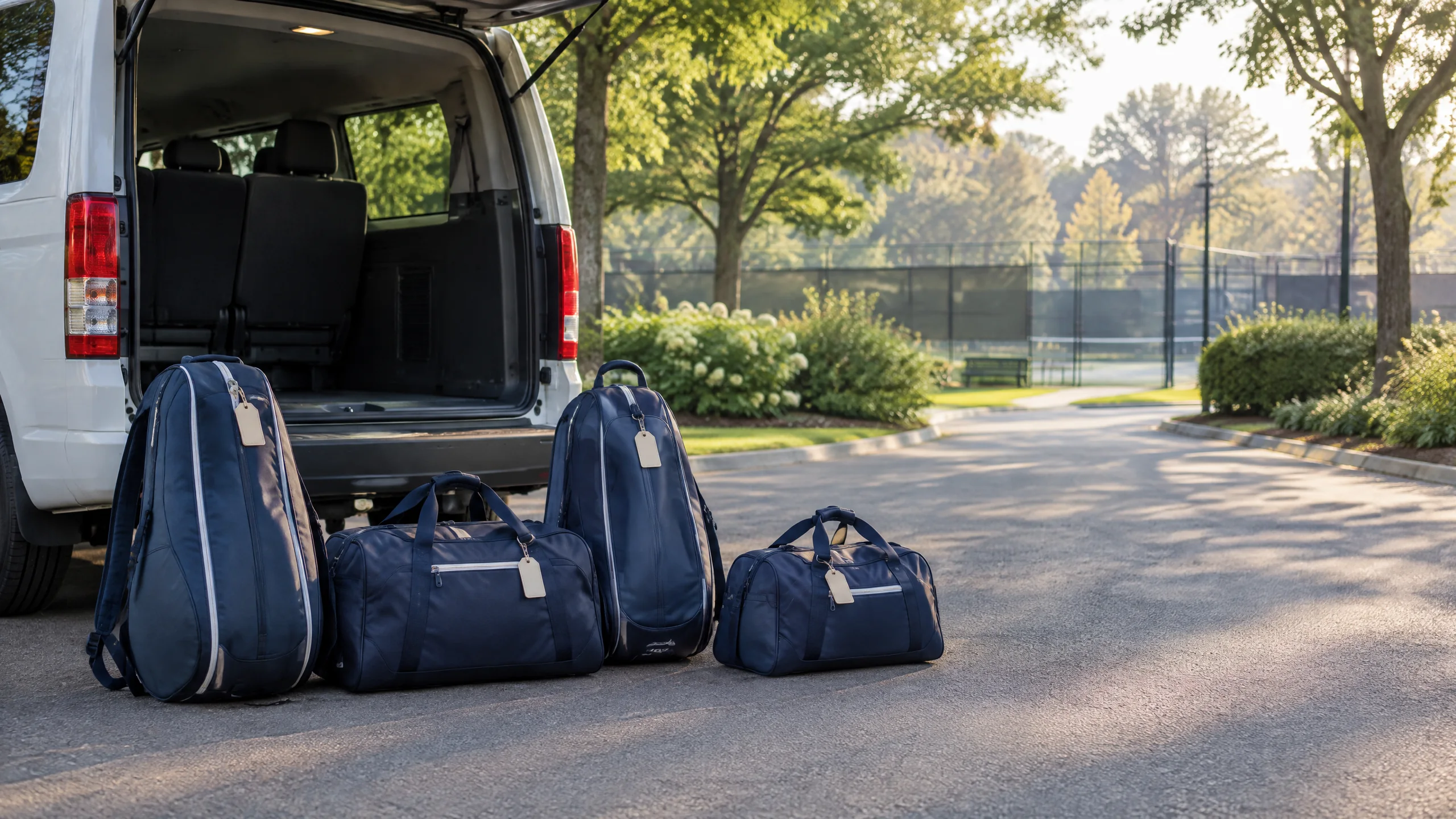
A tennis team’s travel day is a chain of handoffs. Players leave the locker room, load into a vehicle, arrive at an unfamiliar club, find the courts, prepare for play and return with a different mix of dry clothing, used towels, balls, paperwork and racquets. A bag that works for one player’s casual lesson does not automatically work for this shared routine.
A thoughtful custom tennis team bag programme gives the team a visible system. It helps players recognise their equipment, lets coaches keep essential shared items separate and creates a calmer arrival routine on an away fixture. The goal is not to turn every bag into a small suitcase. It is to decide what must stay with a player, what belongs with the coach and what needs to move reliably from one location to the next.
Start with the team’s actual travel pattern
Before specifying a custom tennis bag, describe the travel day in a few plain sentences. A school team, private club league side and academy group may all play away fixtures, but they may use different transport, staff ratios and equipment routines.
Write down the answers to these questions:
- How many players travel together?
- Does the group use a coach shuttle, parents’ cars, train travel or a hired vehicle?
- Are bags carried directly from vehicle to court, or held at a clubhouse first?
- Does each player bring only personal gear, or do bags need to hold shared balls, scorecards, hydration or first-aid items?
- Is the return journey likely to include damp clothing or used towels?
- Who needs to identify bags quickly: the player, the coach, a host club or all three?
The answers shape the system more reliably than a generic feature list. A compact urban league team may value a narrow footprint and clear player ID. A junior academy that moves through a large venue may need a more obvious grouping system and a separate staff carry format.
Separate player bags from coach-controlled equipment
One bag should not be asked to carry every item for every role. The clearest programmes distinguish personal player bags from coach-controlled team equipment.
Player bags
A player’s bag should make the personal routine simple: racquets, footwear or clothing as appropriate, drinks, a small towel and the items the player is responsible for. The design should help the player recognise their bag and keep the core equipment organised without hiding everything in deep compartments.
Coach bag
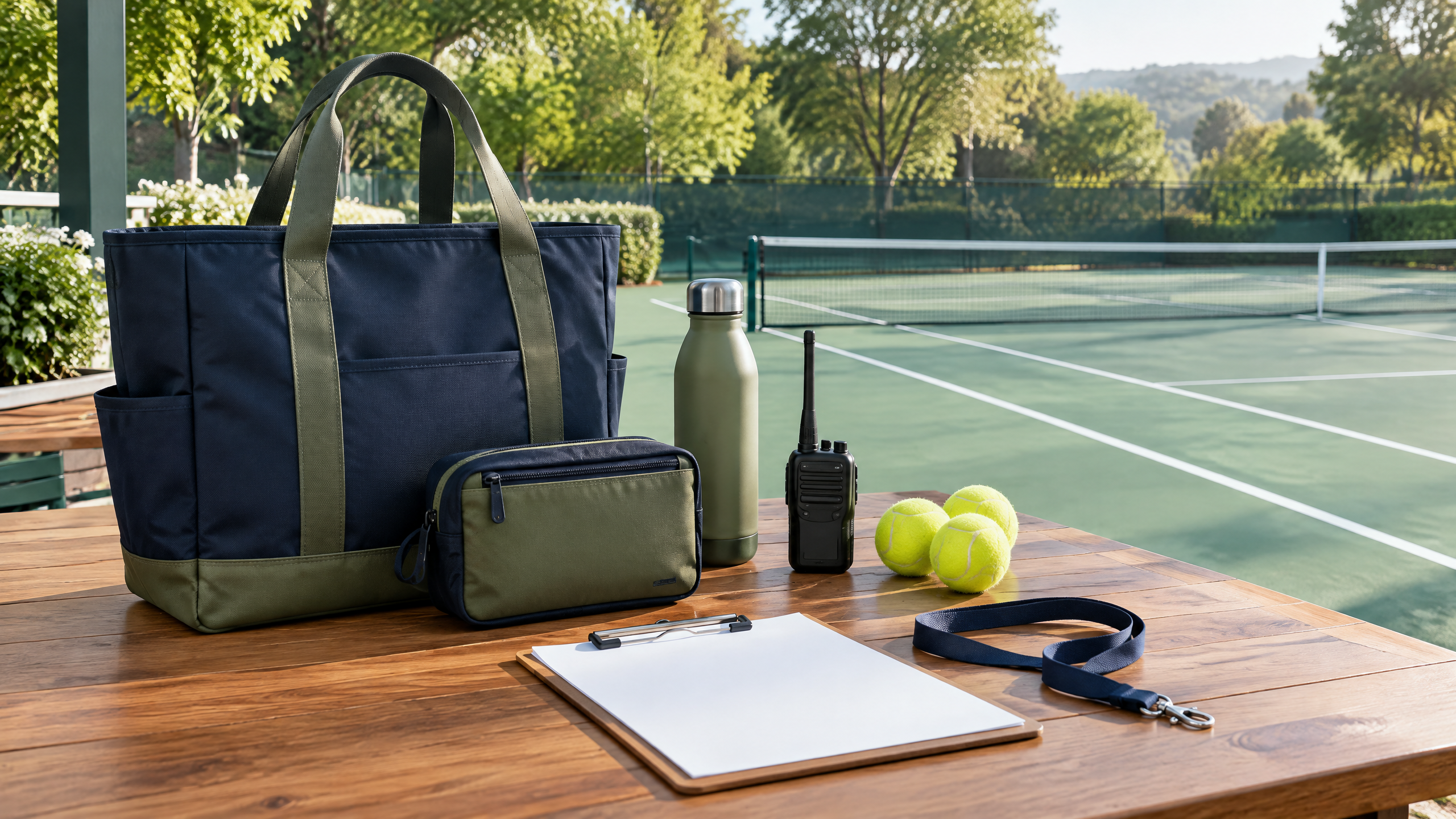
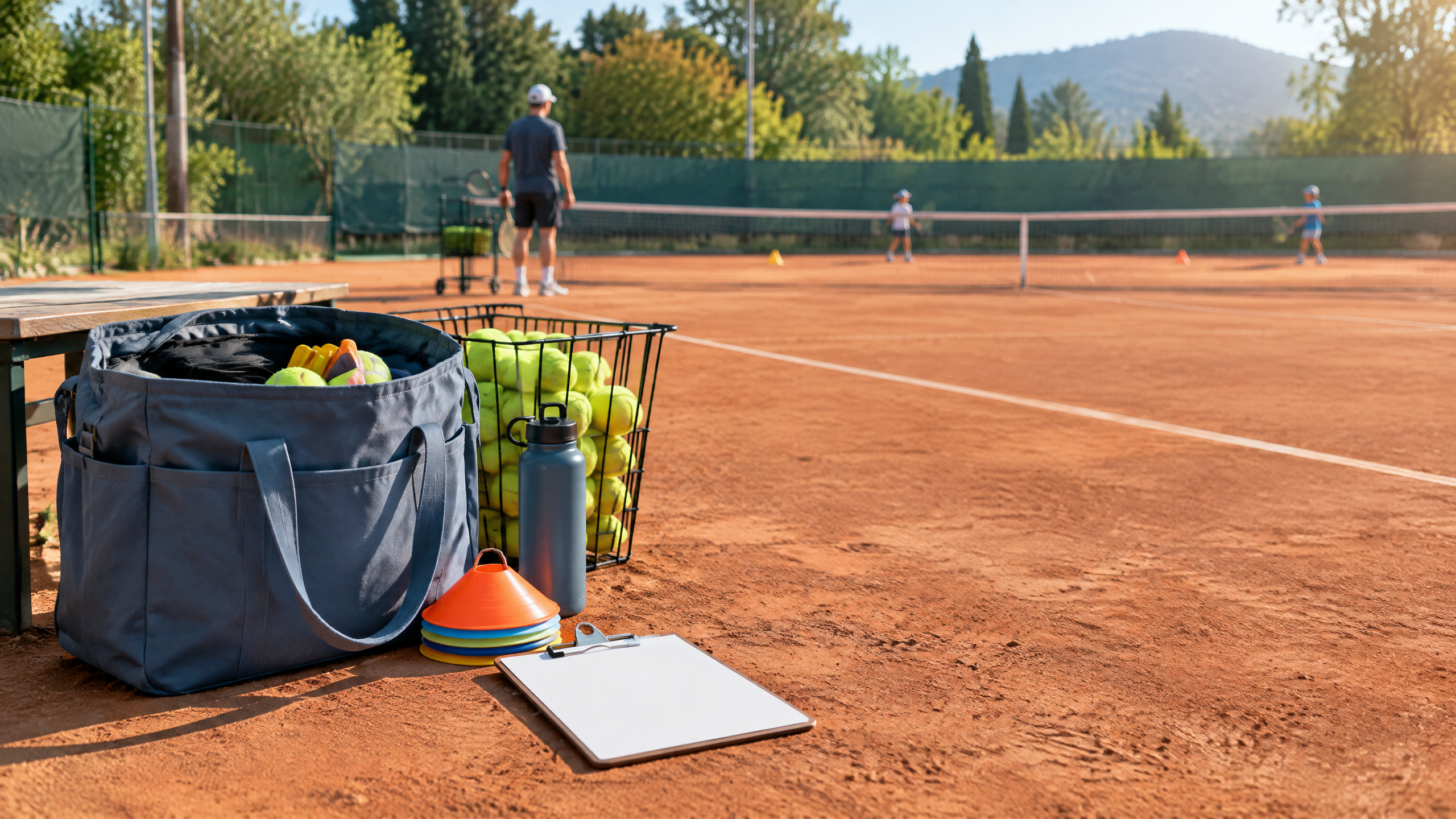
A coach or team-manager bag has a different job. It may need room for shared balls, a compact admin pouch, spare overgrips, a simple first-aid kit according to the club’s policy, fixtures paperwork, court keys or other team-controlled items. It should not be confused with an individual player’s bag.
A coordinated visual family can make these roles clear without making every bag identical. For detailed courtside organisation, our custom tennis coach bag guide addresses the coach’s on-court workflow. The travel-day system adds the route between home club, vehicle and away venue.
Give players clear identification without overpersonalising the whole design
On a busy travel morning, the team should not be searching through similar bags for the right owner. The solution does not need to be a large embroidered name on every panel. In fact, permanent personalisation can make a programme harder to reuse when players change.
Consider these practical ID methods:
| Method | Best use | Buyer question |
|---|---|---|
| Removable name-card sleeve | Teams with changing rosters | Can the card be changed without leaving a visible empty outline? |
| Discreet number tab | Stable team equipment pools | Is the number readable at vehicle-loading distance? |
| Colour-coded handle wrap | Age groups or squads | Does the colour system remain simple enough for staff to use? |
| Coach-only high-visibility tag | Shared equipment bag | Can the coach find this bag first without making the whole collection loud? |
The best choice depends on whether the programme is owned by a school, club, academy or travelling league side. The key is to make the information useful at the moment it is needed.
Design for vehicle loading and arrival, not only for the court
A custom team bag should be evaluated before the first ball is hit. Watch how it is picked up, carried, placed in a vehicle and retrieved at the destination.
During sample review, test the following actions:
- Can a player identify the correct bag when several are placed together?
- Does the bag hold its shape when set down near a vehicle or court entrance?
- Are the main carry handles comfortable for the short but repeated walk from vehicle to venue?
- Can a coach pull their shared bag out without disturbing the player bags?
- Does the bag have a sensible place to separate a used towel or damp outer layer from racquets and key items?
- Does the external form remain tidy when a group photograph or arrival image is taken?
These are practical questions, not performance promises. A club should approve its own requirements through a physical sample and real team routine.
Keep wet-gear planning proportionate
Travel-day planning often needs a place for a damp towel, light rain layer or used clothing. That does not automatically mean every bag needs to be advertised as waterproof or fully sealed. Those are specific construction claims that should only be made when the relevant materials and testing support them.
Instead, write the brief in functional terms. A buyer might ask for “a separate easy-to-clean pocket for a towel or damp light layer” or “a designated lower area that keeps used items apart from racquet handles.” That tells the supplier what operational separation is needed without creating an unsupported promise.
For a more technical discussion of water-resistance terminology, materials and verification, consult our golf and tennis bag weather specification guide. The travel-bag decision is about organisation; the material claim should remain accurate and separately approved.
Make the team identity visible from the right distance
A team bag programme represents a club or school away from home. The visual identity should be recognisable without becoming difficult to reproduce across different bag roles.
Start with three decisions:
- Which colour is the main team field?
- Where should the club, school or academy mark appear?
- Which detail can repeat across player and coach bags: trim, lining, webbing, binding or a controlled accent colour?
A simple base colour with one repeated trim decision is often more scalable than multiple crests, stripes and decorative panels. It gives the team a coherent presence at an away venue and makes future additions easier to coordinate.
If the programme also needs bags for tournament officials, volunteers or check-in staff, do not force those roles into the player-bag pattern. See The Tournament Desk Brief for a separate event-operations lens.
Build an arrival and return routine around the bags
The bag itself is only one part of the system. A useful programme gives the coach a routine that can be repeated under time pressure.
An illustrative away-fixture routine might be:
Before departure: Players collect their labelled bags, confirm racquets and personal essentials, and place coach-controlled equipment in its own bag.
At arrival: The coach retrieves the shared bag first, directs players to one visible meeting point and confirms the next step. Player bags remain with their owners instead of creating an unlabelled pile.
After play: Each player takes responsibility for their core equipment. The coach checks the shared bag, separates any items that need attention and notes missing team-controlled items before the vehicle leaves.
This structure can be adapted to any club’s policy. It does not require complicated technology or a large equipment list. It simply makes ownership clear.
Illustrative buyer scenario
Imagine a 12-player club league team travelling to four away fixtures each season. The team wants a coordinated look but does not want to embroider individual names because its roster changes from year to year.
The buyer briefs a dark navy player bag with a removable name-card sleeve, a small club crest in one location and a matching coach bag with a clear internal divider for shared balls and paperwork. During a trial, the team finds that the coach bag needs a brighter handle marker so it can be identified first at the vehicle. The player bags remain understated; one practical detail makes the system work better.
This is an illustrative scenario, not a claim about a current customer or outcome. The lesson is that travel-day design benefits from testing the group routine rather than approving bags one at a time.
What to include in a supplier-ready brief
A buyer approaching an OEM tennis bag manufacturer should provide:
- Number of player bags and number of coach or shared-equipment bags.
- The transport and arrival route.
- Equipment that belongs to individual players versus the team.
- Preferred ID method and whether it needs to change season to season.
- Colour, mark placement and any shared collection detail.
- Storage requirements at the home club.
- Specific sample decisions: vehicle loading, identification, carry comfort, compartment access and group appearance.
Clear inputs help a supplier recommend a considered construction route. Explore custom tennis bag options and share the travel routine with Links Sports Co when your team is ready to turn the idea into a sample brief.
Frequently Asked Questions
Q: What makes a tennis team travel bag different from a regular tennis bag?
A team travel bag is planned around group movement, identification and the route between the home club, vehicle and away venue. The design may need a clear owner ID method, a coordinated team appearance and a separate coach-controlled equipment format.
Q: Should every player have a personalised tennis bag?
Not necessarily. Removable name-card sleeves, number tabs or colour markers can give players clear identification while allowing the programme to adapt when rosters change.
Q: What should go in a coach travel bag?
The club should decide this based on its own policy. It may include shared balls, a compact administration pouch, spare small equipment and other team-controlled items. Keeping these separate from player bags makes the travel routine easier to manage.
Q: How should a team test a custom tennis bag before ordering more?
Use a physical sample on a realistic travel route. Test vehicle loading, bag identification, carry from vehicle to court, access to shared equipment, the return routine and how the collection looks when placed together.
Share this article