From First Rally to Club Belonging: Designing Multi-Sport Welcome Packs for Tennis, Pickleball & Padel Clubs
A practical framework for clubs creating useful custom welcome packs across tennis, pickleball and padel, with a shared identity and sport-aware organisation.
Links Sports Co
Product Specialist & OEM Consultant · Links Sports Co
10+ years in golf & tennis bag manufacturing. Specialises in OEM/ODM custom branding, material sourcing, and B2B wholesale for brands across 30+ countries.
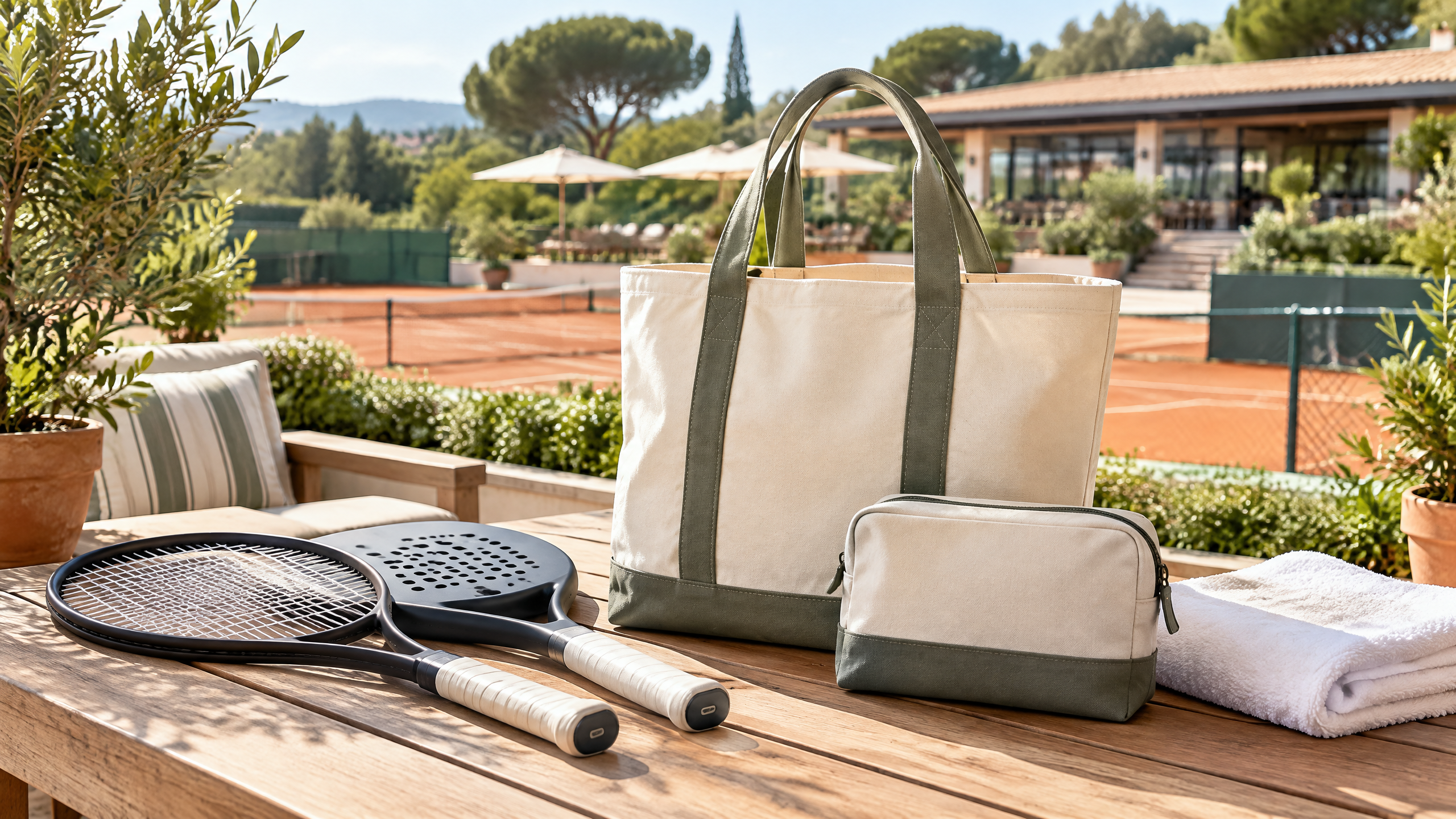
A tennis club welcome pack should help a new member take the next useful step, not merely provide a branded item on day one. For a club offering tennis, pickleball and padel, the strongest approach is a modular programme: one recognisable club identity, paired with small practical details that match how each sport is played and how a member begins to participate.
This is not a claim that a bag or gift will create retention on its own. The point is more concrete. When a new member knows where to put essentials, understands the club’s next activity and carries something that feels genuinely usable, the onboarding experience is more coherent than a collection of unrelated promotional items.
The opportunity is timely. The USTA reported that US tennis participation reached 27.3 million players in 2025, an increase of 1.6 million from the previous year, with 4.9 million first-time players. For clubs welcoming new and returning players, the first equipment touchpoint is an opportunity to make the club’s standards visible without relying on excessive branding or disposable giveaways.
Start with the first-week journey
Design the welcome pack around what a new member is likely to do during the first week. The sequence is more useful than beginning with a catalogue of products.
| Moment | What a new member may need | What the pack can support |
|---|---|---|
| Welcome day | A simple, recognisable point of arrival | A club-branded carry item with a considered, durable-looking presence |
| First booking | A way to keep small essentials together | A small pouch, key loop or clearly separated pocket plan |
| First session | Room for water, a towel, grips, balls or personal basics | Sport-appropriate organisation, sized from actual use rather than a generic list |
| Social play or clinic | A link between the player and club community | A consistent club identity plus a short club-prepared orientation insert |
| Return visit | A useful item worth bringing back | A carry format that remains practical after the onboarding moment |
The club, not the supplier, should define its own onboarding information. A manufacturer can help translate the physical carry and branding requirements into a bag or accessory brief. It should not be asked to invent programme rules, safety advice or membership benefits.
If the club also lends equipment for a first tennis session, treat that handoff as a separate club-owned system rather than as part of the member’s take-home welcome pack. Our custom tennis borrow-bag programme guide covers defining a complete set, identifying shared bags and planning the return-and-reset routine.
One identity, three court realities
Tennis, pickleball and padel have overlapping needs, but their routines are not identical. A three-sport club does not have to produce three completely different welcome bags. It does need to decide which elements are shared and which should adapt.
A simple modular framework has three layers:
- Club layer. The shared colour direction, crest or wordmark placement, material language and welcome presentation. This is what lets the programme feel like one club rather than three unrelated promotions.
- Court layer. A small sport-specific difference, such as a racquet-friendly compartment, a paddle-oriented pouch or an insert that directs the player to the correct booking and introductory session.
- Member layer. The practical details that make the item worth using: a comfortable way to carry it, enough space for ordinary belongings and a layout that does not force a player to unpack everything to find a small item.
The right balance depends on the club. A facility with equal activity across all three sports may use one adaptable tote or backpack with removable accessories. A tennis-led club adding pickleball and padel may choose one core bag and different onboarding inserts. The buyer should choose the route based on its actual programming, not a trend label.
Brief the pack as an everyday object, not event merchandise
The word “welcome” can tempt a team to add too many items. A crowded pack may look generous at handover but become inconvenient in daily use. Begin with the carry item and the few things a member is genuinely likely to keep.
A practical custom sports club welcome-kit brief can cover:
- Carry role: tote, backpack, compact racquet bag, drawstring accessory bag or a modular combination.
- Primary user: adult social player, junior programme family, coaching participant, padel beginner or multi-sport household.
- Everyday load: a racquet or paddle where relevant, water bottle, towel, balls, spare grip, small personal items and a light layer.
- Club identity: one approved mark, planned placement, intended tone and any colour restrictions.
- Onboarding insert: supplied by the club, including only verified local information such as welcome contacts, booking path or introductory events.
- Distribution method: presented on join day, collected at reception, added to a specific programme, or ordered after membership confirmation.
The brief does not need a long list of technical claims. It needs an honest description of who will use the item and what they need to carry.
A useful distinction: new-member pack versus tournament giveaway
A tournament giveaway is usually designed for one event, one date and a broad group of recipients. A pickleball club membership welcome kit or padel onboarding pack needs to continue working after that moment.
The different purpose changes the buyer’s questions. For an event, the club may prioritise speed of distribution and a bold date-specific mark. For a member pack, the club should ask whether the item feels appropriate in the locker room, at a casual lesson and during a normal week of play. A dated event graphic can be memorable; a new-member carry item may benefit from an identity that remains relevant season after season.
This is also why subtle branding often works better than filling every panel with a logo. A clear club identifier, used in the right place, can be enough. Let the material, structure and practical proportions carry the rest of the impression.
Test the proposed pack with real routines
Before approving a production direction, run a small internal review with the people who know the club’s daily rhythm. Include a programme manager, a front-desk or membership representative, a coach from the relevant court sport and one brand decision owner.
Give them a short set of tasks:
- Put ordinary session items into the proposed bag or sample.
- Carry it from reception to the relevant court entrance.
- Retrieve a small item without removing everything else.
- Consider what must remain clean, dry or separated in the club’s normal setting.
- Check whether the club identity looks balanced in a casual, real-world moment rather than only in a mock-up.
- Review the welcome insert separately to make sure the club’s current information is accurate.
Record observations in a single decision sheet. Separate design feedback from programme feedback. The supplier can act on a pocket, handle, material or logo note; the club owns the accuracy of its membership message and schedule.
For a more detailed sport-programme purchasing framework, see One Club, Three Courts: A Buyer’s Guide to Custom Tennis, Pickleball & Padel Bag Programs. For coach-specific organisation questions, our court-side tennis organiser guide is a complementary reference.
Keep the welcome experience consistent across teams
The most memorable welcome programmes usually feel joined up. That does not require every item to be identical. It means a new member should recognise the same visual language at reception, on the court and in the club’s communications.
The buyer can set a simple consistency system:
| Element | Club decision | Supplier input |
|---|---|---|
| Colour direction | Choose the club’s approved palette and priority colour | Review how it translates across proposed bag materials and trims |
| Club mark | Provide the final artwork and use rules | Review application method and placement on the specific surface |
| Welcome information | Verify copy, contacts and local programme details | Confirm the physical format that can be packed with the item |
| Sport variation | Define which sport-specific insert or accessory is actually needed | Review construction options for the selected format |
| Handover | Decide where and by whom the pack is presented | Plan packing or grouping requirements against the approved brief |
This avoids a common failure: treating the physical item as a separate marketing project while the membership team creates a different welcome message elsewhere.
Give the club a clean decision path
The best first step is not a universal bag specification. It is a compact decision meeting that answers six questions:
- Who is the first recipient group?
- Is the pack intended for tennis, pickleball, padel or a true multi-sport member?
- What is the normal everyday load?
- What must be common across every pack, and what can vary by sport?
- What club-approved information will accompany the item?
- Who owns final artwork, sample feedback and the distribution list?
Once these answers are written down, the project can move from an attractive idea to an actionable request. The design can stay fresh and welcoming while remaining grounded in the club’s real operating routine.
Explore current custom tennis and racquet-bag directions and share your intended member journey with Links Sports Co to start a project-specific conversation. Quantities, construction, materials, timing and customisation options should be reviewed against the approved brief rather than assumed from a generic welcome-pack concept.
Frequently Asked Questions
Q: Can one welcome pack work for tennis, pickleball and padel members?
Yes, a club can use one shared identity and a modular physical format where it suits the member journey. The buyer should first decide which carry needs are common and which sport-specific detail, insert or accessory should vary. One format should not be forced on every sport without reviewing ordinary use.
Q: What should a tennis club welcome pack include?
Begin with an item that members are likely to use after the welcome day, plus club-verified onboarding information. The exact contents should follow the club’s player profile, everyday equipment needs and distribution plan rather than a standard promotional bundle.
Q: Should a club put a large logo on every part of the bag?
Not necessarily. A well-placed approved mark can create a stronger everyday result than several competing logos. Review logo size, placement, material surface and the bag’s intended use on a sample or placement drawing before approving production.
Q: What should a club test before ordering custom welcome packs?
Test how the item handles ordinary session essentials, whether small items remain easy to reach, how it moves from reception to the court and whether the club’s welcome information is current. A short review supports the buyer’s decision but does not replace the club’s own programme, safety or quality requirements.
Share this article